Behavior & Training
Halloween with Dogs: Costumes, Doorbells, and the Candy Bowl
How to tell if your dog is happy in a costume and fit one safely, how to keep costumes from matting the coat, a plan for trick-or-treaters at the door, and what to do if your dog gets into the candy.
Nat · October 19, 2026 · 5 min read
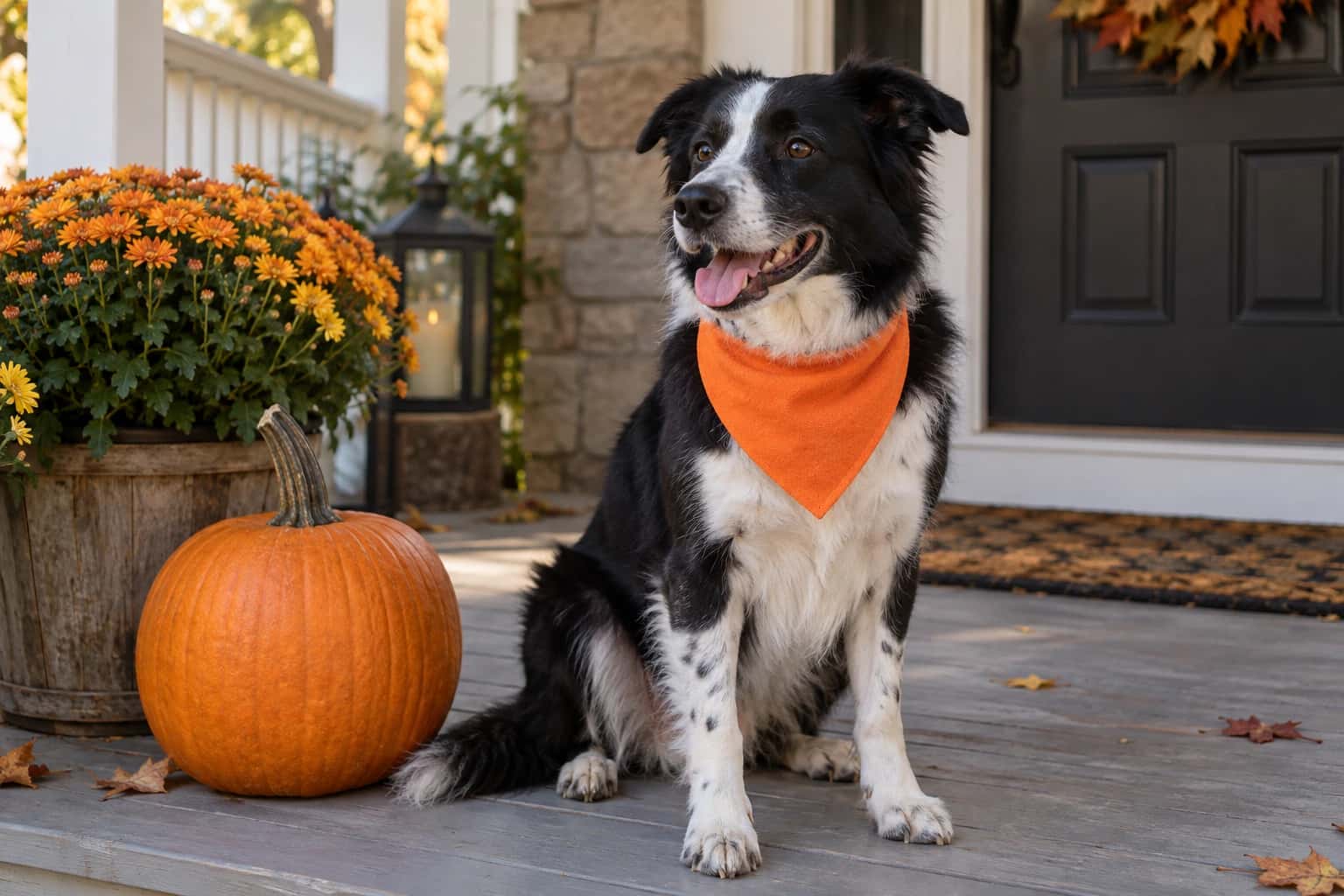
Halloween with a dog in the house can be a lot of fun, from costume photos to a little pumpkin trotting down the sidewalk. It can also be a hard night for dogs, with strangers in masks, a doorbell that keeps ringing, and a bowl of chocolate at nose height. A bit of planning keeps it fun for your dog too.
Costumes are for dogs who enjoy them
Some dogs don't mind a costume at all. Others freeze, tuck their tail, try to back out of it, or roll on the floor to get it off. If your dog is in the second group, skip the costume. A festive bandana makes a sweet photo too.
If you'd like to try a costume, introduce it a week or two early. Let your dog sniff it, reward them, then put it on for a few seconds with treats and take it off. Build up slowly. Signs your dog is uncomfortable include lip licking, yawning, stiffness, refusing to walk, or scratching and biting at the costume.
Getting the fit right
A costume should never get in the way of your dog being a dog. Check that:
- Nothing is tight. You should be able to slide two fingers under any strap or band, especially around the neck and chest.
- Nothing covers the eyes or ears. Dogs need to see and hear what's around them, and covering either can make a nervous dog panic.
- They can breathe and pant freely. Skip anything over the nose or mouth, and be extra careful with flat-faced breeds.
- They can walk, sit, and lie down normally, without tripping on fabric.
- They can go to the bathroom without the costume getting in the way or getting soiled.
- There's nothing to chew off and swallow. Buttons, bells, pom-poms, and loose ties are choking and blockage risks.
Stay with your dog the whole time they're dressed up, and take the costume off once the photos are done. No costume should be left on a dog who's home alone or in a crate.
Costumes and mats
A costume rubbing against a medium or long coat for a few hours can start mats, especially in the spots where fabric moves with every step: the armpits, behind the elbows, around the neck and collar line, and under the chest. Doodles, poodle mixes, and other curly or silky coats are the most prone to it.
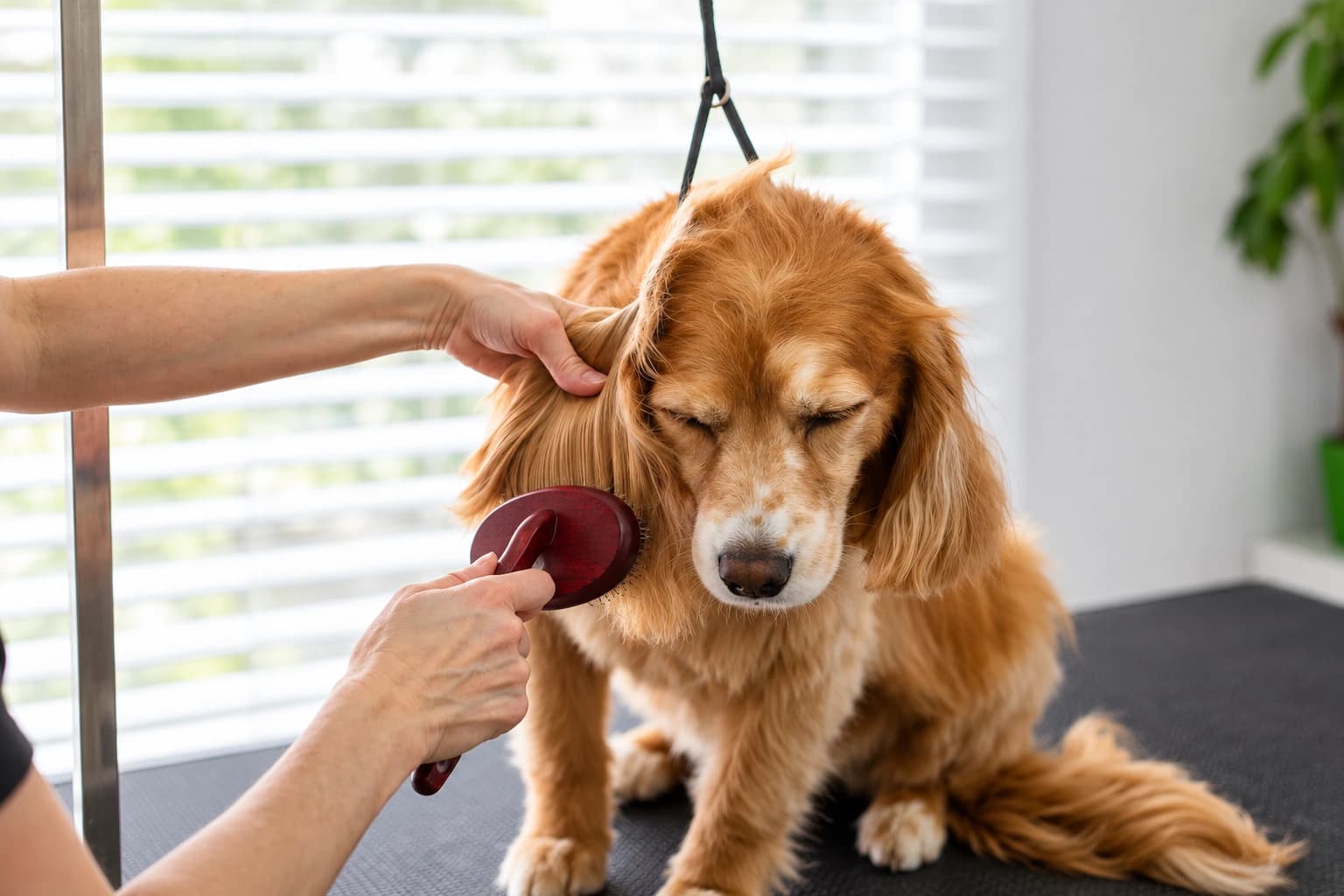
After the costume comes off, run your hands through those areas and look for tangles or flattened patches. Brush and comb them out while they're small, because tangles in the armpits tighten fast and pull at the skin.
Skip human face paint and hair dye
Please don't use human face paint, hair spray color, or hair dye on your dog. Products made for people can irritate a dog's skin, and dogs lick themselves, so whatever goes on the coat can end up swallowed.
If you'd like a pop of orange or purple for the occasion, I offer dog-safe color, made for pets and kept away from the eyes, nose, and mouth. I've written more about what dog-safe color is and which dogs it suits.
A plan for the doorbell
For a lot of dogs the hardest part is the door. Every ring means excitement or alarm, and an open door is a chance to bolt into the dark.
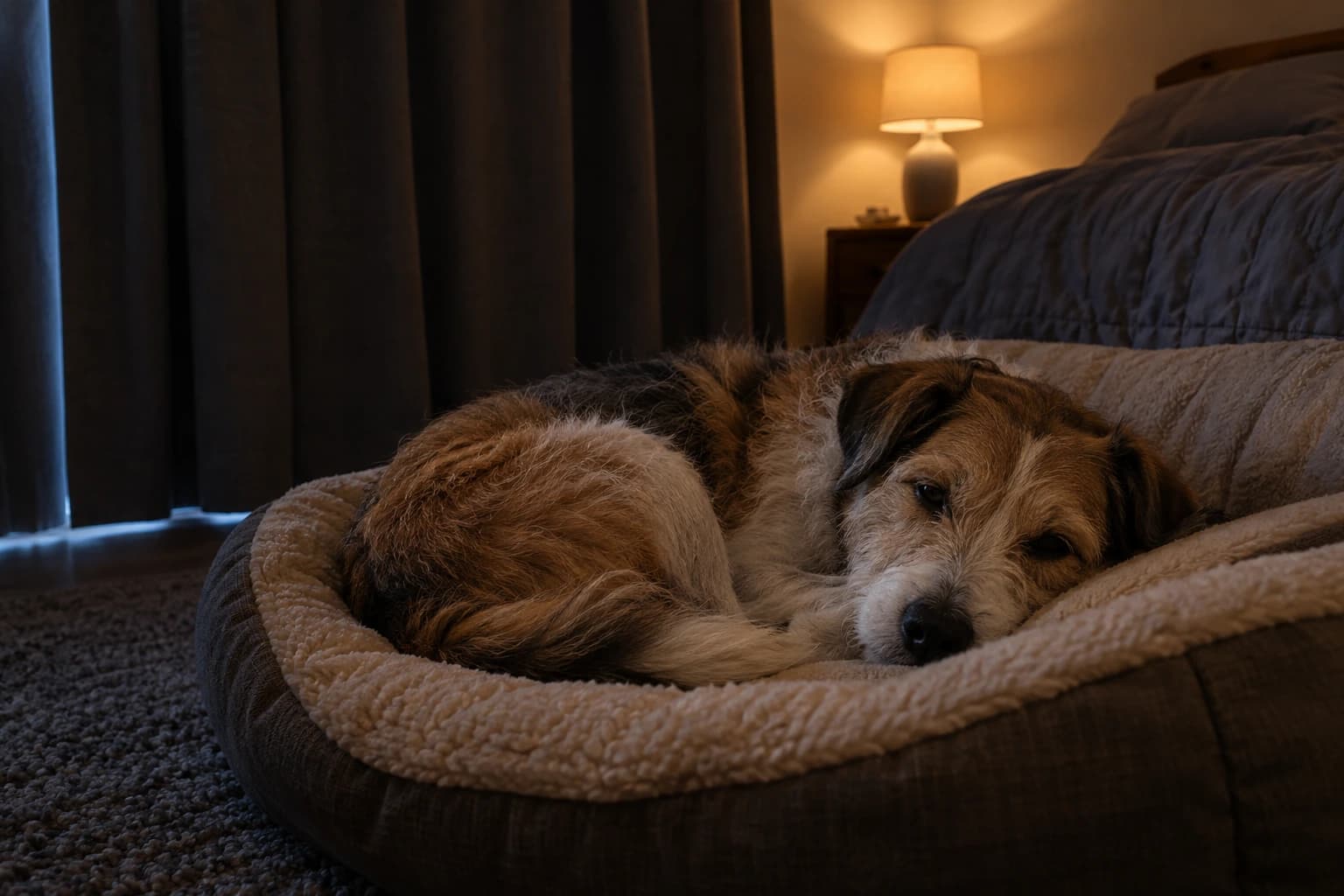
- Set up a quiet room away from the front door before it gets dark. Give your dog their bed, water, a long-lasting chew, and some background music or a fan.
- Use a baby gate or closed door so your dog can't reach the entryway, even if they're usually good at the door.
- Keep the door secure. If your dog is going to be near the entry, keep them on a leash and hold it while you hand out candy.
- Consider skipping the doorbell altogether. Some people sit on the porch with the bowl, or leave a note asking trick-or-treaters to knock softly.
- Check ID tags and microchip details before the night. Make sure the tag is on the collar and the chip is registered to your current phone number, in case your dog does slip out.
If your dog is very fearful of visitors or noise, talk to your vet ahead of time about options that might help.
Keep the candy out of reach
Keep the candy bowl up high, and ask kids to store their haul somewhere closed off from the dog.
Chocolate is toxic to dogs. Dark and baking chocolate are the most dangerous, but any amount is worth a call.
Xylitol is a sugar substitute found in sugar-free gum, some candies and mints, and some peanut butters and baked goods. It can cause a dangerous drop in blood sugar and liver damage in dogs, even in small amounts.
Raisins, wrappers, and lollipop sticks are problems too. Raisins can harm a dog's kidneys, and wrappers and sticks can cause choking or a blockage.
If your dog eats something
Call your vet or an emergency vet right away. You can also call the ASPCA Animal Poison Control Center at (888) 426-4435 or the Pet Poison Helpline at (855) 764-7661 (both may charge a fee). Have the wrapper or package handy, and note roughly how much your dog ate and when. Don't try to make your dog vomit unless a vet tells you to.
Before the night
Save those two poison line numbers in your phone now, next to your vet's number and the nearest emergency clinic. On the day, check the costume fit and the ID tag, set up the quiet room before the first knock, and put the candy bowl somewhere your dog can't reach. When the costume comes off, give the armpits and neck a quick brush so a fun evening doesn't turn into mats.