Behavior & Training
Your Rescue Dog's First Groom: Going Slow and Building Trust
How to plan a newly adopted dog's first groom when you don't know their history: when to wait, when not to, how to practice handling, and why a short cut is sometimes the best start.
Nat · August 10, 2026 · 5 min read
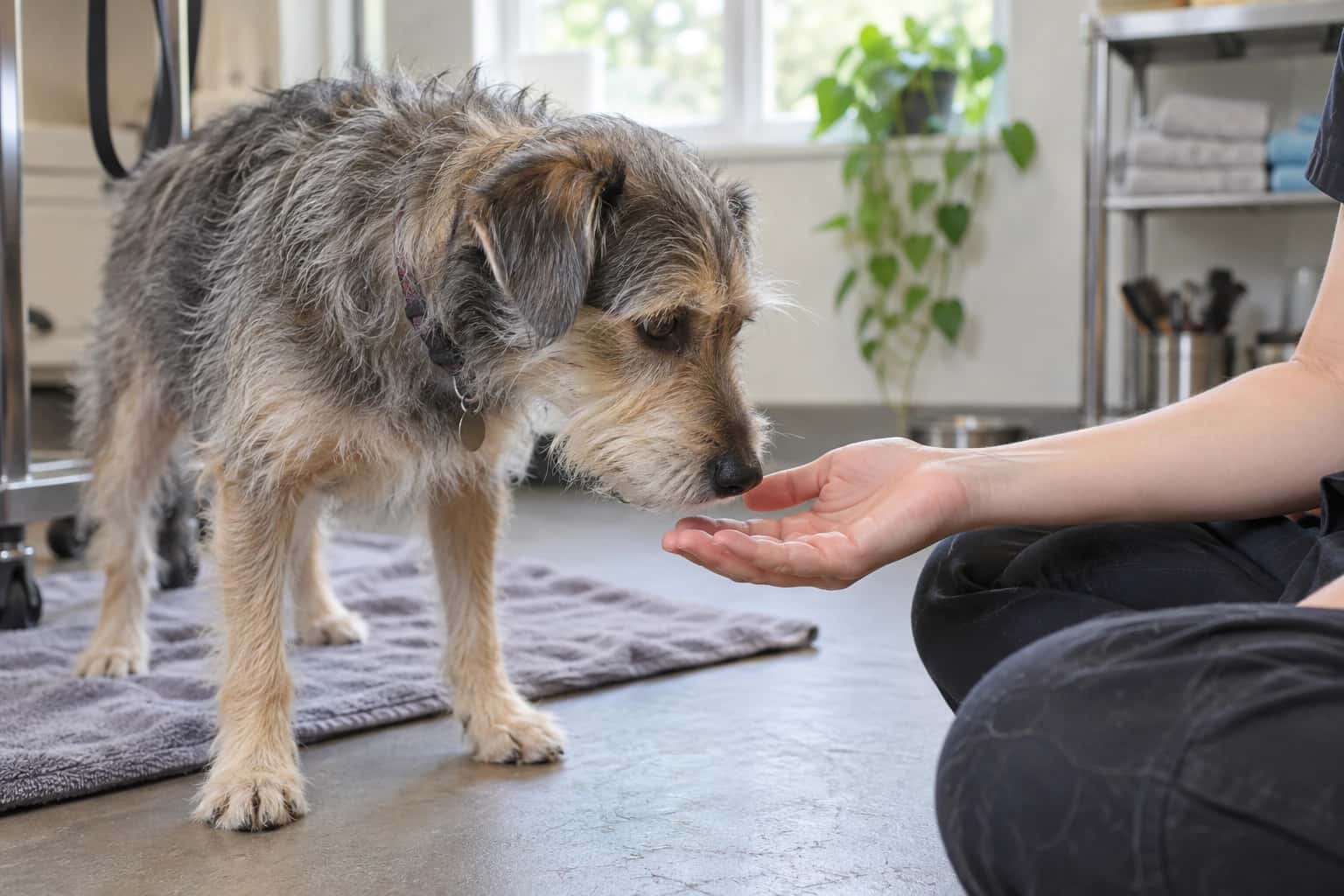
Bringing a rescue dog home is such a tender time. You're learning each other, and every day they seem to relax a little more. At some point the question comes up: when do they get groomed? It usually comes with some worry, because you don't know what this dog has been through and you don't want to undo the trust you're building. That worry is a good instinct. With a little planning, a first groom can be one more thing that shows your new dog they're safe now.
You're working with an unknown history
With a puppy you've raised, you know what they've experienced. With a rescue, you usually don't. They may have been groomed regularly by a loving family, or had painful nail trims, rough handling, or years of matted coat that hurt to touch.
That means you can't assume anything. A dog who seems easygoing on walks might be very sensitive about their feet, ears or tail. A dog who looks nervous might turn out to love being brushed. The first few weeks are about finding out, gently.
Let them settle in first, unless the coat can't wait
If the coat is in reasonable shape, there's no rush. Many people talk about giving a new dog days to decompress, weeks to learn the routine, and months to feel fully at home. Whatever the exact timeline, most rescues do better if their first groom isn't in their first few days. Let them learn the house, learn you, and get some sleep.
Some coats can't wait, though. Get your dog groomed, or see your vet, sooner if you notice:
- Mats that are tight against the skin, especially around the ears, legs, armpits or rear
- Nails so long they curl, click loudly or make walking awkward
- A strong smell, sores, redness or scabs under the coat
- Feces or urine caught in the hair around the rear end
- Signs of fleas
Anything that looks like a skin infection, a wound or a painful spot should go to your vet first. They can treat what needs treating and let you know if it's safe to groom.
Practice handling at home
The most useful thing you can do before a first groom is get your dog comfortable being touched, a little at a time, as part of ordinary affection.
Start with the spots your dog already enjoys, like the chest or behind the ears. From there, work slowly toward the places grooming focuses on:
- Paws. Touch a paw, treat. Hold it for a second, treat. Gently touch between the toes, treat.
- Ears. Lift an ear flap and look inside, treat.
- Face. Touch around the muzzle and gently lift a lip, treat.
- Tail and rear. Brief, light touches, with a treat each time.
- Brushing. A soft brush for a stroke or two, then a treat.
Keep sessions to a minute or two, and stop before your dog has had enough. If they pull away, lick their lips, turn their head or go stiff, back up to something easier. You're learning what's hard for them, and that's valuable information.
If handling a particular area makes your dog growl, snap or panic, don't push through. Stop working on that spot and talk to your vet or a qualified trainer. Pain is sometimes the reason, and a vet can check for that.
Tell your groomer everything you know
Even if you know very little, share it. Useful things to mention:
- What the shelter or rescue told you about their background
- Anything they seem sensitive or scared about at home
- Spots they don't like having touched
- How they react to loud noises, like a vacuum or hair dryer
- Any health conditions, medications or recent vet visits
- How long they've been home with you
- What treats or rewards they love
A good groomer will use this to plan the visit around your dog. That might mean shorter sessions, splitting services across more than one appointment, or a quiet time of day with no other dogs around.
Matted rescues and the short cut
Many rescues arrive matted, sometimes badly. It's usually nobody's fault now, but it's something that needs dealing with kindly.
Mats pull on the skin every time a dog moves. They trap moisture, dirt and sometimes parasites against the skin, and they can hide sores or infections. Brushing out heavy mats means a lot of pulling on skin that is often already sore, and a long session of that is hard on any dog, let alone one who is still learning to trust people.
That's why a short cut is so often the best start. Taking the coat short under the mats removes the problem in one go, with far less pulling and a much shorter time being handled. Hair grows back. What matters most on that first visit is that your dog comes home comfortable and hasn't learned that grooming hurts.
Once the coat grows back, you can decide on the style you want and keep it brushed so matting doesn't return.
After a big shave down, it's common to see some redness or irritation on skin that was under the mats, since it hasn't seen air in a while. Keep an eye on it, and if it looks sore, raw or infected, call your vet.
Be patient with both of you
Some rescues take to grooming right away. Others need months of small, kind steps. Both are completely normal, and neither says anything about how much your dog loves you.
If you're in the East Bay and you'd like help planning a gentle first groom for your new dog, I'm happy to talk it through.