Behavior & Training
Fireworks and Dogs: Getting Through the Fourth of July and New Year's Eve
How to prepare a noise-sensitive dog for fireworks nights: ID and microchip checks, secure doors and gates, a quiet room, and when to talk to your vet.
Nat · June 29, 2026 · 5 min read
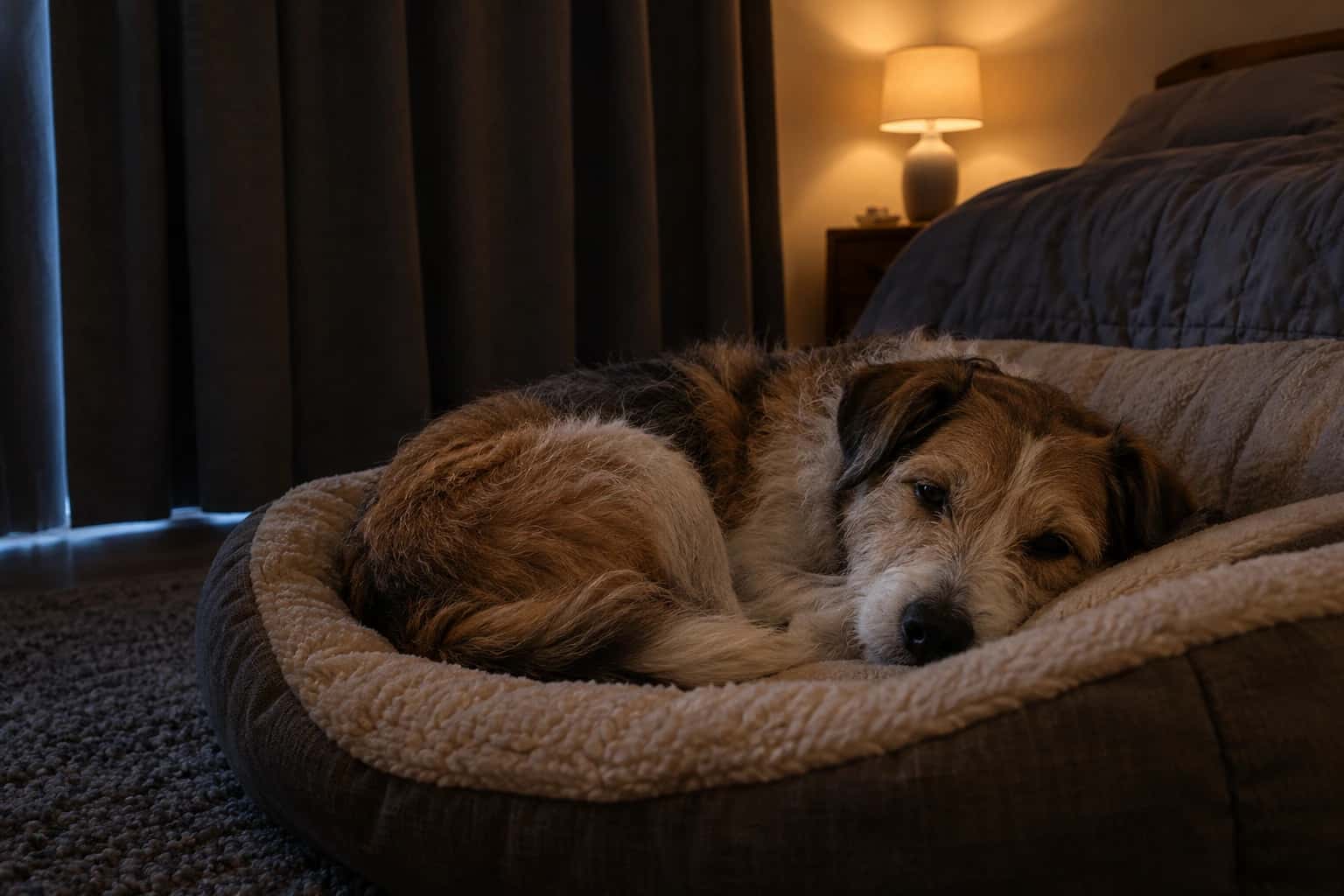
To a dog, fireworks are sudden booms with no warning and no explanation, and in plenty of East Bay neighborhoods they start days before the holiday and keep going after it. Some dogs barely notice. Others shake, pant, pace, drool, or try to squeeze behind the toilet. If your dog is one of the worried ones, a little planning makes the night much easier on both of you.
Plan a week or two ahead
Get ready before the first bang. Think about who will be home, where your dog will spend the evening, and what you'll need on hand. If you're going out, arrange for someone your dog knows to stay with them, or plan to be home yourself.
Check ID tags and microchip details
Frightened dogs run, and they can run a long way. Before the holiday:
- Make sure your dog's collar fits snugly and the tag has your current phone number.
- Look up your dog's microchip registration and confirm the contact details are up to date. If you've moved or changed numbers since you got your dog, this is easy to miss.
- Have a recent, clear photo of your dog on your phone.
These take ten minutes and they're what gets a lost dog home.
Secure doors, gates, and fences
A dog who would never normally slip out can bolt when a firework goes off nearby. Walk your yard and check for gaps under the fence, loose boards, and gates that don't latch properly. On the night itself, keep your dog indoors rather than in the yard, even for a few minutes.
Be careful at the front door too. Guests and deliveries are all chances for a scared dog to shoot past. A closed interior door or a baby gate between your dog and the entry helps. If your dog needs to go out to potty after dark, take them out on leash, even in your own fenced yard.
Walk earlier in the day
Get your dog's main walk and a good play session done while it's still light and quiet. A dog who has had some exercise and a meal is more likely to settle in the evening. Feed dinner a little earlier than usual too, since some anxious dogs won't eat once the noise starts.
Set up a quiet room
Pick a room toward the middle of the house, ideally one with few windows. Bring in your dog's bed, a favorite blanket, water, and something to chew. Then:
- Close the curtains or blinds. The flashes bother some dogs as much as the noise.
- Add background sound. White noise, a fan, the TV, or music at a steady volume softens the sharp edges of the bangs.
- Let them hide. If your dog wants to wedge under the bed or into the back of a closet, let them. A covered crate works well for dogs who already like theirs. Don't pull a dog out of a hiding spot they've chosen.
A long-lasting chew or a lick mat can give a worried dog something to focus on, if they're calm enough to take it.
Comforting your dog is fine
You might have heard that petting or soothing a scared dog will reinforce the fear. It won't. Fear is an emotion, and comfort doesn't teach a dog to be more afraid. If your dog wants to lean on you, sit with them, speak softly, and stroke them slowly. If they'd rather be left alone in their hiding spot, respect that and stay nearby. Your calm presence helps either way.
Please don't scold barking, trembling, or accidents on a fireworks night.
Leave your dog home from the display
Even dogs who seem fine with everyday noise can panic at a live show, with close booms, big crowds, and nowhere to retreat. Please don't bring your dog to a display. They'll be much happier at home.
Talk to your vet well before the day
If your dog panics during fireworks, shaking for hours, trying to dig through doors, hurting themselves, or not recovering the next day, call your vet a few weeks before the holiday. They can talk through options that suit your dog and rule out anything else going on. Please don't give your dog any medication or calming product without your vet's advice, and don't wait until the afternoon of the Fourth, when getting an appointment is hard.
Grooming around the holidays
If your dog is sensitive to noise, try not to book a groom right around the Fourth of July or New Year's Eve. A dog who spent the night before bracing against fireworks is already on edge, and a bath and dryer on top of that can be too much. A week before or after is usually a better choice.
Working on sound sensitivity over the year
Noise fears don't usually disappear on their own, but many dogs can get more comfortable with gradual practice. Find a recording of fireworks and play it so quietly your dog barely notices, while you hand out treats or during meals. Over weeks, turn it up a tiny bit at a time, only when your dog is relaxed at the current level. If they react, go back down. Short sessions a few times a week, started months ahead, give you plenty of practice before the next holiday. The same approach helps with clippers and dryers too.
A quick checklist for the night
- ID tag on, phone number current, microchip details checked
- Gates latched, fence checked, dog indoors after dark
- Walk and dinner done early
- Quiet room ready with curtains closed and background sound on
- Leash by the door for potty breaks
- Your vet's number, and the nearest emergency vet's, saved in your phone
If you have a groom coming up near a holiday and want to move it, book a different day that gives your dog time to settle first.