Behavior & Training
How to Make Grooming Enjoyable for Your Dog
Simple ways to help your dog look forward to grooming: calm handling, good treats, short sessions, and paying attention to what your dog is telling you.
Nat · January 12, 2026 · 4 min read
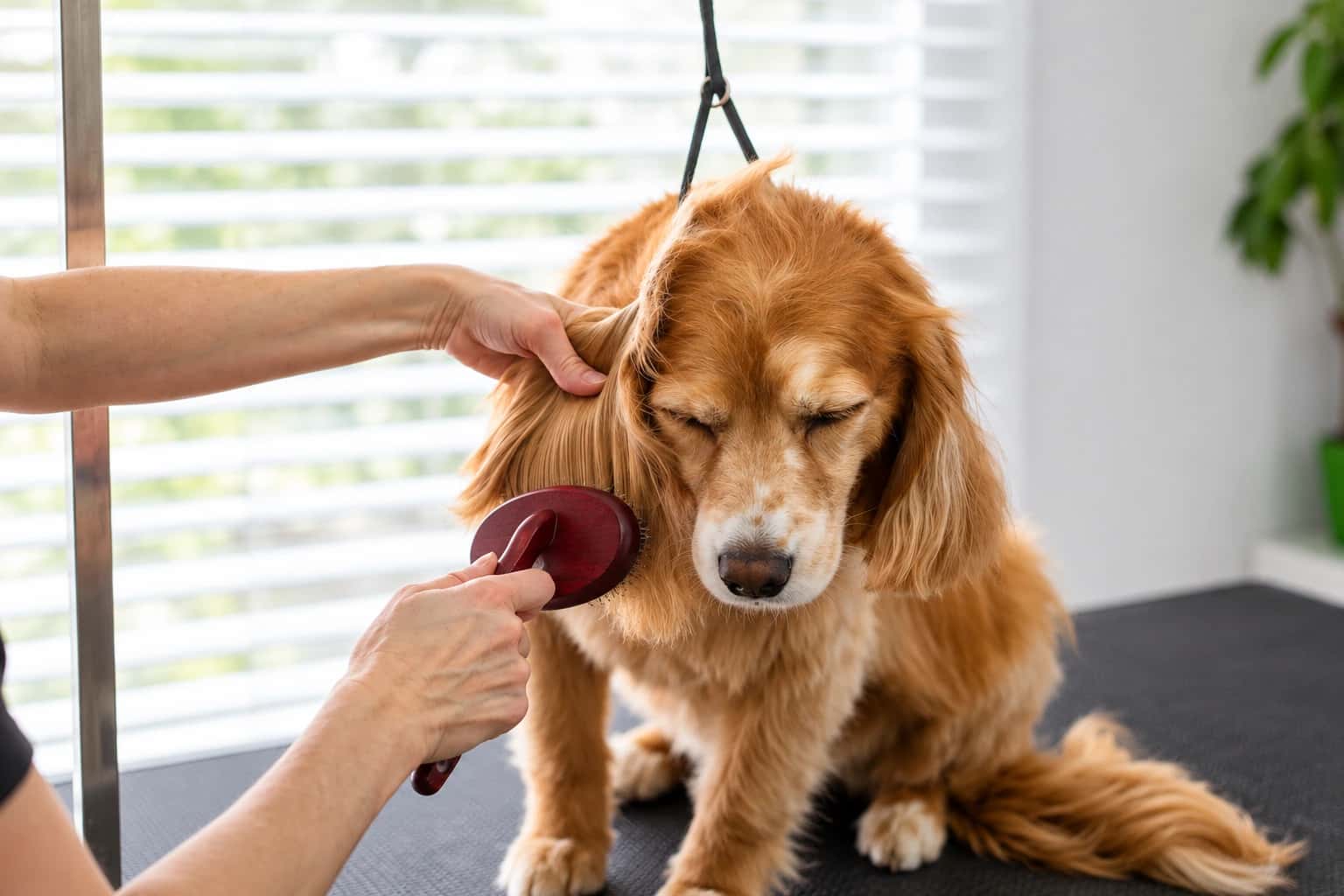
If your dog disappears the moment the brush comes out, you're not alone, and it's not a sign you've done anything wrong. Plenty of wonderful, much-loved dogs just haven't learned yet that grooming can feel good. With some patience and the right rewards, most dogs can learn to relax, and a lot of them come to really enjoy the attention. I love watching a dog who used to squirm lean into the brush and close their eyes.
Start with your own energy
Dogs are so tuned in to the people they love. If you pick up the brush expecting a fight, your dog notices the tight grip, the sigh, the rushed movements. Before you start, slow down. Take a breath, use the soft voice you use when you're telling them they're a good dog, and move calmly. If either of you is getting frustrated, it's completely fine to stop and try again later. A short, happy session beats a long, tense one every time.
Pair grooming with good things
The simplest way to change how a dog feels about grooming is to make it predict things they love.
- The brush comes out, a treat appears.
- The brush touches the coat, another treat.
- Nail clippers come out, a lick of something special.
Do this consistently and your dog starts to see the tools as a signal that good stuff is coming. Save the best treats for the parts your dog finds hardest, usually nails, ears, or the bath.
Not every dog is food motivated. A favorite toy, a game of fetch afterward, a walk, or simply a good cuddle and lots of praise from you can work just as well. You know better than anyone what makes your dog light up.
A few games that help
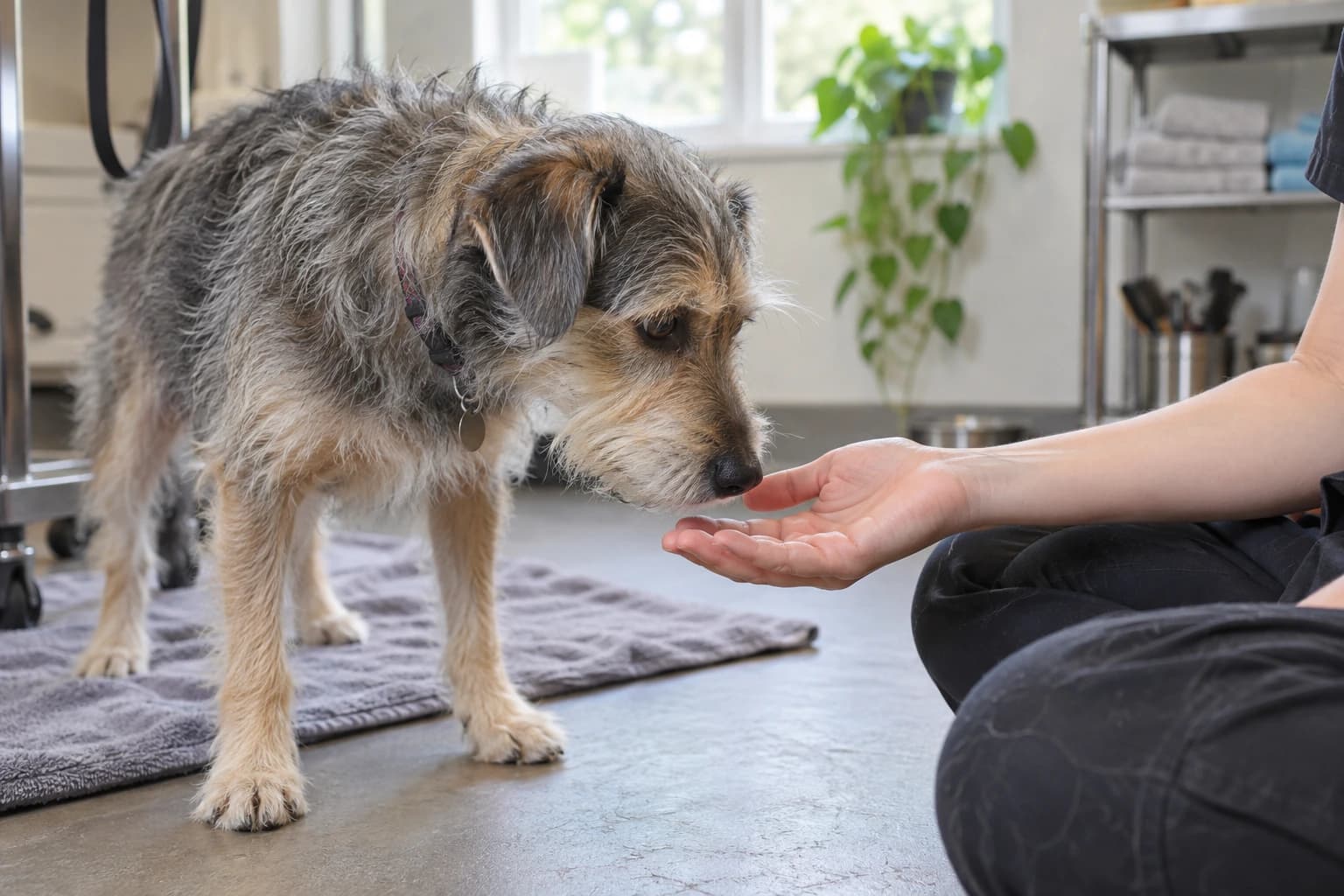
Touch for treats. Show the tool and treat. Treat when your dog sniffs it. Touch them briefly with it and treat. Then one stroke, then two. Only move to the next step when your dog is relaxed at the current one.
Let them opt in. Hold out the brush. If your dog moves toward it, brush briefly. If they move away, take a break. Dogs that feel they have some control often settle faster.
Practice stillness. Reward your dog for holding still during play, starting with a second or two and building up. That skill carries straight over to grooming.
Give them something to do. A lick mat with a smear of something tasty, or a puzzle toy, keeps many dogs busy while you work on feet or brushing.
Set up a good spot
Pick one consistent place to groom. It should have decent lighting, a non-slip surface, a comfortable temperature, and not too much going on around it. Doing things in the same order each time also helps, because dogs like knowing what comes next.
Adjust for age
Puppies. Start early with very short sessions, well under a minute at first. Handle paws, ears, and mouth during play so being touched feels normal.
Adult dogs. If your dog already dislikes grooming, start below the point where they get uncomfortable and build slowly. One good experience at a time.
Seniors. Our older dogs deserve extra tenderness. Keep sessions shorter, use soft tools, keep them warm, and be gentle with stiff joints.
Service-by-service tips
- Brushing: Start with petting, then move to the brush. Brush their favorite spots first and stop before they've had enough.
- Nails: One nail, one good treat. It's fine to do a paw or even a single nail a day.
- Baths: Check the water is comfortably warm, keep water out of the face, and have a towel ready.
Read your dog
Signs your dog is comfortable: loose body, soft eyes, leaning into the brush.
Signs they need a break: turning the head away, lip licking, yawning, trying to move off, or showing the whites of the eyes. When you see these, pause and give them a moment. Listening to your dog builds trust, and pushing through teaches them that grooming is something to dread.
Keep it going
Short, regular sessions work better than occasional long ones. Progress isn't always steady, and that's okay. If your dog has an off day, go back a step, keep it easy, and try again tomorrow. The goal isn't a perfect groom every time. It's a dog who feels safe and loved while being cared for, and that's worth every bit of patience.
If you're in the East Bay and want help making grooming easier for your dog, get in touch.