Pet Health
Wildfire Smoke and Your Dog: Walks, Air, and Coat Care on Smoky Days
How to decide when the air is too bad for a walk, which dogs are most at risk, the signs that mean call your vet, and how to get smoke and ash out of your dog's coat afterward.
Nat · September 21, 2026 · 5 min read
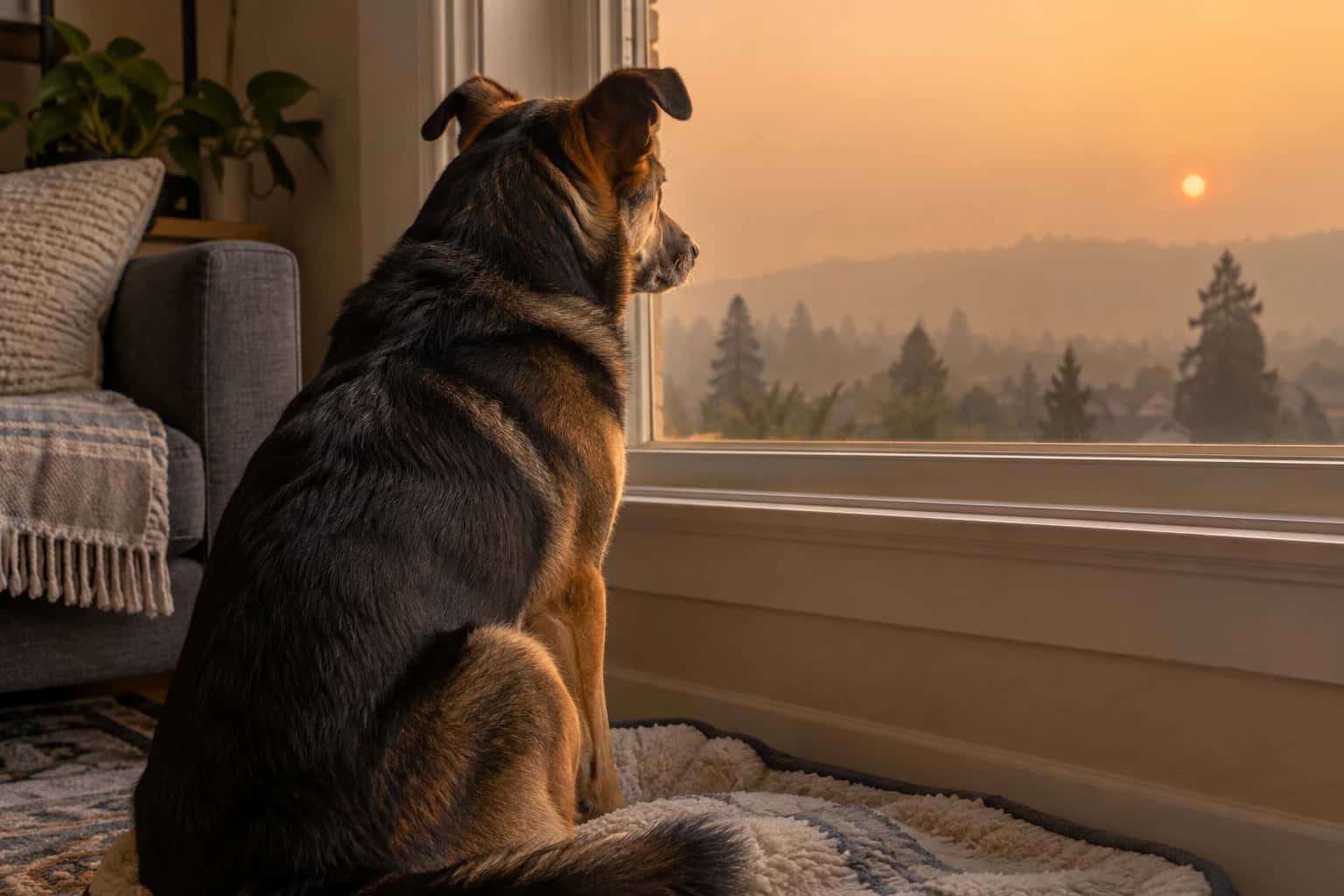
Late summer and fall in the Bay Area can bring days when the sky turns orange and everything smells like a campfire. Even when the fires are far away, the smoke can settle over the East Bay for days. Our dogs breathe the same air we do, and they can't tell us when their throat feels scratchy, so it's on us to plan for them.
Check the air before you go out
Smoke isn't always obvious, so look at the Air Quality Index (AQI) before walks. AirNow.gov and the Bay Area Air District's Spare the Air alerts are good places to check, and many weather apps show AQI too.
A rough guide for dogs, based on the same categories used for people:
- 0 to 50 (good) and 51 to 100 (moderate): normal walks for most dogs. Keep an eye on sensitive dogs at the top of that range.
- 101 to 150 (unhealthy for sensitive groups): shorter, gentler walks for everyone. Sensitive dogs should stick to quick potty breaks.
- 151 and above (unhealthy or worse): potty breaks only for all dogs, and keep them brief. Save play and exercise for inside.
Numbers change over a day, so check again before each outing.
Keep them inside with the windows closed
On bad air days, the best place for your dog is indoors with the windows and doors shut. A few things help:
- Run a HEPA air purifier in the room where your dog spends the most time. A purifier sized for that room does far more than one small unit trying to cover the whole house. Avoid ozone generators and purifiers that release ozone, since ozone irritates lungs too.
- Set your AC or car air to recirculate so you're not pulling outside air in.
- Watch the heat. A closed-up house on a warm afternoon gets stuffy fast. Use fans or AC and keep fresh water out.
- Swap walks for indoor games like a puzzle feeder or treats hidden around the house.
Dogs who need extra care
Smoke is hard on every dog, but some are more vulnerable and need a more cautious plan:
- Puppies, whose lungs are still developing.
- Senior dogs.
- Flat-faced breeds such as Pugs, French Bulldogs, Bulldogs, Boston Terriers, and Shih Tzus, who already work harder to breathe.
- Dogs with heart or lung conditions, including collapsing trachea, chronic bronchitis, or heart disease.
If your dog is in one of these groups, keep outings to the bare minimum once the air is unhealthy for sensitive groups, and ask your vet ahead of fire season whether there's anything specific they'd like you to do or watch for.
Signs to call your vet
Call your vet if you notice any of these during or after smoky days:
- Coughing or gagging
- Wheezing, or breathing that looks fast or labored
- Red, watery, or squinty eyes, or pawing at the eyes
- Lethargy, or seeming unusually tired or unwilling to move
- Less interest in food or water
Go to an emergency vet right away if your dog is struggling to breathe, breathing with their mouth open while resting, has pale or bluish gums, or collapses. Don't wait to see if it passes.
Getting the smoke out of the coat
Smoke and ash settle into a dog's coat the same way they settle into your clothes, and a thick coat holds onto them for days while your dog licks their paws and fur. Ash can also irritate skin, especially on dogs with sensitive skin or allergies.
After a smoky outing, even a short one:
- Wipe down the coat with a damp cloth or unscented pet wipe, working with the direction of the fur. Get the legs, chest, and belly, where ash collects most.
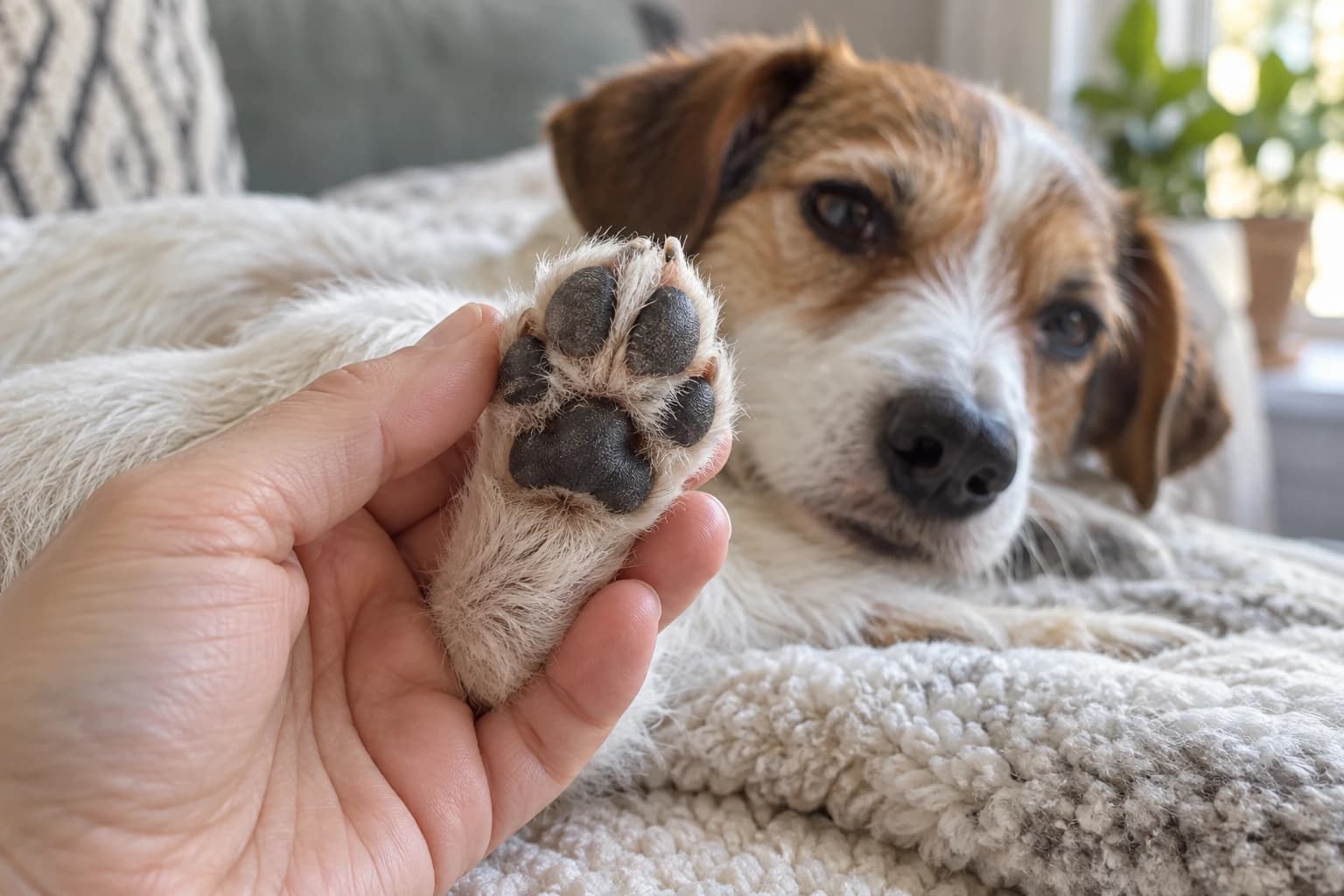
- Wipe the paws and between the toes before your dog comes inside or starts licking them.
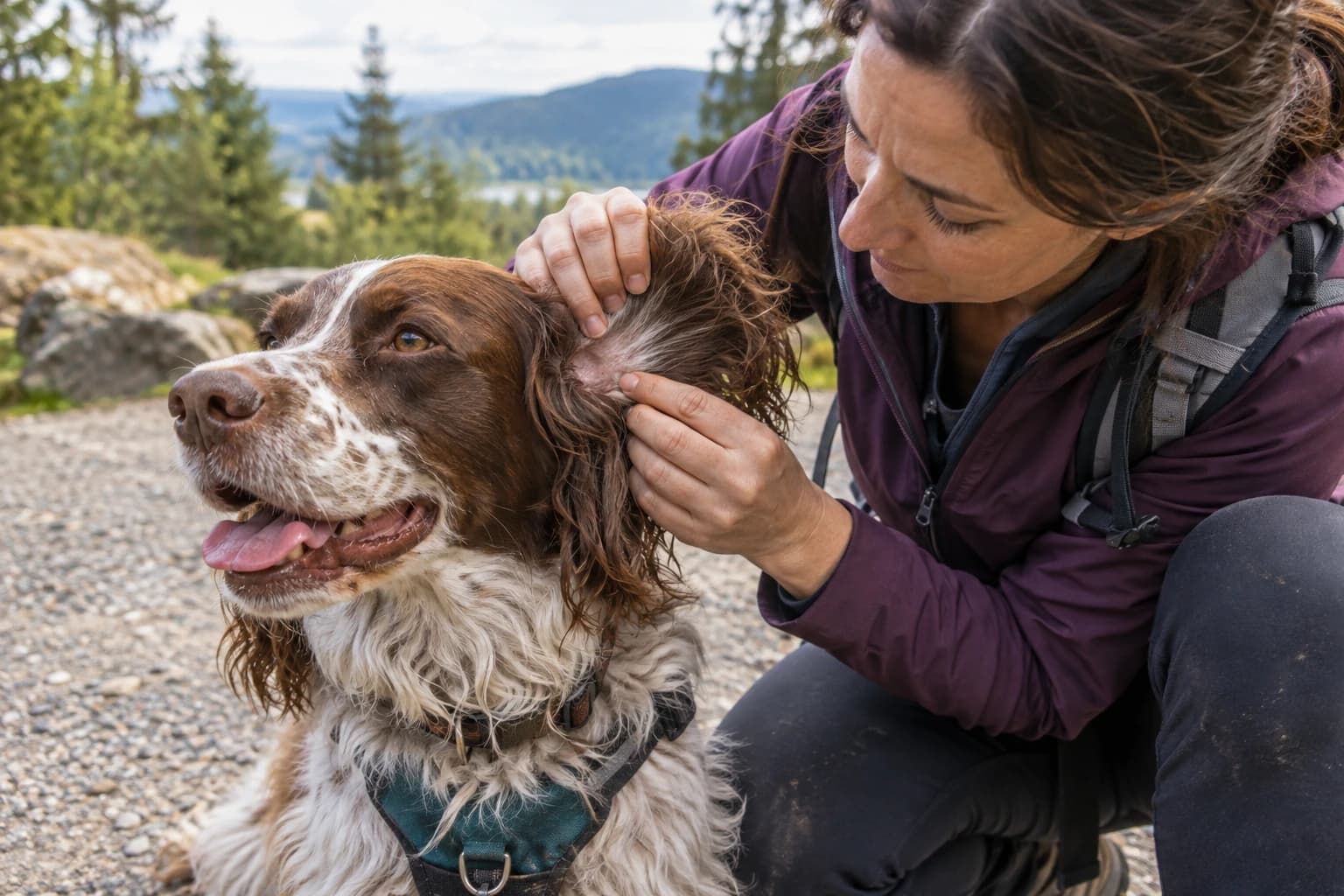
- Wipe around the face gently, keeping away from the eyes. If the eyes look irritated, call your vet rather than rinsing them yourself with anything they haven't recommended.
Once the air clears, or if there's visible ash on your dog, a proper bath is worth it. Use a dog shampoo, and rinse longer than you think you need to, because leftover shampoo and ash together are a recipe for itchy skin. Then dry thoroughly, all the way to the skin. A damp undercoat left for hours can lead to hot spots, and a thick coat can stay wet underneath while feeling dry on top. Brushing afterward lifts out loosened dust.
If a bath at home is a struggle, or the smoke smell has worked deep into a heavy coat, this is a good time for a professional bath and blow-dry.
If you need to leave
If a fire is close enough that evacuation is possible, keep a small bag ready by the door with a leash, a few days of food, any medications, and your dog's vet and vaccination records. Make sure your dog is wearing a collar with a current ID tag, and that their microchip is registered with your current phone number.
A simple smoky day routine
On mornings when the sky looks off, check the AQI before the leash comes out. If it's over 100, keep walks short and slow, or stick to potty breaks. Close the windows and turn on the purifier. Wipe paws and coat every time your dog comes back in. Keep an eye out for coughing, labored breathing, or red eyes, and call your vet if you see them. Once the air clears, give your dog a good bath and a thorough dry, and they'll be back to smelling like themselves.