Pet Health
Paw Care for Dogs: Pads, Paw Fur, and Hot Pavement
How to keep your dog's feet comfortable: trimming the fur between the pads, looking after dry or cracked pads, checking between the toes, and knowing when licking or limping needs a vet.
Nat · May 4, 2026 · 6 min read
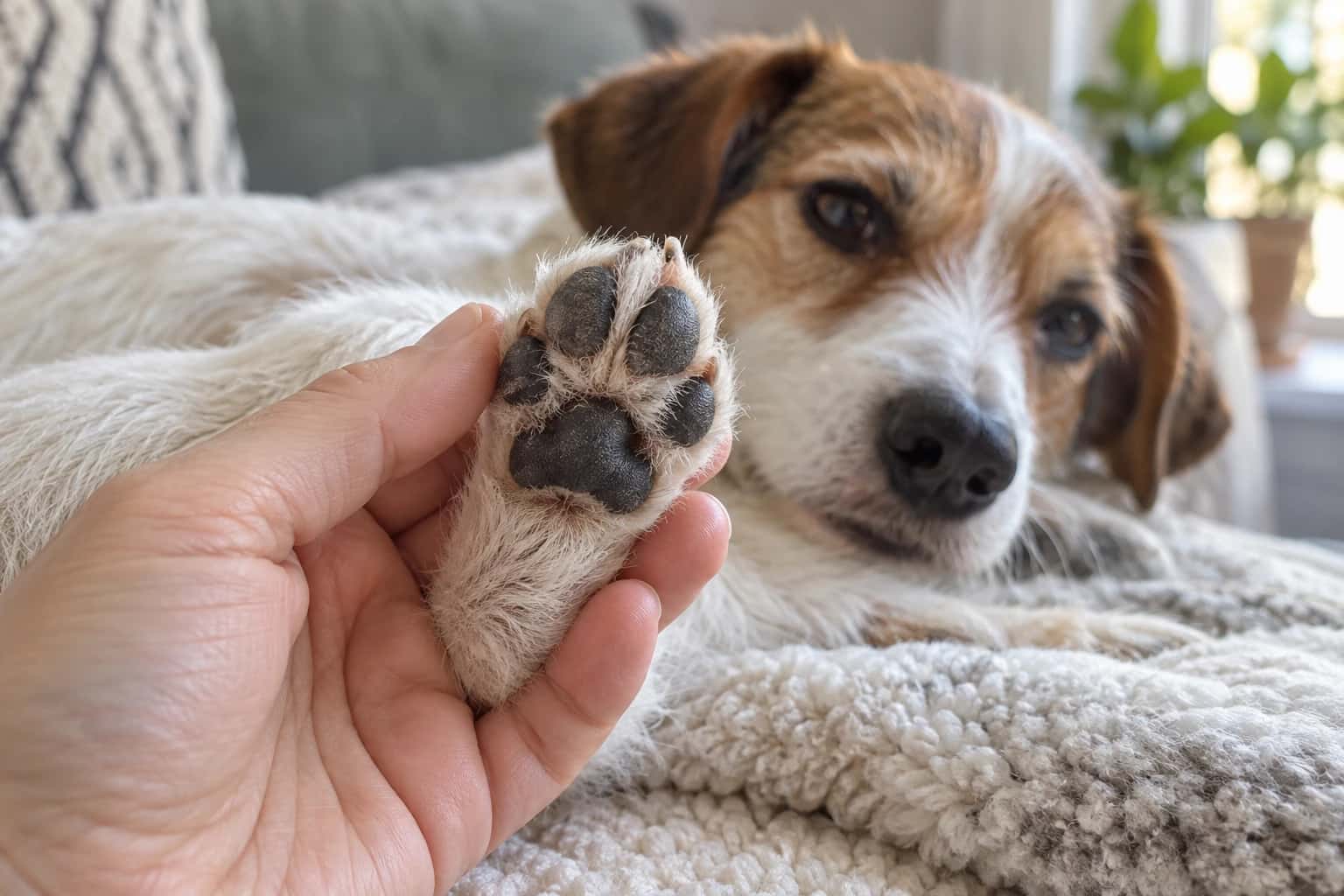
Our dogs' feet carry them everywhere: across the kitchen floor, up the trail, down to the beach and back. Paws are tough, but they aren't indestructible, and a lot of foot problems start small and easy to miss. A few minutes of attention every week or so goes a long way toward keeping your dog comfortable on their feet.
Trim the fur between the pads
Many dogs grow fur between and around their paw pads, and in some breeds it grows long enough to cover the pads completely. It's easy to overlook, but it causes more trouble than you'd think.
Traction. Paw pads are what give a dog grip. When fur grows over them, your dog is walking on hair instead, and on hardwood, tile, or laminate that can mean slipping and sliding. This matters most for seniors and dogs with stiff joints, who already find slick floors tricky.
Cleanliness. Long paw fur collects mud, sand, burrs, and little bits of everything. It holds on to moisture after walks and baths, which can leave feet smelling musty and keep the skin between the toes damp.
Foxtails. In the East Bay, foxtail season runs through late spring and summer. These grass seeds are shaped to work their way forward, and a tuft of paw fur gives them a place to catch. Short, tidy fur makes them easier to spot and easier to brush out before they cause trouble.
A tidy paw trim leaves the fur level with the pads, or just below, and neatens the outline of the foot. If you trim at home, use small rounded-tip scissors or a small trimmer, go slowly, and never dig down between the toes where the skin is thin. If your dog won't hold their foot still, this is a good job to leave for grooming day.
Dry or cracked pads
Healthy pads feel firm and a little rough, a bit like the sole of a well-worn shoe. They shouldn't be deeply cracked, peeling, or bleeding.
Pads can dry out from rough terrain, hot surfaces, lots of time on concrete, or frequent washing. Some dogs simply have drier pads than others. What I usually suggest:
- Rinse and fully dry paws after beach or muddy walks, including between the toes.
- Use a balm made for dogs if the pads feel dry. Many dogs lick their feet, so avoid human creams and lotions, since some contain ingredients that aren't safe to swallow.
- Keep an eye on how much time your dog spends on hard, hot, or rough ground.
Mild dryness is common. Deep cracks, pads that bleed, pads that seem to be peeling away, or dryness that doesn't improve are worth showing your vet. Very thick, crusty, or overgrown pads can also be linked to underlying health conditions, so don't just keep moisturizing those.
Hot pavement in summer
East Bay summers are dry, and on sunny days sidewalks, asphalt, and parking lots can get much hotter than the air. Dogs can burn their pads on surfaces that feel fine to us through our shoes.
The simplest check is the back-of-hand test. Press the back of your hand flat on the pavement for about seven seconds. If it's too hot for you to keep it there comfortably, it's too hot for your dog's feet.
On hot days:
- Walk early in the morning or in the evening when the ground has cooled.
- Stick to grass, dirt trails, and shade where you can.
- Keep outings on pavement short, and don't make your dog wait on hot asphalt at crossings or in parking lots.
Signs of burned pads include limping, refusing to walk, licking the feet, and pads that look red, darker than usual, blistered, or have loose flaps of skin. Burns can be painful and can get infected, so call your vet if you see any of these.
Check between the toes
When you pick up your dog's foot, spread the toes gently and look between them and between the pads. You're looking for:
- Foxtails, burrs, splinters, or small stones
- Cuts or scrapes
- Redness, swelling, or a moist, irritated patch
- Lumps or bumps between the toes
- A strong or yeasty smell
- Reddish-brown staining on light fur, which often shows a dog has been licking that spot a lot
While you're there, check the nails and dewclaws for cracks, splits, or nails that have grown long enough to curl. Doing this regularly, even when nothing seems wrong, gets your dog used to having their feet handled, which makes grooming and vet visits easier too. A treat per paw helps.
When licking or limping needs a vet
Dogs lick their feet a bit as part of normal cleaning. It's the change that tells you something is up. Call your vet if you notice:
- Licking or chewing at one foot that keeps going, or suddenly starts
- Limping that lasts more than a day, or any limping with swelling, heat, or obvious pain
- A cut that is deep, won't stop bleeding, or is on the pad itself
- Swelling or a lump between the toes, especially one that appears after a walk
- Redness, discharge, or a bad smell
- A torn or broken nail
- Any chance a foxtail has worked its way into the foot
Foxtails deserve a special mention. Once one has burrowed into the skin between the toes, it won't come back out on its own and can keep moving deeper. If your dog is suddenly licking hard at one paw after a walk in dry grass, don't wait it out.
Licking both feet over time can also point to allergies or skin issues, which is something your vet can help sort out. Please don't give pain medication meant for people, as some are dangerous for dogs.
Small habits, happy feet
Most paw care is just noticing. Look at the feet after walks, keep the fur tidy, protect them from hot ground, and pay attention when something changes. When I groom, I always check the pads and between the toes and trim the paw fur, and I'll mention anything that looks like it needs a closer look.