Pet Health
Checking Your Dog for Ticks After an East Bay Hike
Where ticks hide on a dog, how to remove one safely with fine tweezers or a tick tool, and what to watch for in the weeks after.
Nat · June 15, 2026 · 5 min read
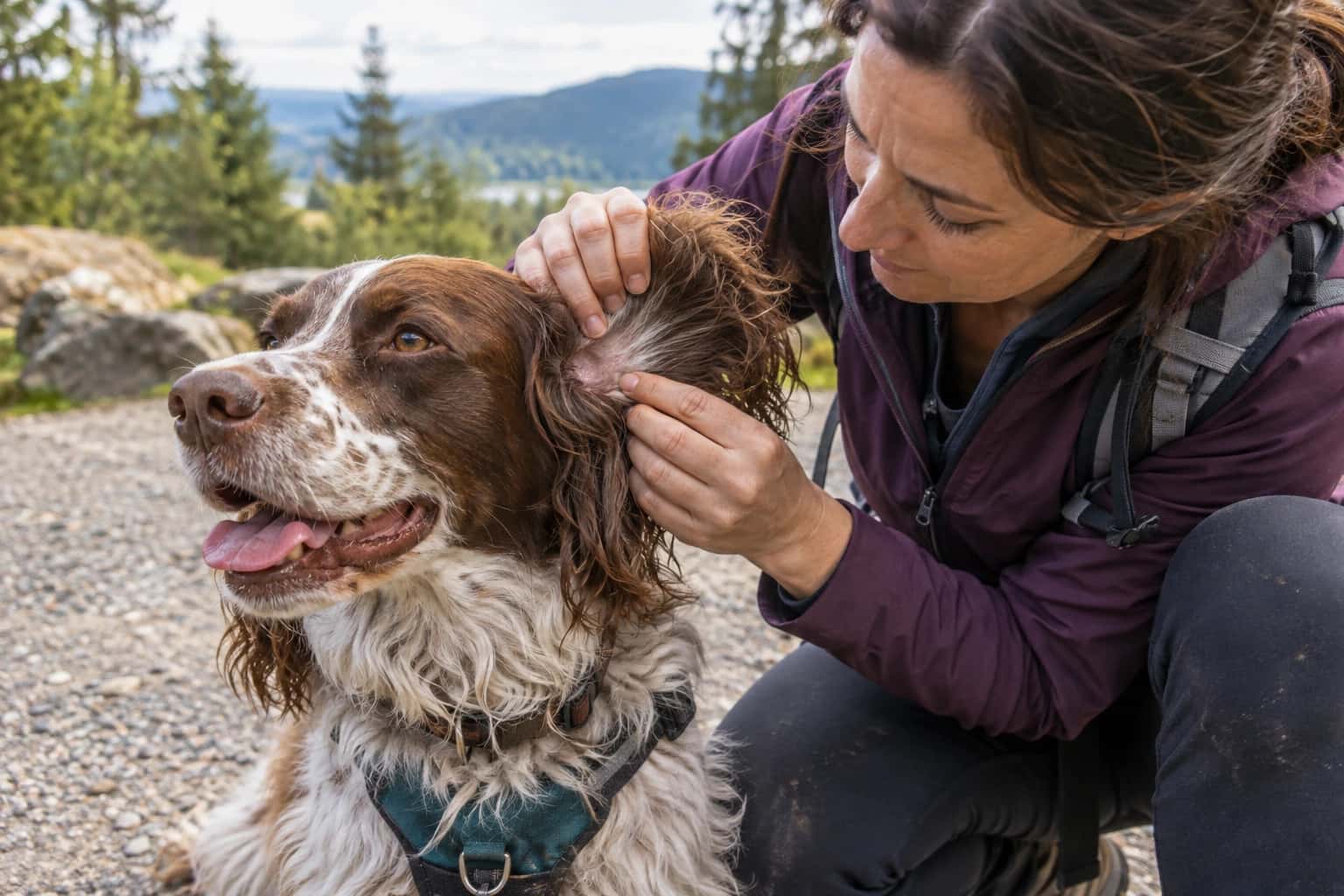
Some of the best dog walks around here are the ones where you come home tired and a little dusty: the trails at Tilden, Briones, or Redwood, a loop around Lake Chabot, a long day at Del Valle. Those same grassy edges and brushy trails are where ticks wait. A tick check after a hike takes a few minutes, and it's worth making a habit, because the sooner a tick comes off, the lower the chance it passes anything on.
Here's where to check and how to handle one calmly.
Why it's worth doing every time
Ticks don't jump or fly. They sit on the tips of grass and brush along the trail and grab on as a dog brushes past, then crawl around looking for a good place to attach. The Bay Area has a few tick species, including the western blacklegged tick, which can carry Lyme disease. Ticks here aren't only a summer problem either. They can be active in the cooler, wetter months too.
A tick that's just crawling on the coat is easy to brush off. One that has been attached for a day or more is more of a concern, which is why checking the same day matters.
Where to look
Run your hands slowly over your whole dog, feeling for small bumps, then part the coat and look. Ticks can be as small as a poppy seed before they feed, so good light helps. Pay special attention to:
- Ears: inside the flap, the folds at the base, and around the edges.
- Head and face: around the eyes, eyelids, and muzzle.
- Neck: under the collar or harness, where ticks can hide unnoticed.
- Armpits and groin: warm, thin-skinned spots ticks like.
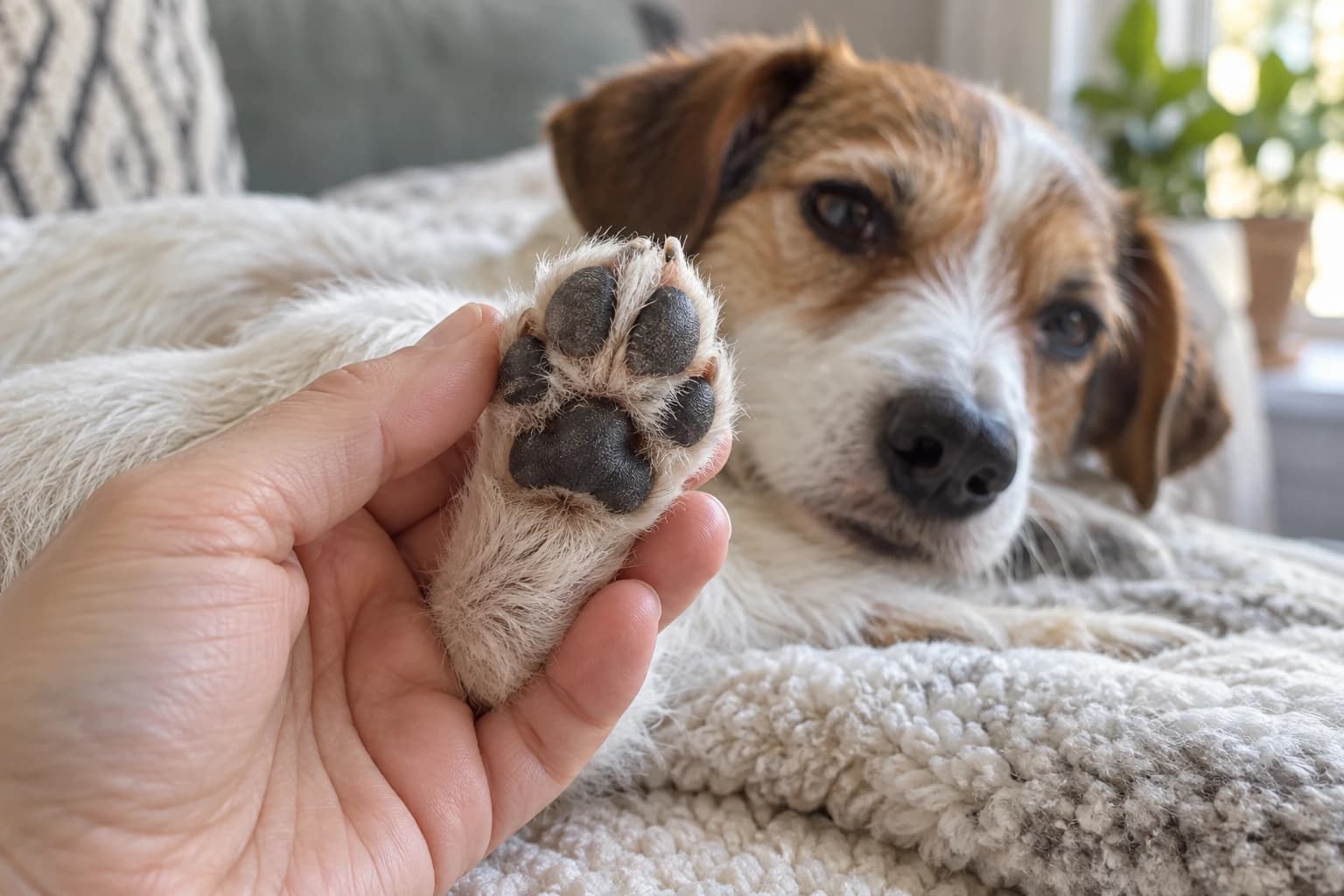
- Feet: between the toes and pads.
- Under the tail and around the bottom.
- Belly and chest, especially on dogs who crash through tall grass.
On long or thick coats, work in sections with a fine comb. Check yourself as well. Ticks don't only ride home on dogs.
Before you pull anything, look closely. Skin tags, small warts, and nipples can look surprisingly like a tick. A tick has legs near the skin, and an engorged one looks like a smooth grey or tan bean.
How to remove a tick safely
You need fine-tipped tweezers or a tick removal tool, the kind with a slotted hook you slide under the tick. Regular blunt household tweezers tend to squeeze the body, which you want to avoid. Wearing gloves is a good idea.
- Part the fur so you can see where the tick meets the skin.
- Grip as close to the skin as you can, getting the head and mouthparts, not the swollen body.
- Pull straight out with slow, steady pressure. Don't twist, jerk, or crush it. With a tick tool, slide it under the tick and lift or turn gently as the tool's directions say.
- Clean the spot with soap and water or rubbing alcohol, and wash your hands.
What not to do: don't burn the tick, and don't smother it with petroleum jelly, nail polish, essential oils, or anything else. These don't make it let go, they delay getting it off, and they can hurt your dog.
If a small piece of the mouthparts stays in the skin, try to lift it out gently with the tweezers. If you can't do it easily, leave it alone rather than digging. The skin will usually push it out as it heals. Call your vet if the spot gets red, swollen, or sore.
Keep the tick
Drop the tick into a small sealed container or bag with a little rubbing alcohol and write the date on it. If your dog gets sick in the following weeks, your vet may want to see it. Don't crush a tick with your fingers.
What to watch for afterward
A small red bump where the tick was is common for a few days. After that, keep an eye on your dog for the next several weeks, since tick-borne illnesses can take a while to show up. Call your vet if you notice:
- Tiredness or low energy that isn't like your dog
- Not wanting to eat
- Fever, or feeling hot to the touch
- Limping, especially if it moves from leg to leg
- Swollen or painful joints
- Swollen lymph nodes
- A bite spot that gets bigger, redder, or oozes
Let your vet know when and where the tick was found. It helps them decide what to look for.
Prevention is a conversation with your vet
There are good tick prevention options for dogs, and which one is right depends on your dog's age, health, and where you hike. Your vet is the person to ask. They can also tell you whether a Lyme vaccine makes sense for your dog. Please don't use products made for a different species or size of animal. Some products that are safe for dogs are dangerous to cats, so be careful in a home with both.
On the trail, staying in the middle of the path and away from tall grass and brush cuts down on how many ticks your dog picks up. It won't stop all of them, so the check at home still matters.
Make it part of the walk
The easiest way to not forget is to make the tick check part of coming home. Towel off the feet, run your hands over your dog, look in the ears. Most dogs just take it as extra attention.