Pet Health
Poison Oak, Dogs, and East Bay Trails: How to Keep the Oil Off Everyone
How to recognize poison oak, why your dog can bring it home to you, and how to wash your dog and their gear after a hike without spreading the oil.
Nat · April 20, 2026 · 5 min read
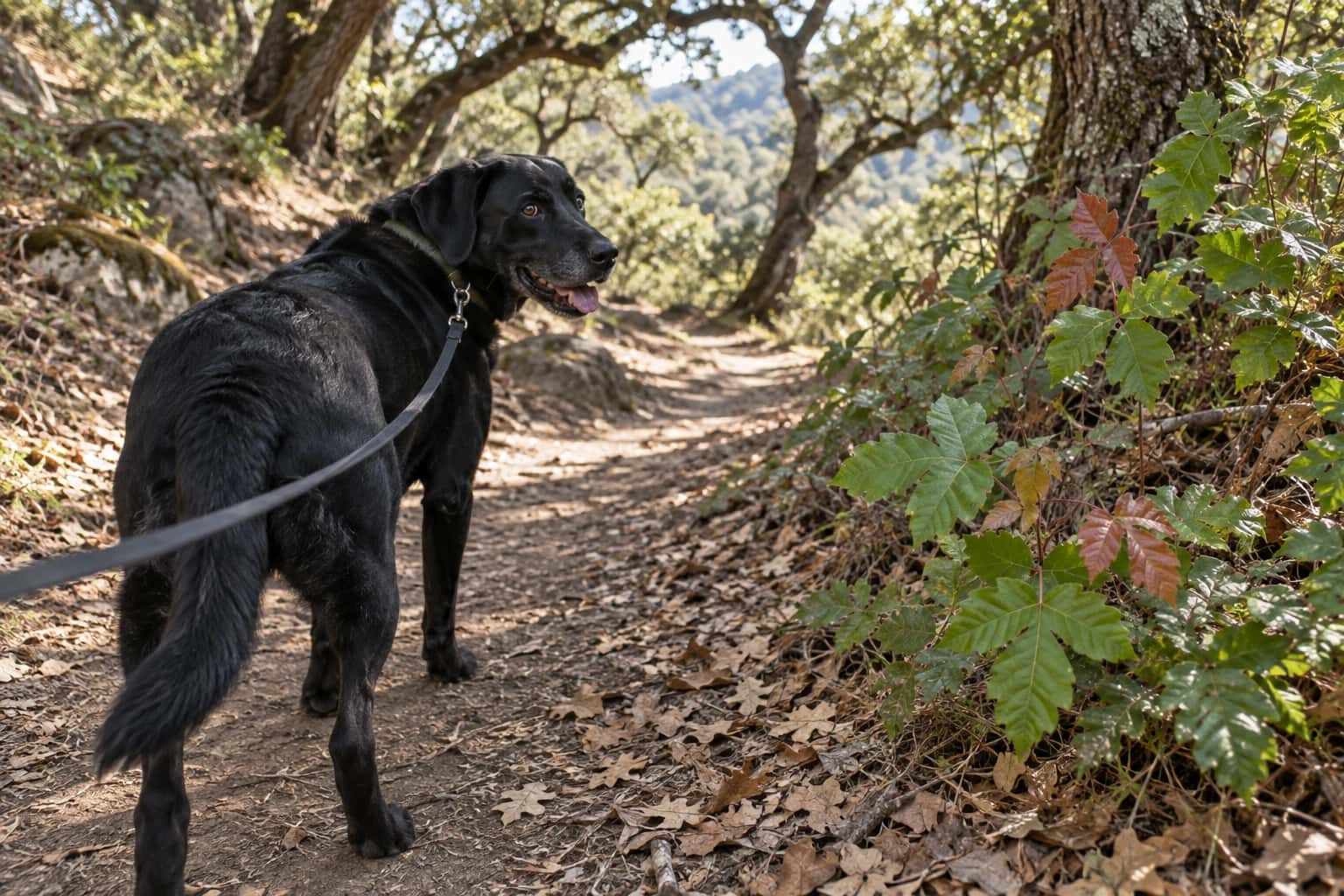
If you hike with your dog in the East Bay hills, you've walked past poison oak, probably a lot of it. It grows along trail edges and in the understory all over Tilden, Briones, Redwood, and Sibley, and in plenty of smaller parks and open space too. Dogs don't stay on the trail. They push through brush, roll in leaf litter, and come back to you happy and covered in whatever they found.
Dogs rarely react to poison oak themselves. The catch is that they carry it home to you.
Why your dog is the problem, not the patient
Poison oak's rash comes from an oil called urushiol, which is on the leaves, stems, and roots. When your dog brushes through a plant, the oil smears onto their coat. Their fur keeps it away from their skin, which is why most dogs don't get a rash. But the oil sits on the hair, and it stays active for a long time.
Then you pet your dog, towel them off, or let them up on the couch, and the oil moves to your hands and your furniture.
How to recognize it
The old saying "leaves of three, let it be" is a good start. Poison oak has leaflets in groups of three, and the middle leaflet usually sits on a longer stalk than the two side ones. The edges are often lobed or wavy, a bit like an oak leaf. Beyond that, it changes a lot through the year:
- Spring: new leaves are often shiny and can be bright green or tinged red. This is when many people get caught out.
- Summer: leaves are green and may look duller. It grows as a low shrub, a thicket, or a vine climbing up trees.
- Fall: leaves turn red, orange, and yellow, and it's pretty enough that people sometimes pick it.
- Winter: the plant drops its leaves and you're left with bare, woody stems. Those stems still carry the oil. Winter is when dogs crash through what looks like dead sticks and bring it home anyway.
If you're not sure, assume it is, and keep your dog on leash in brushy sections.
Bathing your dog after a hike
If you know or suspect your dog went through poison oak, a bath before they settle in the house is the best way to stop the spread. Do it as soon as you can after you get home.
- Protect yourself first. Wear rubber or disposable gloves and long sleeves. Anything that touches your dog before the bath can pick up oil.
- Bathe outside or in a tub that's easy to clean. Keep your dog off furniture and bedding until they're washed.
- Wet the coat thoroughly with cool to lukewarm water.
- Wash with dog shampoo, working it all the way down to the skin. Pay extra attention to the legs, chest, belly, face, and anywhere your dog pushed through brush. The oil sits on the coat, so a quick surface wash isn't enough.
- A grease-cutting dish soap can help break down the oil, but it's harsh on a dog's skin. If you use it, use a small amount on the areas most likely to have touched the plant, keep it away from the eyes, and follow with a regular dog shampoo. Don't make it a habit.
- Rinse well, then rinse again. Leftover soap irritates the skin, and you want the oil rinsed away with it.
- Towel dry with a towel that goes straight into the wash afterward.
Then wash your own hands and arms with soap and cool water, even if you wore gloves.
Wash the gear too
Urushiol clings to anything your dog touched. After a poison oak hike, wash:
- The leash, collar, and harness (warm soapy water for the ones you can't put in the machine)
- Towels used to dry your dog
- Your dog's bed or blanket if they got on it before the bath
- Car seat covers or blankets from the drive home
- Your own hiking clothes, separately from the rest of the laundry
Wipe down hard surfaces your dog rubbed against. Oil left on gear can give someone a rash days later.
Tell your groomer
If your dog has been in poison oak recently, let your groomer know, even if you've already bathed them, so they can wear gloves and wash with that in mind. If you mention it when you book, I'll plan the bath around it. Book a groom a few days after a hike rather than the same day if you can, and give your dog a rinse at home first.
When your dog does react
Dogs aren't completely immune. Skin where the hair is thin, like the belly, inner thighs, armpits, and muzzle, can sometimes react, especially in short-coated dogs. Watch for:
- Red, bumpy, or blistered skin in sparse-haired areas
- Itching, licking, or rubbing that starts a day or two after a hike
- Swelling around the face or eyes
If you see any of these, call your vet. A rash in these areas can also be something else, like another plant, an allergy, or insect bites, so it's worth having it looked at rather than guessing. Please don't put creams or medications meant for people on your dog without your vet's advice.
A routine for hiking season
The easiest way to live with poison oak is to make a few things automatic. Keep a pair of gloves, an old towel, and a bag for dirty gear in the car. Put a washable blanket down for your dog, and handle them with gloves until the bath. Bathe them when you get home after any hike where they left the trail, and put the leash and collar in to wash at the same time. Once it's routine, it takes about as long as the drive home.