Behavior & Training
Managing Grooming Anxiety in Dogs: Tips and Tricks
Why some dogs fear grooming, how to spot the signs, and step-by-step ways to work on nail trims, dryers, and clippers.
Nat · December 1, 2025 · 5 min read

Plenty of dogs know it's grooming day before anyone says a word. If your dog trembles or hides, it can break your heart a little, and you might even wonder if you're doing the right thing by having them groomed at all. You are. Keeping them clean and free of mats is part of caring for them, and grooming anxiety, whether it's mild nerves or real panic, almost always has a cause. With patience and kindness it usually gets better.
Where the fear comes from
- A bad past experience: a painful nail trim, rough handling, or a scary moment at a groomer or vet.
- Too much at once: loud dryers and clippers, strange smells, being touched in sensitive spots.
- Little handling early on: dogs that weren't handled much as puppies often find grooming strange and uncomfortable.
- Not knowing what's coming: unfamiliar people, places, and routines, and the feeling of losing control.
Reading the signs
Mild: trembling, panting when not hot, yawning, lip licking, trying to hide.
Moderate: whining, freezing, drooling, tucked tail, trying to escape.
Severe: growling, snapping, or biting out of fear, losing bladder control, or completely shutting down.
Mild signs mean slow down and give a break. Severe signs mean stop and rethink the plan, and it's worth talking to your vet.
Working on it before the appointment
Start a couple of weeks ahead if you can, with short daily sessions.
Sounds. Play recordings of clippers and dryers at very low volume during meals, and raise it gradually. The goal is a dog who doesn't react.
Tools. Show a tool and treat. Touch your dog with it, switched off, and treat. Build up to brief grooming-like motions. Only move on when your dog is relaxed.
Handling. A few minutes a day touching paws, looking in ears, lifting lips, and handling the tail, with rewards for staying calm.
Keep every session short and end before your dog gets worried.
On the day
A walk or some play beforehand helps burn off nervous energy. It's hard not to feel nervous on your dog's behalf, but try to keep your manner calm and upbeat. Long, emotional goodbyes tend to make anxious dogs more anxious, so a cheerful pat and a "see you soon" is the kindest send-off.
If your dog's anxiety is severe, talk to your vet ahead of time about options. Don't try supplements, calming products, or medications without their advice.
How I approach anxious dogs
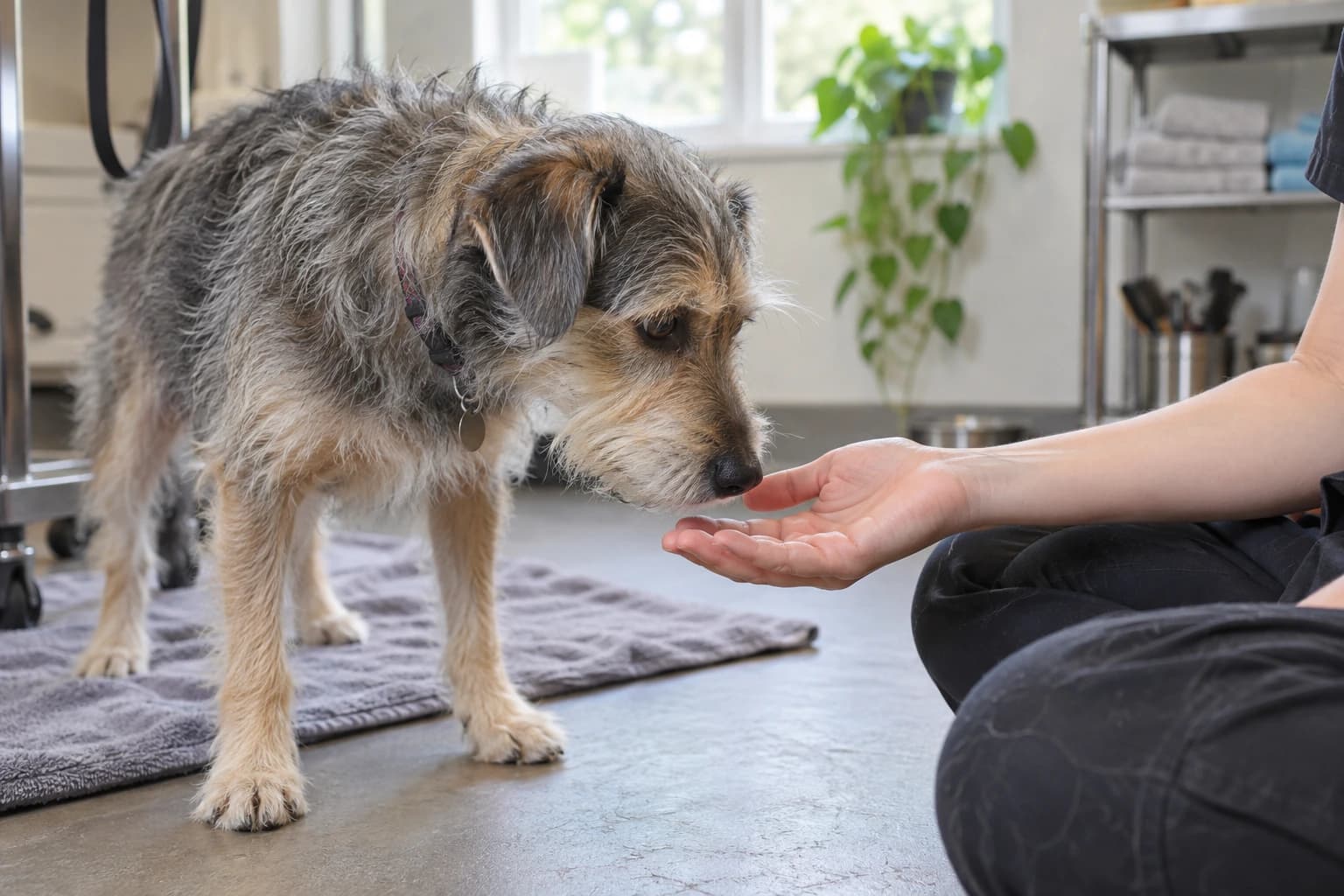
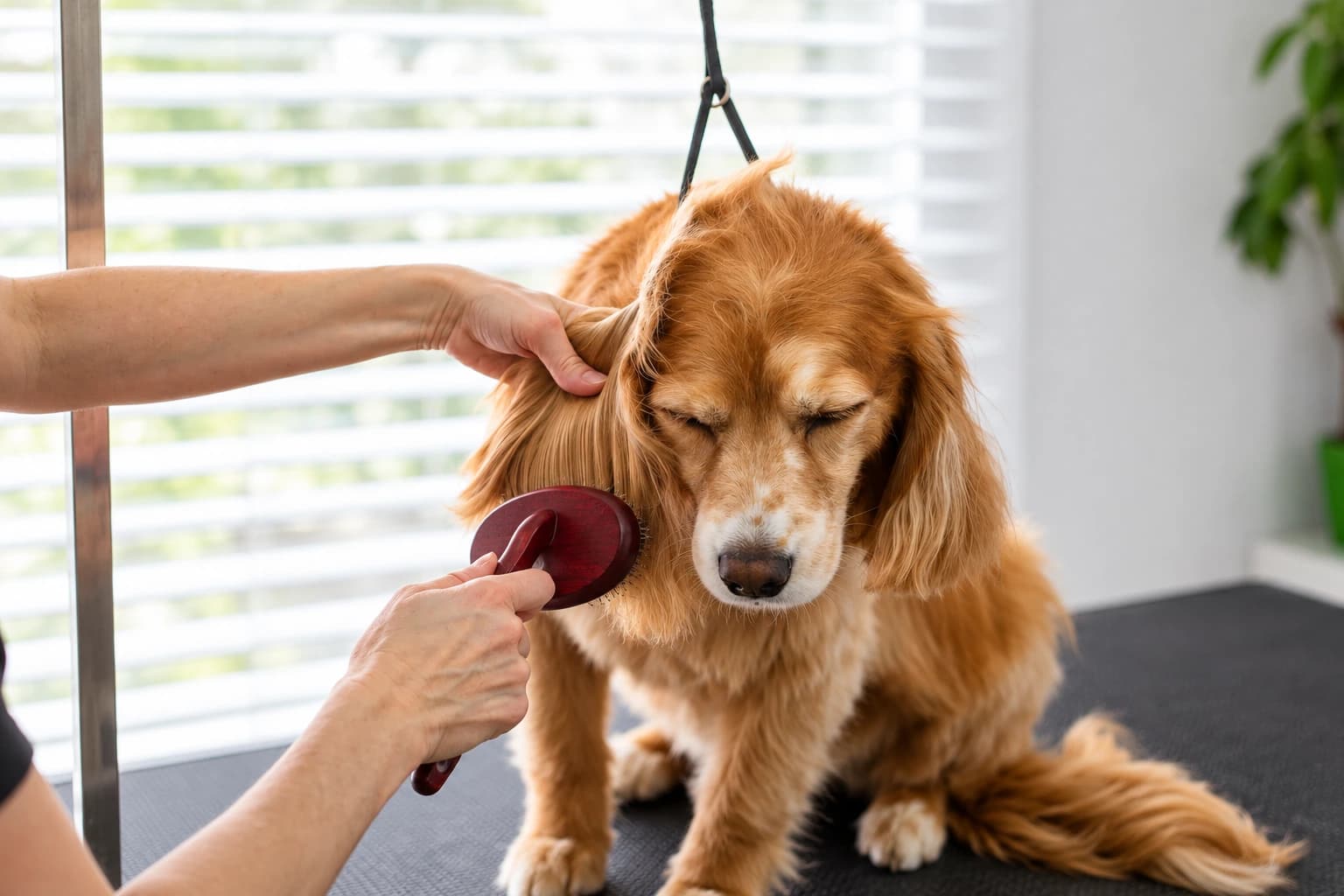
I start with whatever the dog finds least threatening, take breaks between tasks, and end on a good note. For a very nervous dog, a first visit might be nothing more than gentle brushing, treats, a paw touch, and a lot of quiet reassurance. That's a real success, and I celebrate it.
Predictability matters a lot. The same groomer, the same order of tasks, and the same rewards each time help a dog learn what to expect. A quiet setting with no other dogs around helps too.
Specific triggers
Nail trims
Work through this over several weeks, moving on only when your dog is comfortable:
- Touch paws during cuddle time.
- Hold paws a little longer.
- Touch individual nails.
- Tap nails with the clippers.
- Clip one nail, then treat.
Some dogs do better with a grinder than clippers, or with a scratch board that lets them file their own nails. Doing one nail a day is fine.
The dryer
- Dryer visible, treats.
- Dryer on across the room, treats.
- Airflow from a distance, treats.
- Gradually bring it closer, on a low setting.
For dogs that really can't cope, a thorough towel dry and more time is better than forcing it.
Clippers
Start with the clippers off, then let your dog feel the vibration without cutting, working on less sensitive areas first. Take frequent breaks.
Keeping progress going
Regular handling at home between appointments makes the biggest difference: a couple of minutes of brushing, checking ears, and touching paws as part of normal cuddle time. Some groomers also welcome short visits that are only treats and a hello, with no grooming.
When to see your vet
Talk to your vet if your dog panics despite gradual training, bites out of fear, can't be groomed at all, or could get hurt. They can check for pain or other medical issues that make handling hard and discuss whether medication might help. Needing that help isn't a failure.
What to tell your groomer
Share your dog's triggers, past experiences, what works at home, and any medical conditions. Ask how they handle anxious dogs and whether they'll go slowly, split services up, or do shorter sessions.
An anxious dog isn't being difficult or bad. They're scared, and they need time, gentleness, and people who love them in their corner. By reading this, you're already being that for your dog.
If you're in the East Bay and your dog struggles with grooming, get in touch.