Behavior & Training
How Regular Grooming Can Improve Your Dog's Behavior
Discomfort, handling, and routine all affect how a dog behaves. Here's how regular, gentle grooming can help, and where it can't.
Nat · November 17, 2025 · 4 min read
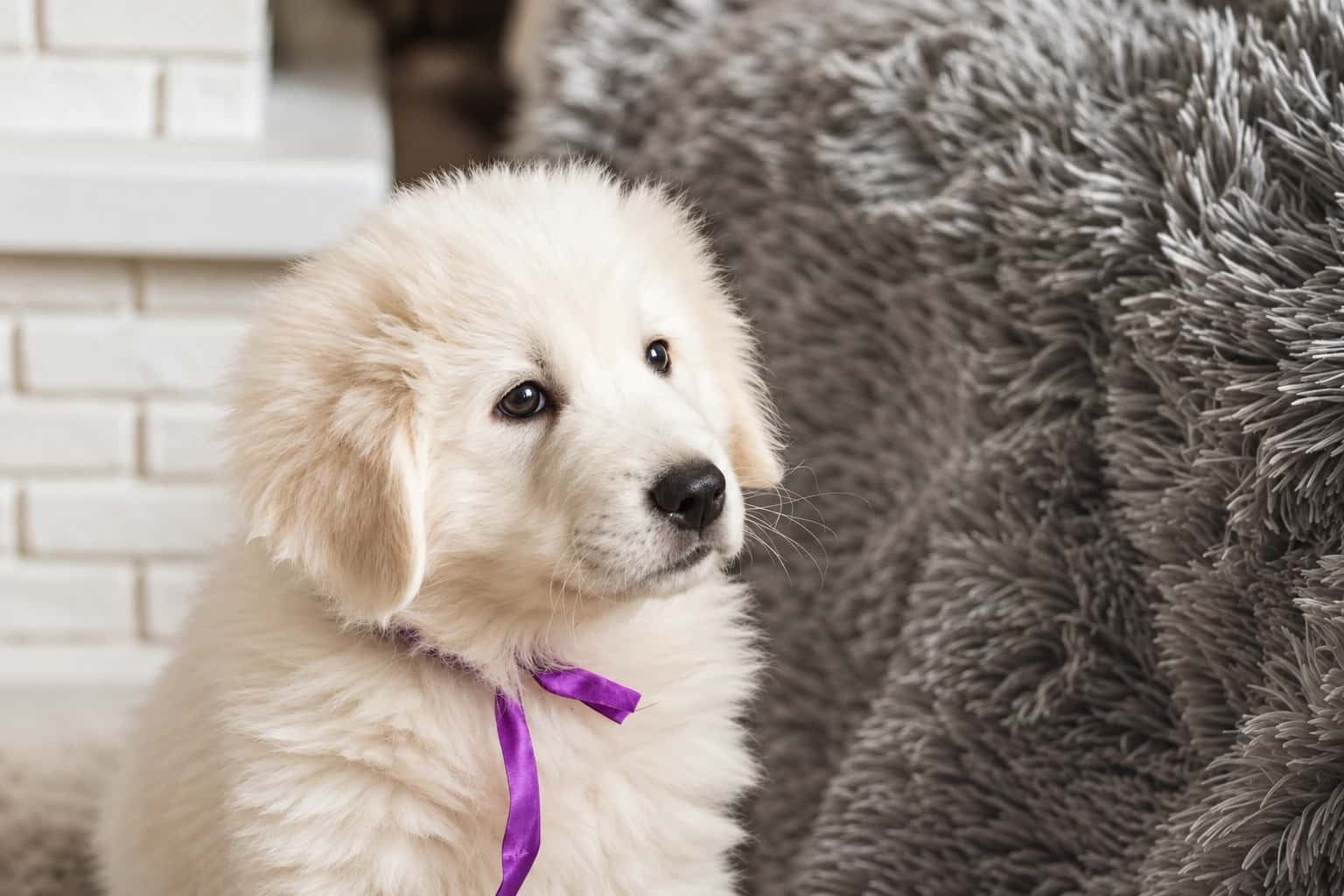
Owners often tell me their dog seems happier or calmer after a groom, and I love hearing it. Some of that is simply a dog who feels better. When you love your dog, you notice these things, and you want to understand what's behind them. Grooming won't fix every behavior problem, but it affects a dog's comfort, how they cope with being handled, and their routine, and all three show up in behavior.
Discomfort changes behavior
A dog who is uncomfortable can seem grumpy, jumpy, or withdrawn. Common grooming-related sources of discomfort:
- Mats pulling on the skin
- Overgrown nails changing how the dog walks
- Dirty ears or irritated skin
- Hair hanging over the eyes, which can make a dog more easily startled
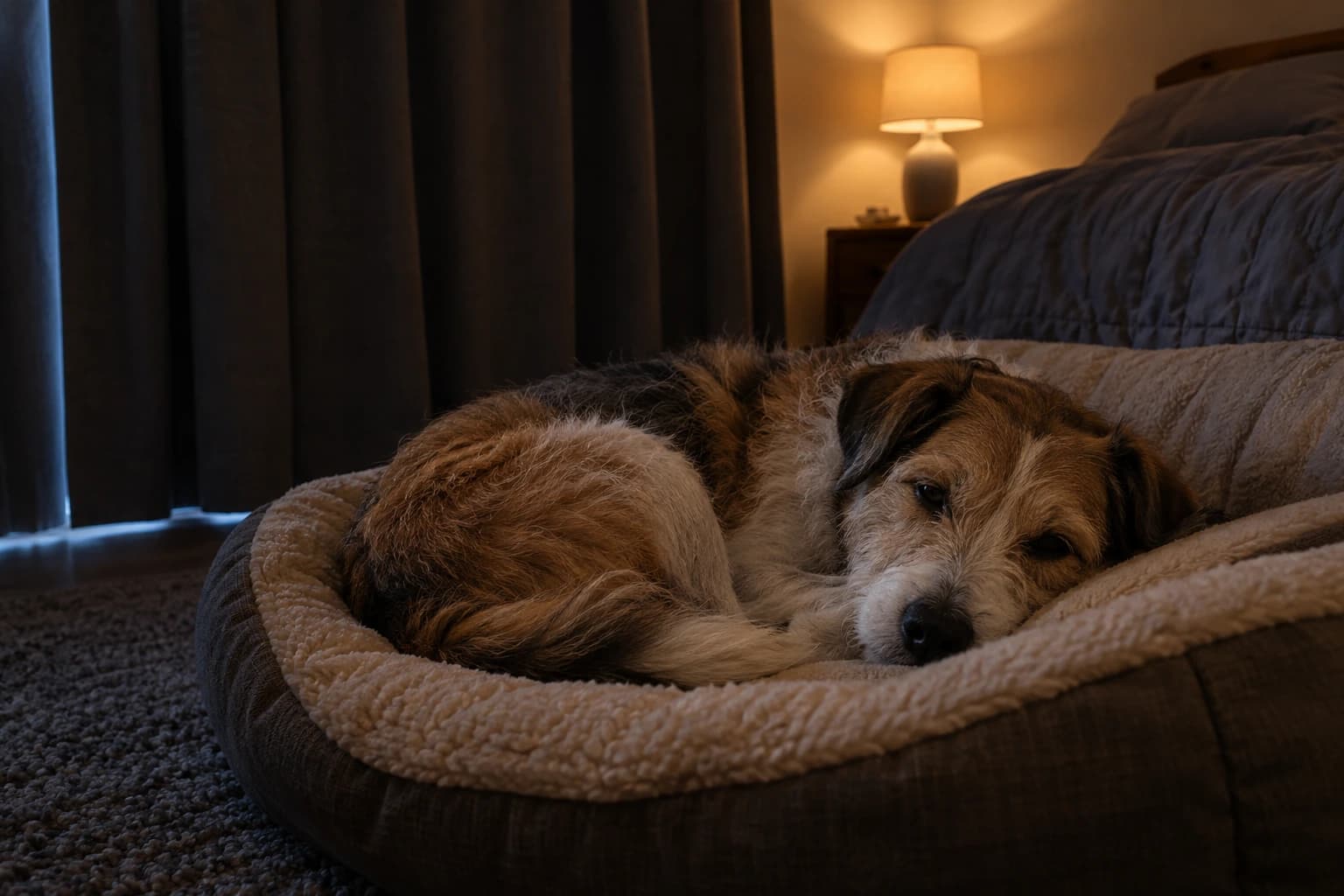
A dog who snaps when touched in one spot may be sore there. Keeping the coat, nails, and ears in good shape removes some of those sources. If your dog's behavior changes suddenly, or they react to being touched in a particular place, see your vet first. Pain from an injury or illness can look exactly like a behavior problem.
Handling gets easier with practice
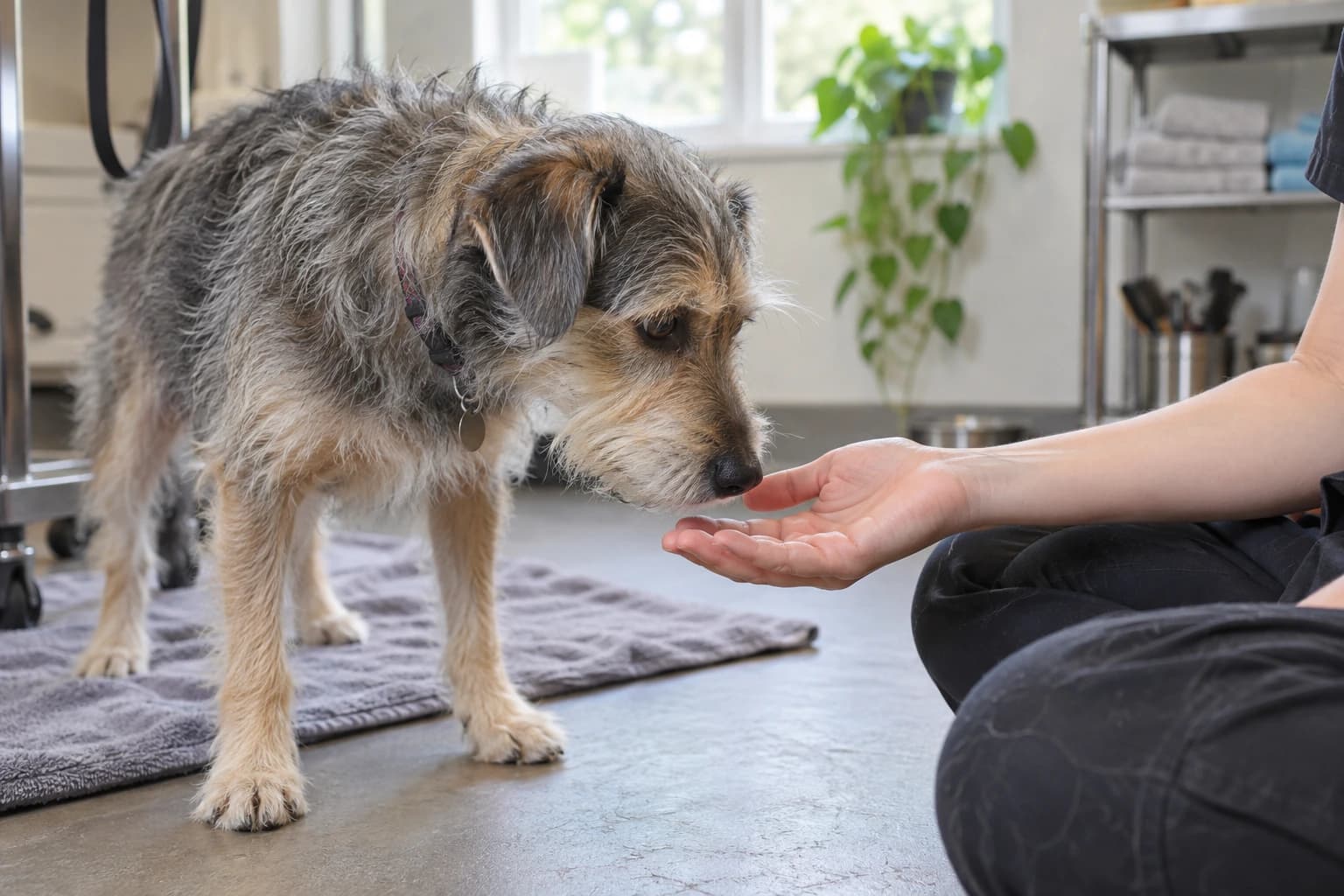
Dogs who are handled gently and regularly tend to get more comfortable with it. That pays off beyond grooming: vet exams, nail trims, and checking a paw after a walk all go more smoothly with a dog who is used to having their feet, ears, and mouth touched.
The key is that the experience is positive. Rough or rushed grooming can make a dog more fearful, not less. Gentle, patient handling tells your dog they're safe with you, and that trust carries over into the rest of their life.
Routine helps
Dogs do well with predictability. A regular grooming schedule, ideally with the same groomer, becomes familiar over time. In my experience, nervous dogs usually get noticeably more relaxed once they know me and know what to expect. That trust takes time and consistency to build, and watching a worried dog start to relax is one of my favorite parts of this work.
Puppies, adults, and seniors
- Puppies: Early, gentle handling sets them up for a lifetime of easier grooming. Keep sessions short and positive, and get them used to brushing, having their feet held, and the sound of clippers or a dryer.
- Adult dogs: It's not too late. Dogs who have had bad experiences can improve with gradual, patient work. Go slowly and don't push past what the dog can handle.
- Senior dogs: Keeping an older dog comfortable (short nails, no mats, clean skin) can make a real difference in how they move and how much they enjoy the day.
What you can do at home
Short, regular handling sessions between appointments help a lot:
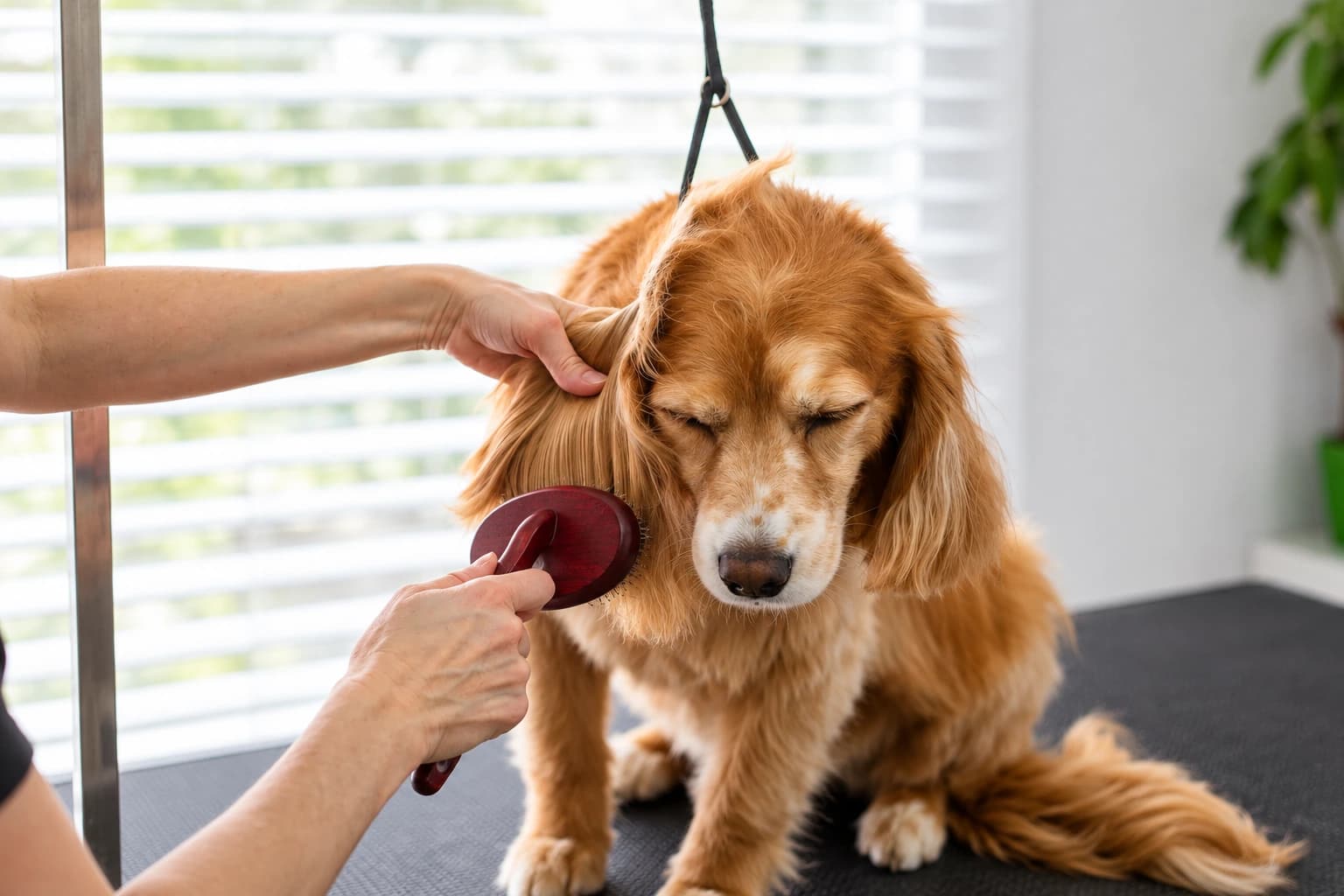
- Brush gently for a few minutes.
- Handle paws, look in ears, and lift the lips to check teeth.
- Reward calm behavior with treats.
- Keep it short and end before your dog gets fed up.
These little sessions don't have to feel like chores. For a lot of dogs they become a favorite bit of one-on-one time with their person.
Choosing a groomer for a nervous dog
Look for someone who is patient, is willing to go slowly and take breaks, uses positive methods, and will tell you honestly how your dog did. Tell your groomer about any fears, sensitive spots, or past bad experiences before the appointment.
Where grooming isn't enough
Serious aggression, severe anxiety, and compulsive behaviors need more than good grooming. Talk to your vet, and consider a qualified trainer or behaviorist. Grooming can be one part of the plan, but it isn't a substitute for that help. Asking for it is part of loving a dog who is struggling, not a sign you've done anything wrong.
If you're in the East Bay and your dog finds grooming stressful, get in touch.