Grooming Tips
How to Handle Matting and Tangles in Your Dog's Coat
How mats form, where to look for them, how to deal with small tangles safely at home, and when to leave it to a groomer.
Nat · July 28, 2025 · 5 min read
If you've just found a mat on your dog and feel a pang of guilt, please don't. Mats happen to dogs with loving, attentive owners all the time, often in spots that are hard to see. What matters is dealing with them kindly and keeping new ones from forming.
Mats are much easier to prevent than to remove. A small tangle left alone tightens, catches more loose hair, and eventually becomes a dense mat sitting right against the skin. Here's how to stay ahead of them.
How mats form
Loose hair that doesn't fall out gets tangled by friction: walking, lying down, scratching, a collar or harness rubbing. Tangles tighten into knots, knots join up, and over time they can felt into a solid mass. Moisture speeds all of this up.
Where to look
- Behind the ears (the most common spot in my experience)
- Armpits
- Groin and inner thighs
- Under the collar or harness
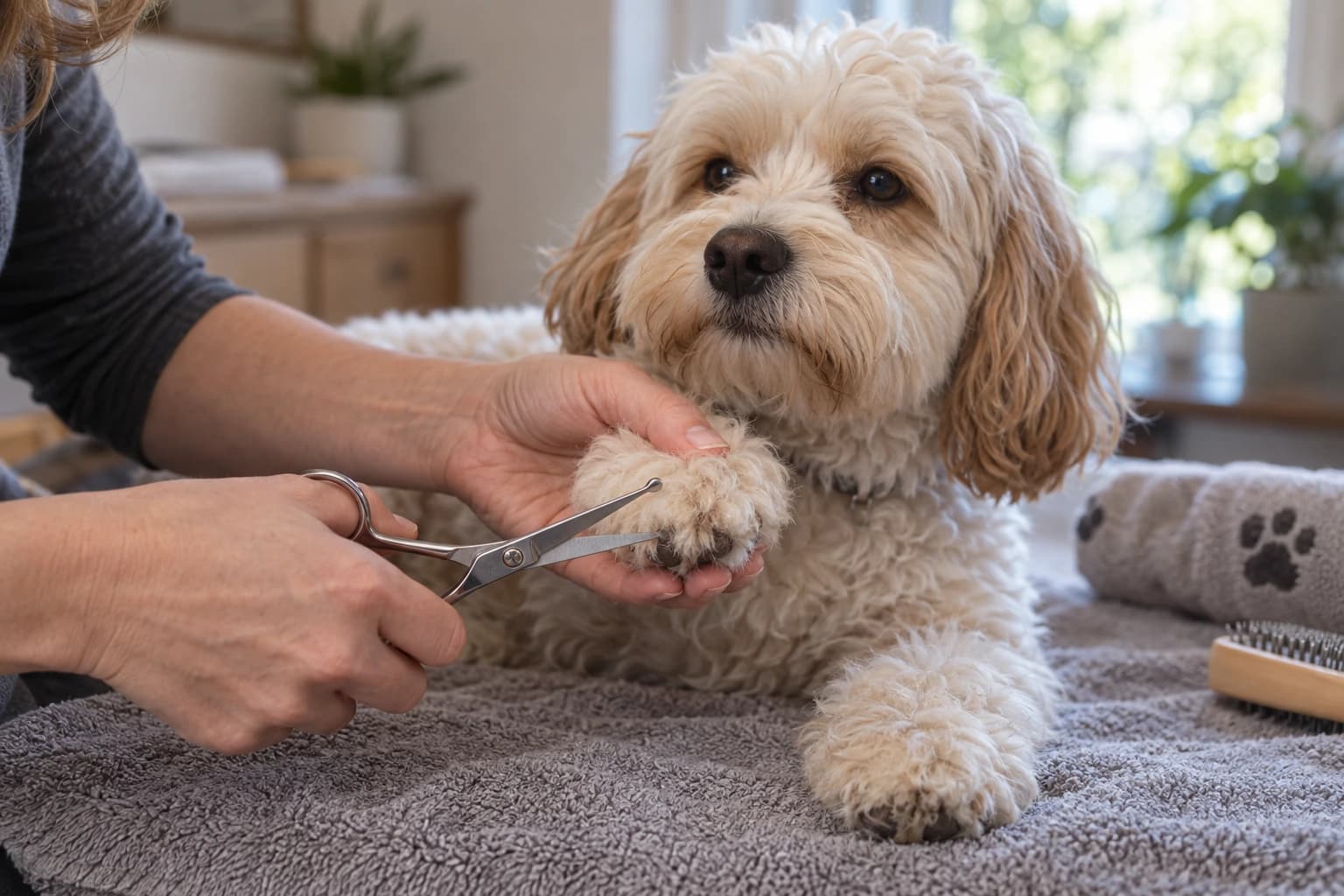
- Legs and feet, especially around the paw pads
- Base of the tail
- Chest and anywhere the dog lies on
Brushing only the top of the coat is how a dog can look fine while hiding mats underneath. It's an easy mistake, and a very common one.
Why mats matter
Mats pull on the skin every time the dog moves, which can be uncomfortable or painful. They also hold moisture and dirt against the skin and can hide irritation, sores, or parasites. If you find red, broken, or sore skin under a mat, have your vet take a look.
Preventing mats
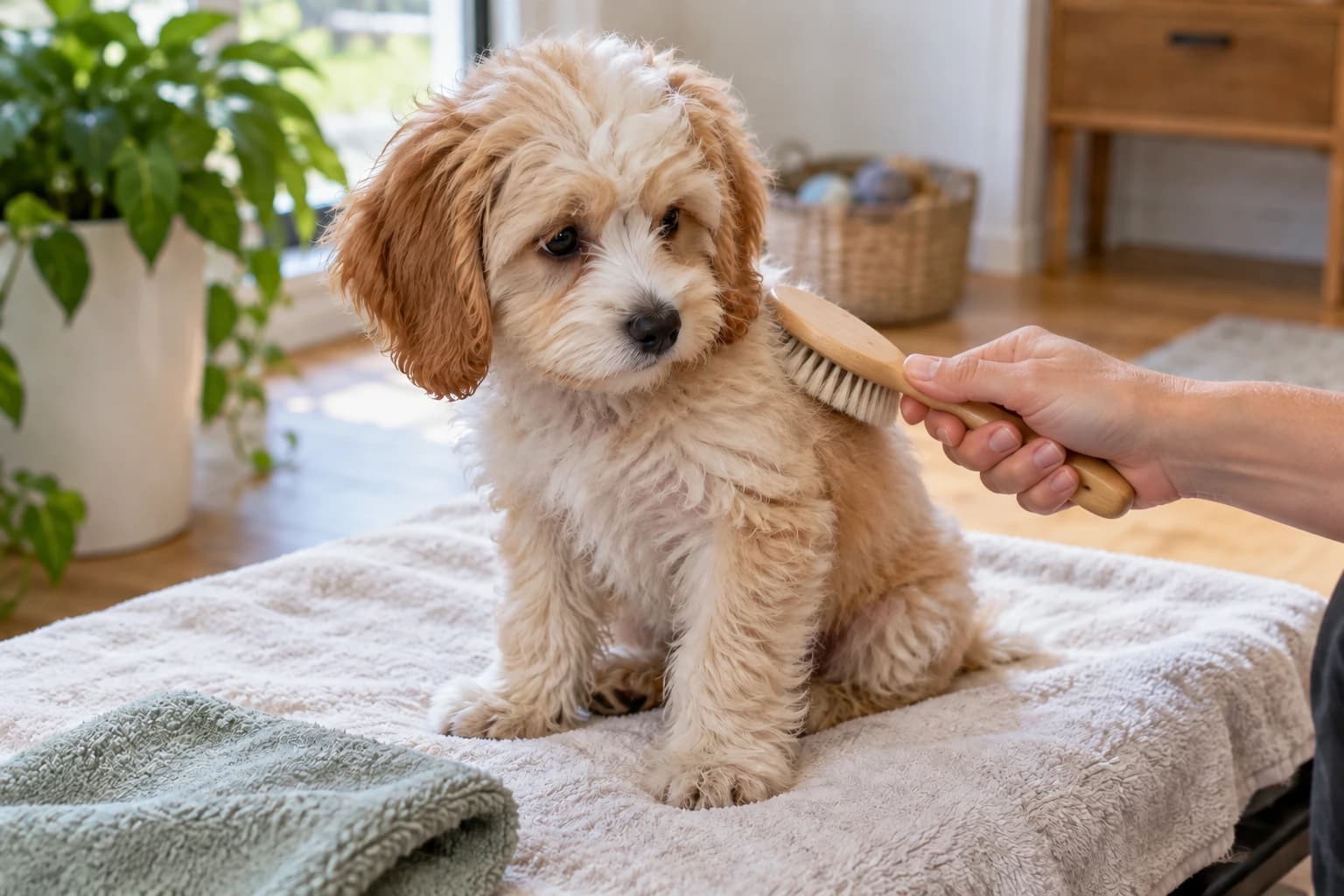
Tools. A slicker brush and a metal comb cover most dogs. A detangling spray helps with small knots.
Line brushing. This is how groomers make sure nothing gets missed:
- Part the coat so you can see the skin.
- Brush that layer down to the skin with the slicker.
- Follow with the comb. If it catches, you've found a tangle.
- Move up a little and repeat until you've worked through the whole coat.
Drying. Wet coats tangle fast. After baths, swimming, or rain, dry your dog thoroughly, paying attention to ears, armpits, and chest. A damp coat that air dries is a common cause of mats.
Collars and harnesses. Take them off at home when you can, and check underneath regularly.
Checking for mats
Run a metal comb through the coat, all the way to the skin. It should glide through. If it catches, there's a tangle. If it can't get in at all, there's a mat. Clumped, flat, or oddly textured patches are also a sign.
Removing small tangles safely
Only try this on small, loose tangles:
- Separate the tangle from the surrounding hair.
- Work in some detangling spray.
- Use your fingers to gently loosen it, working from the outer edge inward.
- Finish with the comb, holding the hair near the skin so you're not pulling on it.
- Take breaks, talk to your dog, and reward them generously. If they're in pain, stop.
Don't cut mats out with scissors. Mats pull skin up into them, and it's very easy to cut the skin without realizing it's there. This is one of the most common ways dogs get hurt during home grooming.
Also avoid bathing a matted dog before the mats are dealt with. Water tightens mats.
When to call a groomer
Leave it to a professional if:
- The mat is close to the skin or you can't see skin underneath
- Several mats have joined together
- The mat is in a sensitive area (face, ears, groin, armpits)
- Your dog shows pain or tries to bite
- There's more matting than you can comfortably work through in one short session
Sometimes the kindest option is to shave the coat short and start fresh. Working through heavy matting can mean a long, uncomfortable session for the dog. Hair grows back, and a short clip gives you a clean slate to set up a better routine. Choosing it isn't a failure. It's putting your dog's comfort first, and most dogs are noticeably happier once the mats are gone.
Prevention by coat type
- Long coats (Yorkies, Maltese, Shih Tzus): Brush daily, keep the face, feet, and sanitary area trimmed, and consider a shorter cut if daily brushing isn't realistic. Professional grooming every 4 to 6 weeks.
- Curly coats (Poodles, doodles): Brush thoroughly at least every other day, keep the length manageable, and dry completely after getting wet. Regular professional grooming is a must.
- Double coats (Goldens, Huskies, Shepherds): Work on the undercoat with an undercoat rake, especially during heavy shedding. Mats usually form behind the ears and on the back legs.
- Wire coats (Schnauzers, many terriers): Hand stripping or carding keeps dead coat from building up. Pay attention to the leg furnishings and beard.
A few minutes of proper brushing most days is what keeps a coat mat-free, and many dogs come to enjoy it as quiet time with you. If mats have already gotten ahead of you, go easy on yourself. You're taking care of it now, and that's what counts.
If you're in the East Bay and your dog needs help with mats, get in touch.