Grooming Tips
Your Puppy's First Groom: When to Start and How to Prepare
When a puppy is ready for their first groom, the handling and sound practice worth doing at home beforehand, and what a short, gentle first visit looks like.
Nat · February 9, 2026 · 5 min read
A new puppy changes the whole house. There are toys everywhere, someone is always getting up in the night, and everyone is completely in love. Somewhere in those first weeks comes the question of the first groom. It's worth thinking about early, because what a puppy learns about being handled now shapes how they feel about grooming for the rest of their life.
When to start
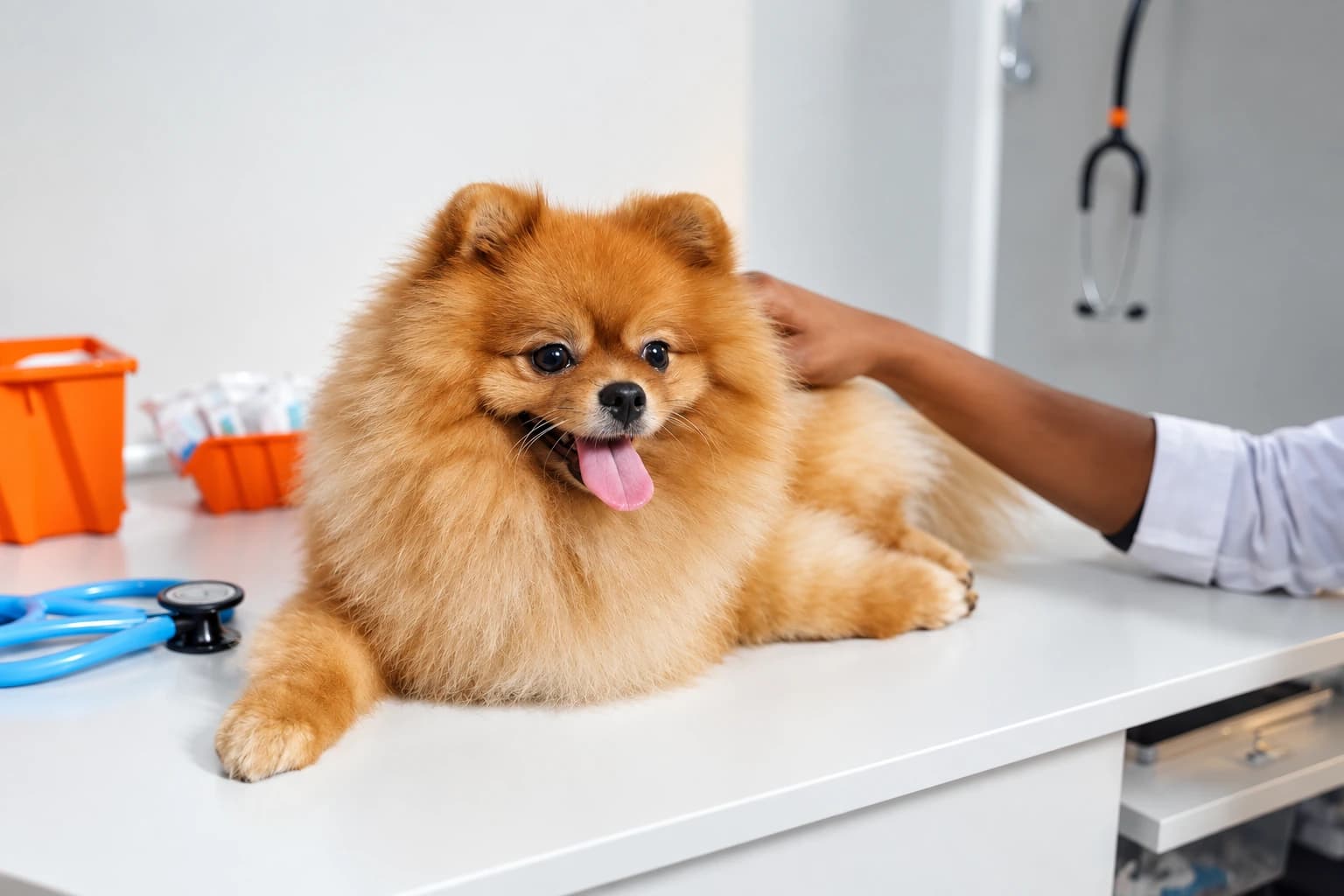
For most puppies, the first professional groom makes sense once your vet says their vaccinations are far enough along. Ask your vet what they recommend for your puppy, since the timing depends on the vaccine schedule and your puppy's health.
That first visit doesn't need to wait until the coat needs work. The point is to meet grooming while your puppy is young and curious, before any fears have a chance to settle in. This matters most for breeds whose coats keep growing, like Poodles, doodles, Shih Tzus, Bichons, and Yorkies. They'll be seeing a groomer every month or two for life, so it's worth making it familiar early.
Short-coated puppies benefit too. They still need nail trims and the occasional bath, and a puppy who is used to having their feet handled grows into a much easier adult dog at the vet as well.
What to practice at home first
You can start this the week your puppy comes home. Keep each session very short, often under a minute, and do it when your puppy is sleepy and settled rather than wound up. Treats and a soft voice do most of the work.
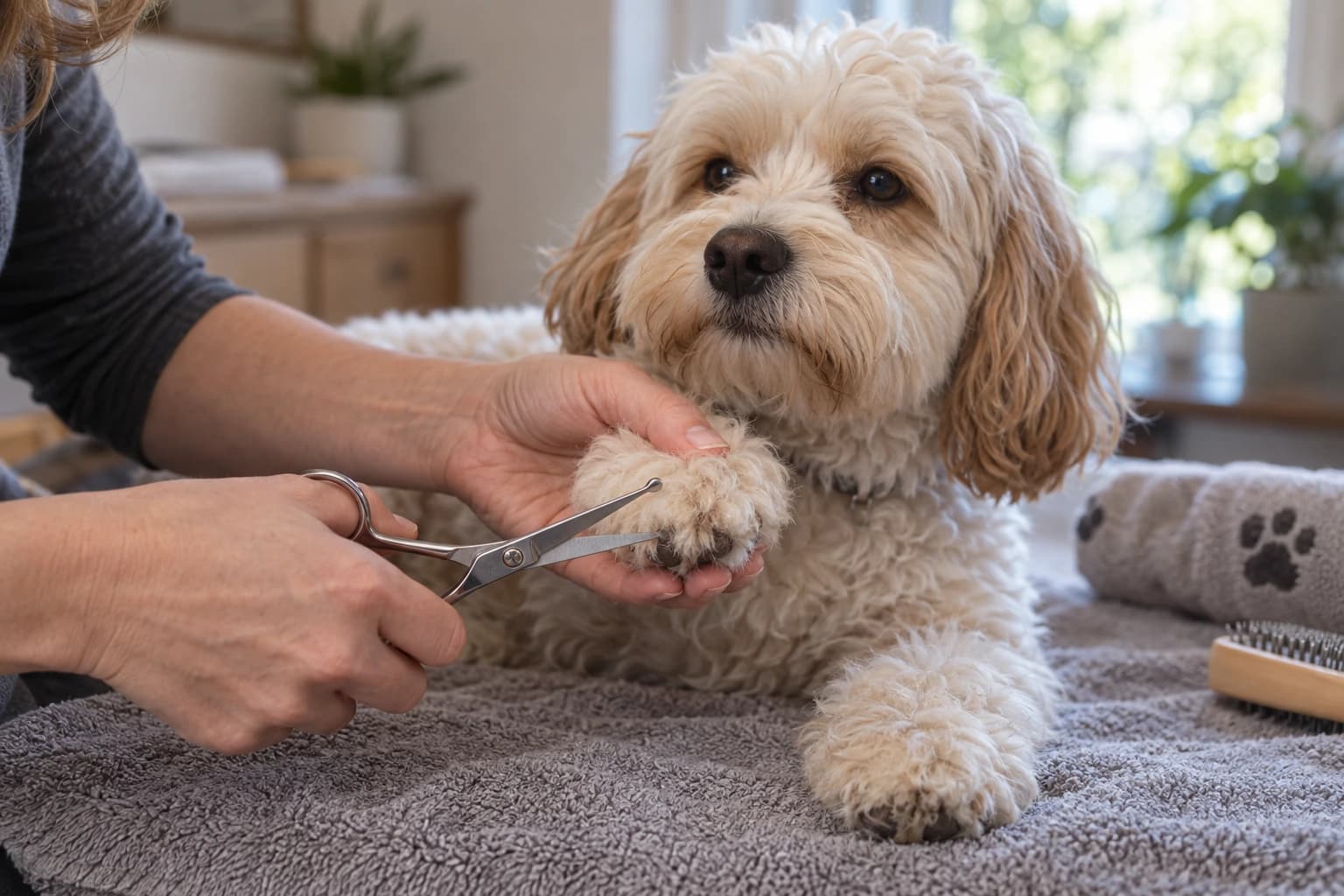
Paws. Hold each paw for a second, then give a treat. Build up to gently pressing the pads and touching each nail. Nails are the thing adult dogs most often dislike, so this is time well spent.
Ears. Lift each ear flap, look inside, and give it a gentle rub. Reward. Later you can wipe the outer ear with a soft cloth.
Mouth. Lift the lips to look at the teeth, then let go and reward. Vets will thank you for this one too.
Face and eyes. Touch around the eyes and muzzle, and brush the hair on the face with a soft brush. Face trims are part of most grooms for fluffy breeds, and a puppy who is used to hands near their face is much easier to trim safely.
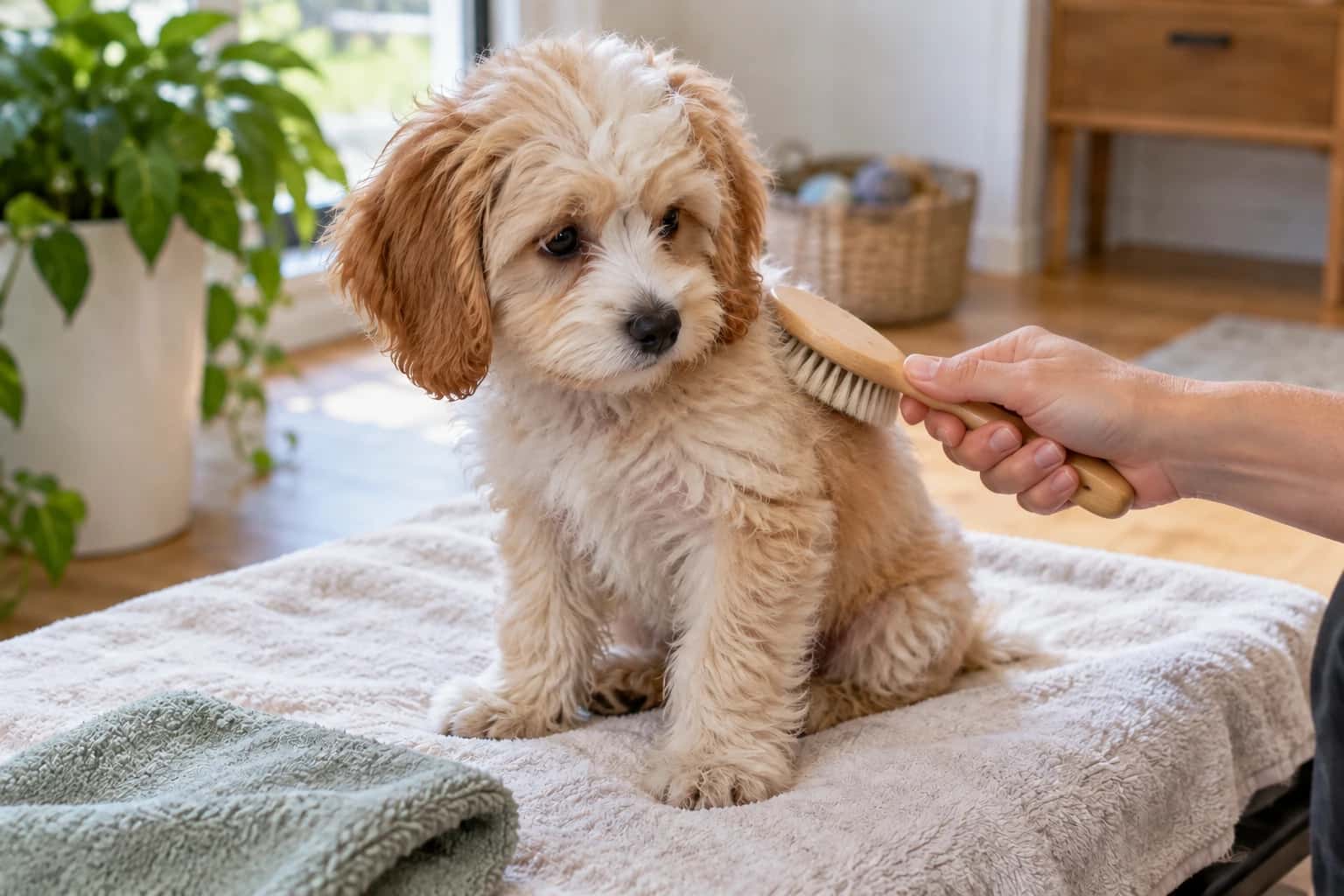
Whole body. Run your hands down the legs, over the belly, and along the tail. A soft puppy brush a few times a week is a nice extension of cuddle time.
Standing still. Reward your puppy for standing calmly for a few seconds, and try it on a sturdy table with a non-slip mat now and then, with your hand on them the whole time.
Sounds
Clippers buzz and dryers roar, and to a small puppy that can be a lot. Help them get used to it gradually:
- Run a hair dryer on cool across the room while they eat, never pointed at them
- Hold an electric toothbrush near their body so they feel a gentle vibration, then treat
- Bring things closer over several days, only when your puppy is relaxed at the current step
If your puppy startles, go back a step. There's no rush, and puppies do best when every experience feels safe.
What a first puppy groom is like
A first groom for a puppy is much lighter than an adult groom. Usually it looks something like this:
- Time to sniff, settle, and say hello, with treats
- A gentle bath with a mild puppy shampoo, and water kept out of the face
- A careful towel dry and a low, quiet dryer if the puppy is comfortable with it
- A light tidy: face, feet, and sanitary area, rather than a full haircut
- A nail trim, even if it's only a few nails
- Lots of breaks, praise, and ending while the puppy is still happy
For some puppies the whole visit is a bath, a brush, and a nail or two. That's a success. The haircut can come later, once they've learned grooming is nothing to worry about.
A quiet, one-dog-at-a-time setting helps puppies a lot here. There are no other barking dogs and no kennel wait, so the new place is the only new thing they have to cope with.
Keep it short and happy
Puppies have tiny attention spans and they tire quickly. A long first groom, even a gentle one, can leave a puppy overwhelmed. A short visit that ends on a good note is worth much more than a perfect haircut. If your puppy is getting wriggly or worried, it's always fine to stop and finish another day.
A few things that help on the day:
- A potty break right before the groom
- Some play earlier, so they're a little calmer
- A light meal a few hours before rather than right before
- Their favorite treats handy
- Telling your groomer about anything your puppy finds hard
After the first visit
The first groom is a starting point. Keep up the paw, ear, and brushing practice between visits, and try to book the next one in a few weeks, even for a simple bath and tidy. Regular, easy visits while your puppy is young add up. And puppy coats change as they grow, so keep an eye out for tangles behind the ears and in the armpits, especially in doodles and other curly breeds as the adult coat comes in.
If you'd like to plan your puppy's first groom, get in touch.