Grooming Tips
Small Trims That Make a Big Difference Between Grooms
The four small trims that keep a dog comfortable between full grooms: the sanitary area, paw pads, around the eyes, and the ears, plus what's safe to do at home and what to leave to a groomer.
Nat · August 24, 2026 · 5 min read
A full groom takes care of everything at once, but the coat doesn't grow evenly while you wait for the next one. A few small areas tend to get untidy first, and those are the places that affect how comfortable your dog feels day to day. If your dog seems a bit off three weeks after a groom while the rest of the coat still looks fine, it's usually one of these spots.
The sanitary trim
This is the short trim around the rear end, the genitals, and the lower belly. It isn't glamorous, but it matters. Long hair there catches urine and stool, and once it's soiled it can irritate the skin, attract flies in warm weather, and start to smell long before the rest of the dog needs a bath.
Signs the sanitary area needs attention:
- Your dog is licking or fussing at their back end more than usual
- Hair around the rear is clumping or staying damp
- A smell that comes back soon after you've cleaned them
- Scooting
Scooting is worth a second look. Sometimes it's just hair, but it can also mean full anal glands, worms, or skin irritation, so mention it to your vet if a tidy trim doesn't settle it.
This is an area I'd rather owners didn't tackle with scissors. The skin is thin and loose, it moves when the dog moves, and it's very easy to nick. If you want to keep things clean between grooms, a pet wipe or a quick rinse and a thorough dry is safer. If you're set on trimming at home, a quiet trimmer with a guard is much safer than scissors here.
Paw pads
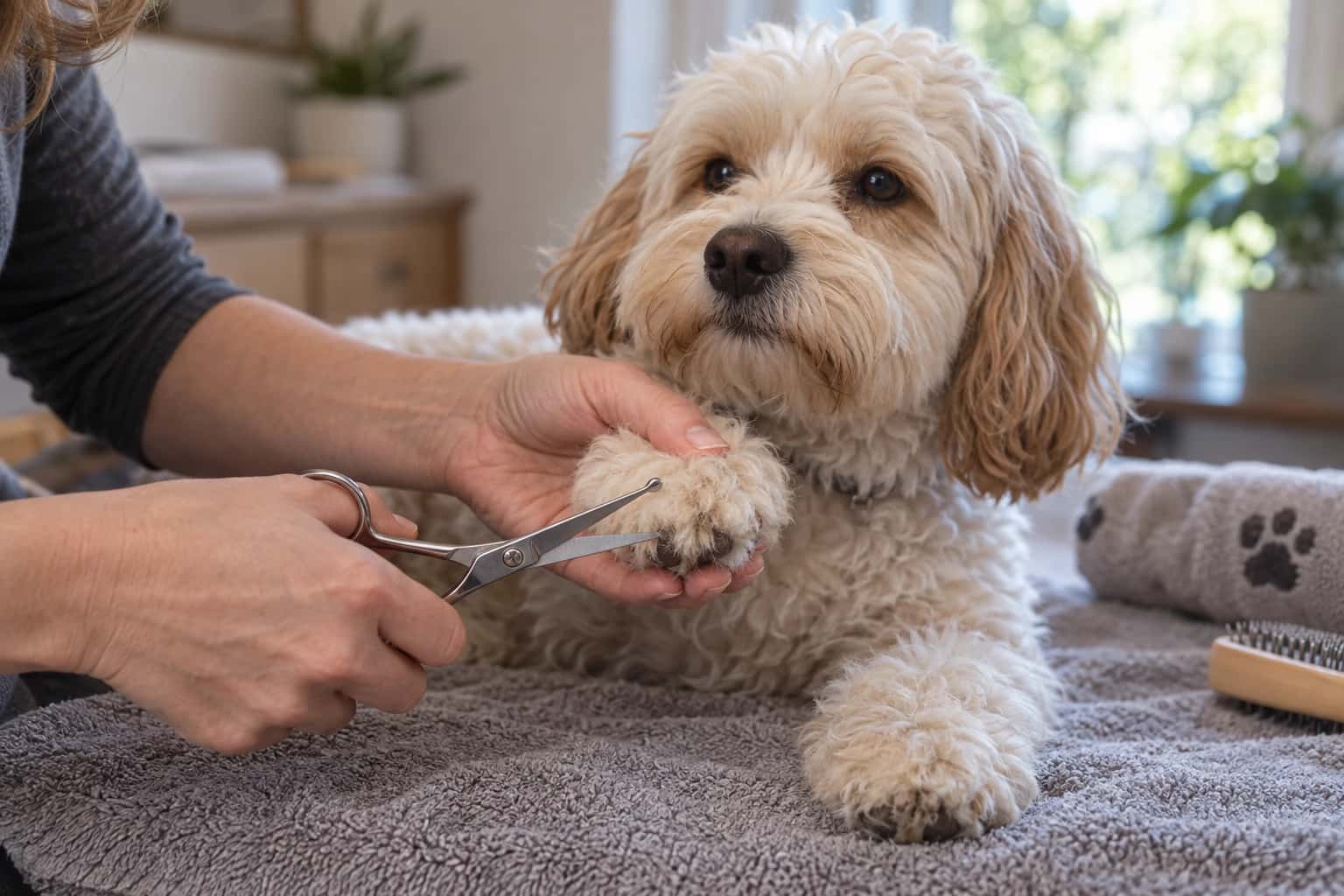
The fur between the pads keeps growing, and on many dogs it grows right over them. That hair picks up mud, burrs, and grass seeds. On smooth floors it acts like a pair of socks, and dogs, especially older ones, can slip and struggle to get up.
Here in the East Bay, foxtails are the big one in spring and summer. They catch in the fur between the toes and can work their way into the skin, and short pad hair makes them much easier to spot. I aim for hair trimmed level with the pads, not dug out from between them. If you see redness, swelling, a limp, or constant licking at one foot, call your vet.
Around the eyes
Hair growing into the eyes can scratch the surface of the eye, trap tear staining, and make it hard for your dog to see where they're going. Breeds with long facial hair, like Shih Tzus, Maltese, and doodles, often need this more often than anything else.
Please be very careful here. A dog can turn their head in an instant, and scissors near the eye are the most likely way for a home trim to become a trip to the vet. If you do trim at home:
- Use small scissors with rounded, blunt tips
- Keep the blades pointed away from the eye, never toward it
- Hold the muzzle gently and have someone help steady your dog
- Only trim when your dog is calm, never when they're wriggly
- Stop if you're unsure
If hair is only slightly in the way, combing it back or up and clipping it with a small soft band can buy you time until a groomer can trim it properly. Squinting, redness, cloudiness, discharge, or pawing at the eye are reasons to see your vet, not reasons to trim.
Ear fur
Hair around the opening of the ear and on the underside of floppy ears traps moisture and debris. Trimming the fur around the outside of the ear helps air move and makes it easier to keep the ears clean.
Hair inside the ear canal is a different matter. Whether to pluck it depends on the dog, and many vets now advise against routine plucking unless there's a reason. Don't pluck at home. Don't push anything into the canal either. If you notice a smell, dark discharge, redness, head shaking, or your dog scratching at an ear, that's a vet visit, since it can be an infection that grooming won't fix.
Why a tidy visit helps
Many groomers offer a short tidy between full grooms that covers the face, the feet, and the sanitary area, sometimes along with nails. It's quicker than a full groom, and for a lot of dogs it's also easier, since there's less time on the table and less handling.
It helps in a few practical ways. The areas that get uncomfortable first stay comfortable, so you can often push the next full groom back a couple of weeks without your dog paying for it. Problems like foxtails, skin irritation, or overgrown nails get caught early. For puppies and nervous dogs, short and easy visits build up good experiences in between the longer ones.
What you can safely do at home
- Brush the feet and face gently every few days
- Wipe the sanitary area if it gets dirty
- Check between the toes after walks, especially in foxtail season
- Keep an eye on the ears for smell or redness
Leave the scissors work near the eyes, the skin around the rear, and anything inside the ears to a groomer or your vet. A slightly scruffy dog is much better than a nicked one.
These small trims don't take long, but they're the part of grooming your dog feels most between visits. Next time your dog is groomed, ask which of these spots grow fastest on your dog so you know what to watch.