Pet Health
The Role of Grooming in Preventing Ear Infections
Why some dogs are prone to ear trouble, how grooming and home care help keep ears clean and dry, and the signs that mean a trip to the vet.
Nat · December 29, 2025 · 4 min read
Ear problems are one of the most common things owners mention to me, usually along the lines of "his ears smell funny." If your dog keeps shaking their head or pawing at their ears, you probably already feel for them. Ear trouble is uncomfortable, and it's hard to watch someone you love be miserable. If your dog has had infections before, it doesn't mean you did something wrong. Grooming can't prevent every ear infection, and allergies and other health issues play a big part. But keeping ears clean, dry, and checked regularly makes trouble less likely and helps you notice it sooner.
Why dogs get ear trouble
A dog's ear canal runs down and then bends inward, so moisture and debris don't drain out easily. Anything that traps warmth and moisture in there makes problems more likely:
- Water from swimming or baths
- Long, heavy ears that fold over the opening
- Hair growing inside the canal
- Wax and debris building up
Dogs that need extra attention
- Floppy-eared breeds like Cocker Spaniels, Basset Hounds, Beagles, and Golden Retrievers
- Breeds with hair in the ear canal like Poodles, Doodles, Schnauzers, and Shih Tzus
- Water dogs, especially Labs and Retrievers who swim often
- Dogs with allergies, since ear trouble often goes along with itchy skin
If your dog has repeated ear infections, talk to your vet about whether something underneath, like allergies, is driving them.
What happens in a groom
Ear care is a normal part of a full groom:
- A look at the ear for redness, swelling, heavy wax, or a strong smell
- Tidying hair around the ear opening, and removing hair from inside the canal only when it's actually needed (not every dog needs this, and vets have differing views on it)
- Cleaning the outer ear with a dog ear cleaner
- Drying the ears well after the bath
I go gently here, because ears are sensitive and plenty of dogs are a little unsure about having them handled. If an ear looks sore or infected, cleaning it can make it hurt more, so the right move is to leave it alone and see the vet.
Checking ears at home
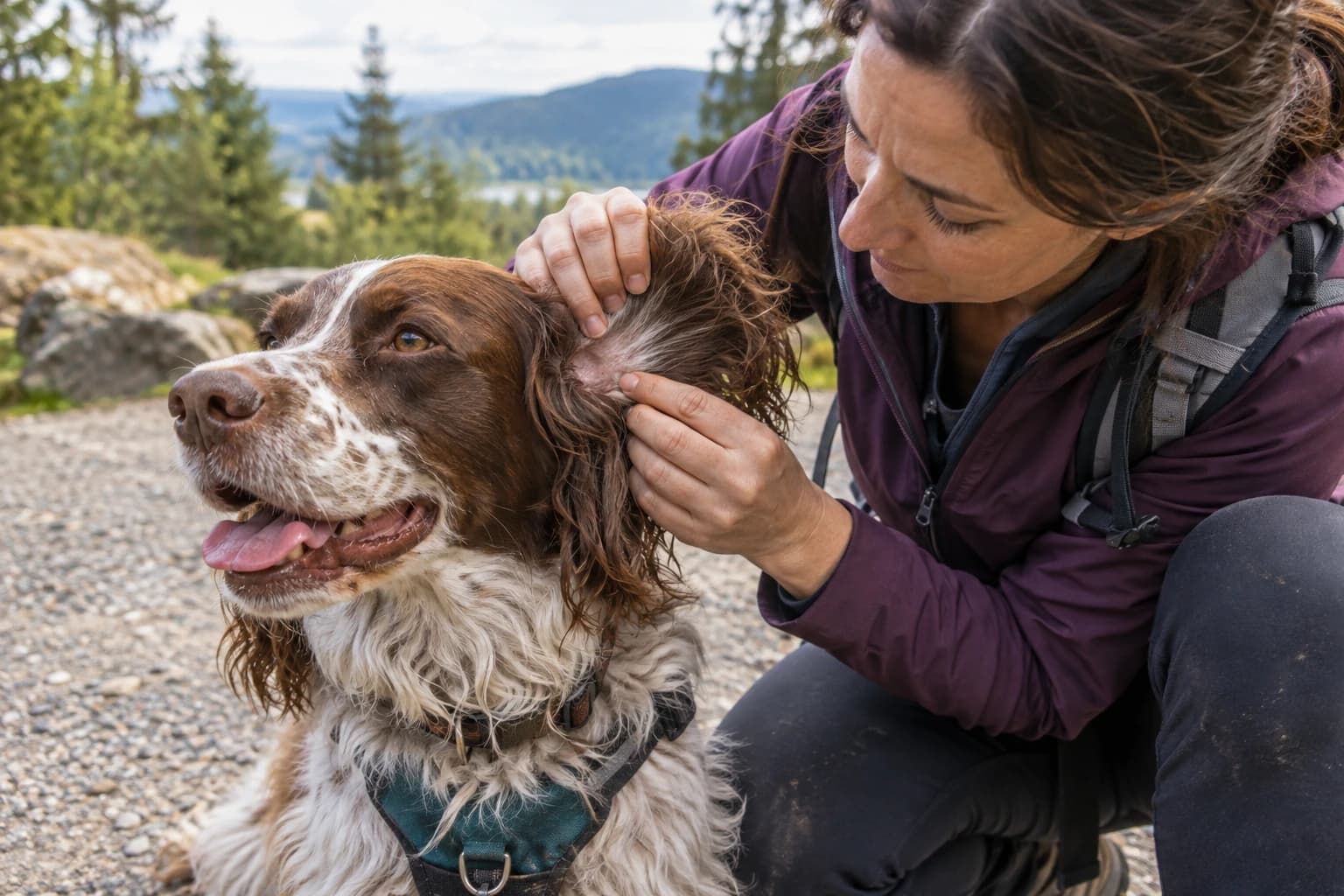
Once a week, while your pup is relaxed next to you, have a quick look and sniff:
- Healthy ears are pale pink, with little wax and no real smell.
- Worth a vet visit: redness, swelling, dark or crumbly debris, discharge, or a strong or sour smell.
- Watch the dog, too: head shaking, scratching at the ears, tilting the head, or pulling away when you touch them.
Cleaning at home
If you're nervous about cleaning your dog's ears, that's normal. Go slowly, stay calm, and keep the treats coming. Ask your vet which cleaner to use and how often. Many dogs only need cleaning occasionally, and cleaning too often can irritate the ear.
- Squeeze cleaner into the ear canal as directed on the bottle.
- Gently massage the base of the ear.
- Let your dog shake (and stand back).
- Wipe out the part of the ear you can see with a cotton ball or pad.
- Give a treat and do the other side.
Don't push cotton swabs down into the canal, and skip alcohol, hydrogen peroxide, or homemade mixes unless your vet recommends them.
Swimmers and bath time
Water is one of the most common triggers. After swimming or a bath, dry the outer ear with a towel or cotton. If your dog swims a lot, ask your vet about an ear drying solution. During baths at home, keep water out of the ears and wash the head with a damp cloth instead.
See the vet if you notice
- Constant head shaking or scratching
- Crying or pain when the ear is touched
- Redness, swelling, or a canal that looks narrowed
- Discharge, blood, or dark debris
- A bad smell
- Loss of balance, a head tilt, or changes in hearing
Ear infections are painful and usually need a vet's help to clear up, so trust your instincts and go early. You'll never regret getting your dog checked.
A simple routine
- Check ears weekly.
- Dry ears after every swim and bath.
- Keep up with regular grooming, especially for hairy or floppy-eared breeds.
- Clean only as often as your vet suggests.
If you're in the East Bay and would like help keeping your dog's ears in good shape, I'd love to hear from you.