Pet Health
How Grooming Can Help Detect Skin Issues Early
A groom is a chance to look at every inch of your dog's skin. Here is what groomers notice, what you can check at home, and when to call the vet.
Nat · September 22, 2025 · 4 min read
Finding something odd on your dog's skin can make your stomach drop. If you've ever missed a spot and felt guilty about it later, please go easy on yourself. Owners often miss changes in their dog's skin, not because they don't care, but because fur hides a lot. During a groom, the coat gets bathed, blown apart, and sometimes clipped short, so the skin underneath is easy to see. That makes a regular groom a good chance to catch something early and get it to a vet.
To be clear about the limits: groomers are not vets. We can notice that something looks different. Only a vet can tell you what it is.
Why things show up during a groom
- Bathing loosens tangles and flattens the coat, so the skin is easier to see.
- Blow-drying parts the fur all the way down, including thick undercoats.
- Clipping makes spots, redness, and bumps obvious.
- Handling every part of the dog, including armpits, belly, under the tail, and between the toes, turns up lumps and sore spots you might not feel while petting.
Things worth pointing out
Red, moist, or irritated patches. These can come up quickly and are often hidden under thick or matted fur, especially around the ears and neck.
Signs of fleas. Tiny black specks in the coat ("flea dirt") that turn reddish when wet, along with small red bumps or scratched areas. You don't always see the fleas themselves.
Patchy hair loss, flaking, or crusting. Many things can cause this, from allergies to parasites to infections. It needs a vet to sort out.
Pimples, scabs, or an unusual smell. Worth mentioning to your vet, particularly if they're spreading.
Lumps and bumps. Most are harmless, but there's no way to tell by looking. Any new lump, or one that changes, should be checked by a vet.
Sore spots. A dog who flinches or pulls away when a particular area is touched is telling you something.
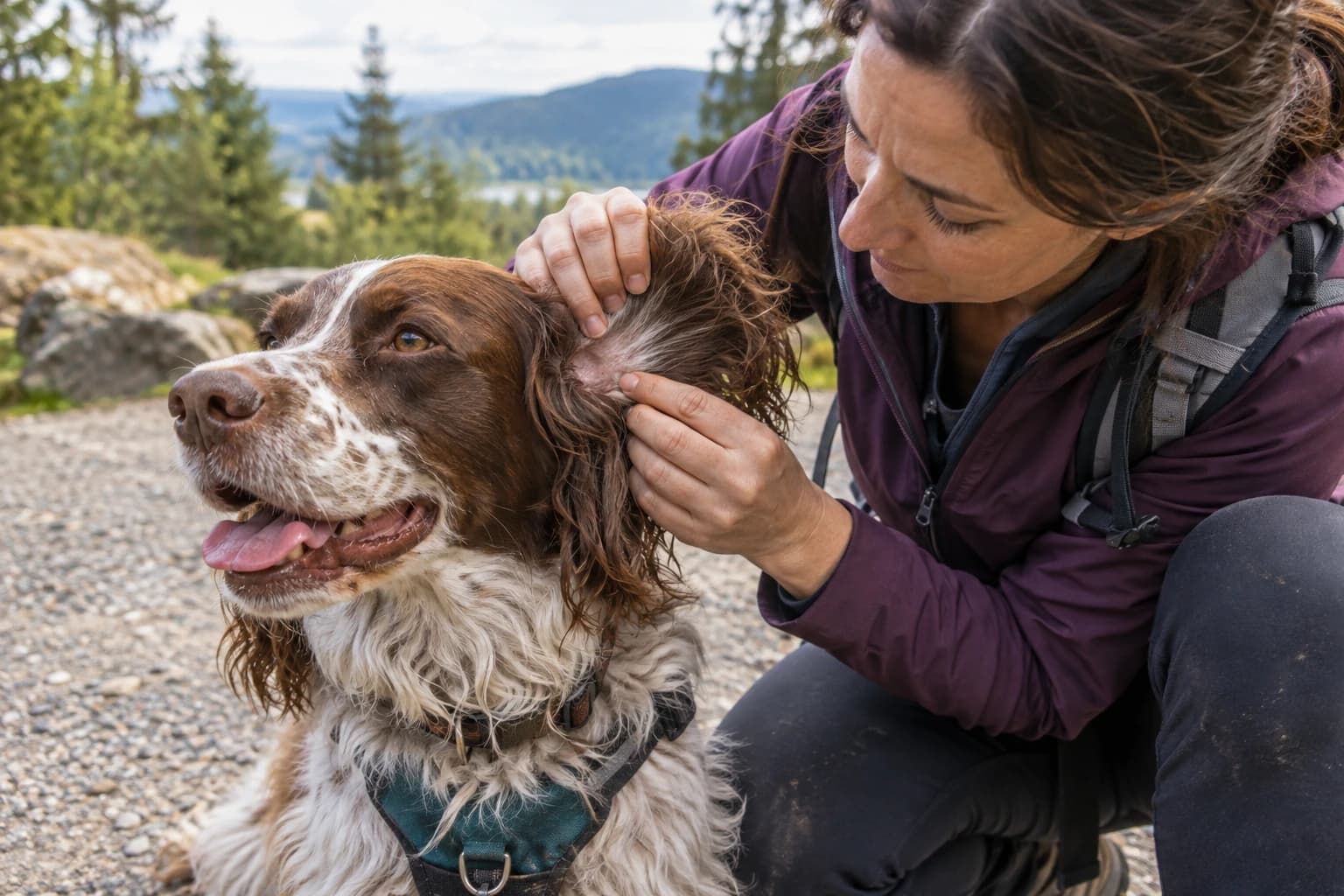
Paws and ears. Red, stained, or inflamed paws from licking, and red or smelly ears, are common and worth raising with your vet if they persist.
What to do when something is found
- Take a breath. It's natural to worry, but most findings turn out to be minor.
- Take a photo and note where it is and roughly how big.
- Book a vet visit, sooner if it's growing, bleeding, painful, or oozing.
- Tell your groomer what the vet said, so they know what to keep an eye on next time.
Checking at home between grooms
Once a week or so, go over your dog with your hands and a comb. Most dogs happily accept this as extra petting, so it can easily become part of your cuddle time.
- Part the fur in several places and look at the skin.
- Feel along the body, legs, and belly for new lumps.
- Check the armpits, groin, under the tail, ears, and between the toes.
- Look for areas your dog keeps licking or scratching.
Photos help. Taking a picture of a spot and checking it again in a couple of weeks makes it much easier to tell whether it's changing.
Dogs with skin folds, heavy coats, or long ears tend to have more trouble in those areas, so give them extra attention.
When to call the vet right away
- A lump that is growing quickly
- Open, bleeding, or oozing sores
- Swelling, heat, or a strong smell
- A dog in obvious pain when touched
- Sudden, widespread changes to the skin or coat
Ask your groomer
After a groom, it's fair to ask whether they noticed anything unusual and whether there's anything you should watch. A good groomer will tell you what they saw, gently and honestly, and suggest a vet when something needs one. You and your groomer are on the same side: you both want your dog comfortable and healthy.
If you're in the East Bay and would like your dog groomed regularly, I'd love to hear from you.