Pet Health
Foxtails and East Bay Dogs: What to Check After Every Walk
When foxtails dry out around the East Bay, where they hide on a dog, how to check after walks, and the signs that mean your dog needs a vet today.
Nat · April 6, 2026 · 5 min read
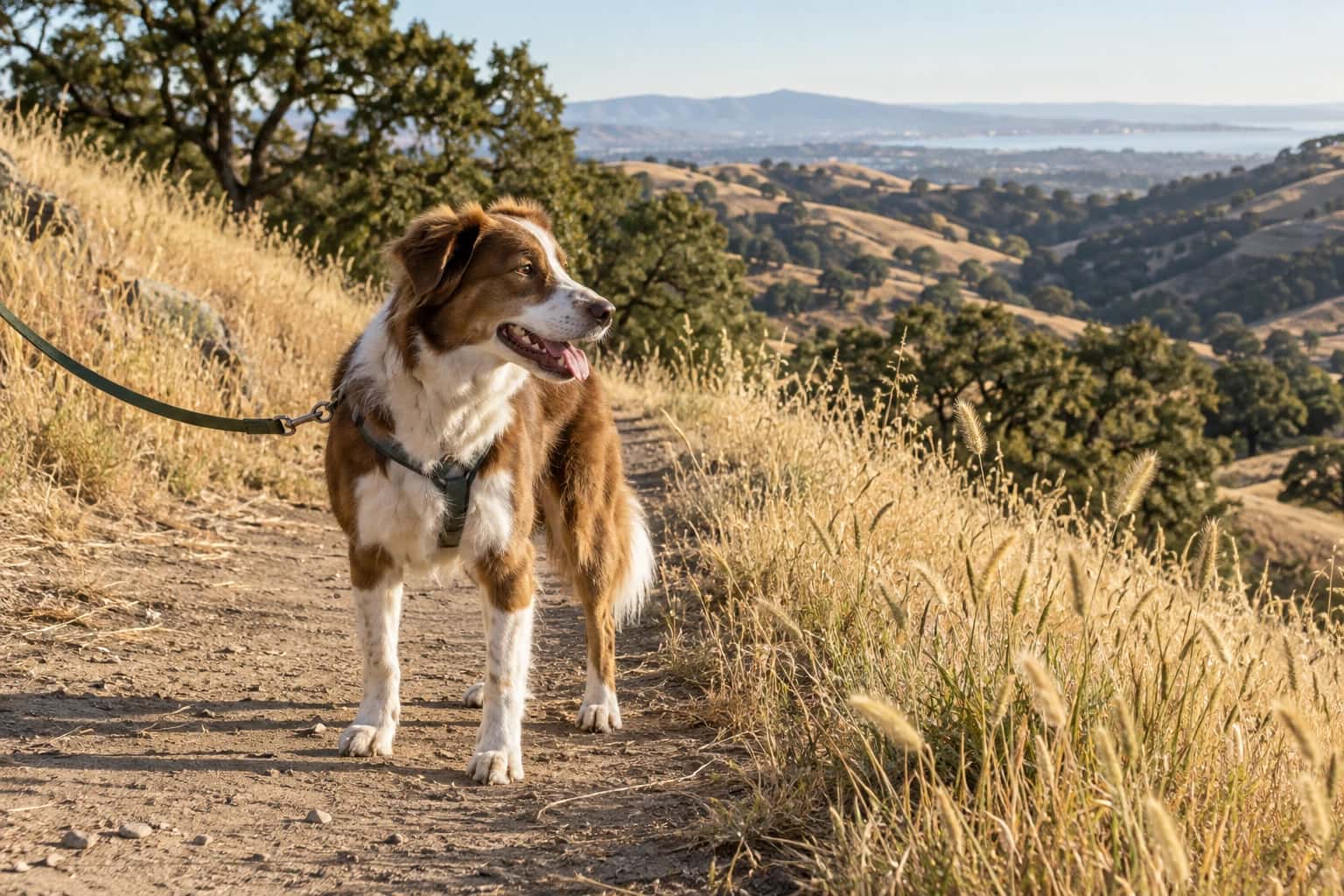
Every year, as the East Bay hills turn from green to gold, I look for foxtails a lot more carefully when I groom. They are one of the most common seasonal hazards for dogs around here, and a quick check after walks can save your dog a lot of pain.
What foxtails are and why they matter
"Foxtail" is the common name for the seed heads of several wild grasses. While the grass is green, the seeds are soft and mostly harmless. Once it dries out, the seed heads turn hard and break apart into small, sharp, arrow-shaped pieces covered in tiny backward-facing barbs.
Those barbs are the problem. They let a foxtail move forward but not backward. Every step or sniff can work it a little deeper, from fur into skin and beyond. A foxtail that gets inside the body does not break down, and it can keep moving and cause infection or abscesses well away from where it went in.
When they dry out in the East Bay
With most of our rain falling from about November through March, the grasses grow green over winter and start drying out in spring. Depending on the year, you will often see dry foxtails by April or May, and they stay around through the summer and into fall until the rain comes back.
You find them along trail edges, in vacant lots, and at the edges of sidewalks and yards. Regional parks like Tilden, Briones, and Redwood have plenty of grassy trail margins, but a strip of dry weeds on your own street can be just as bad.
Where foxtails hide on a dog
Foxtails go wherever a nose, paw, or coat brushes through dry grass. The spots I check most carefully:
- Paws, between the toes and pads. Probably the most common spot. Fluffy feet catch them easily.
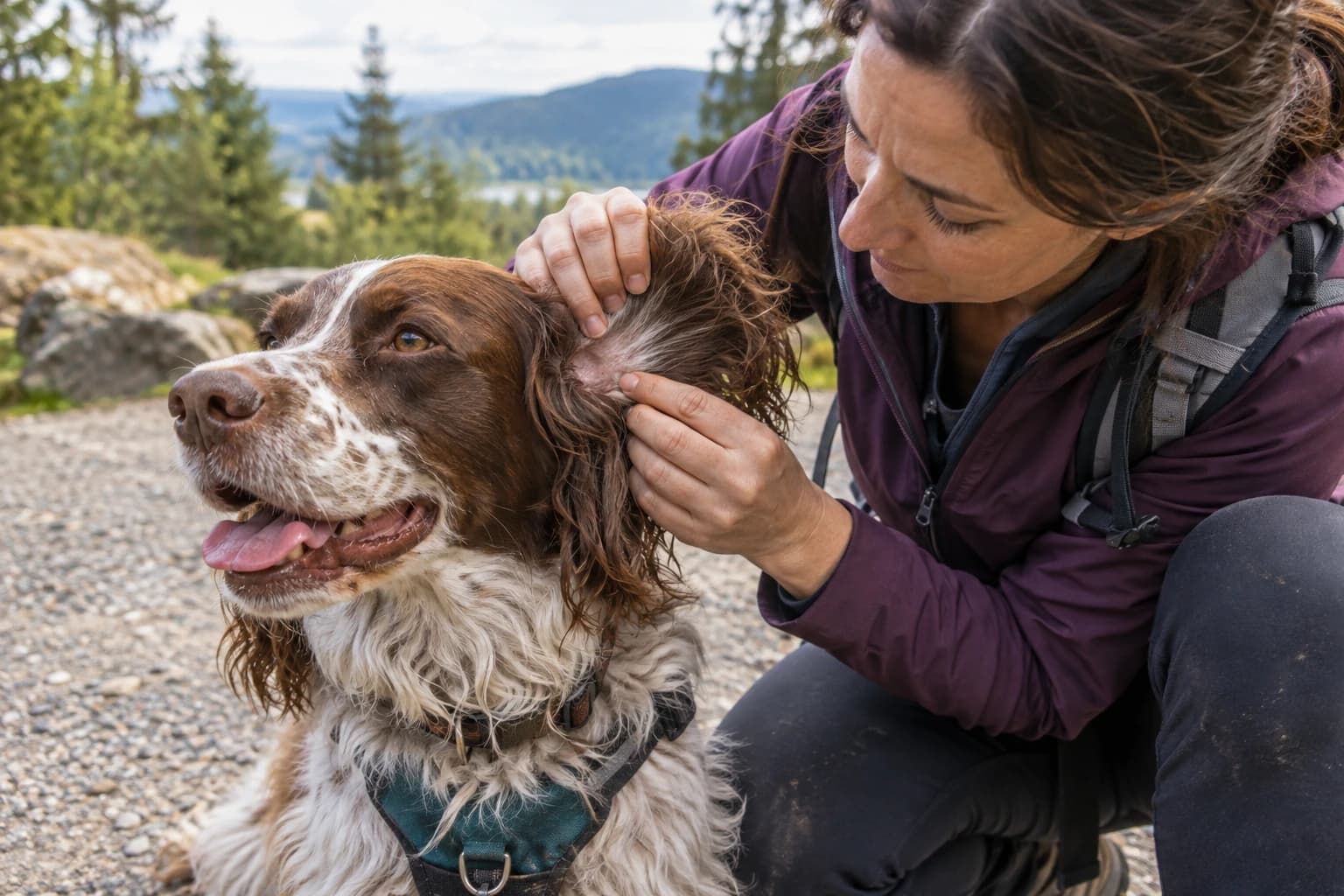
- Ears. They can drop into the ear flap and work down into the canal.
- Nose. Dogs who sniff through grass can inhale them.
- Eyes. They can lodge under the eyelids or third eyelid.
- Armpits and groin. Soft skin and friction from walking.
- Under the tail and around the genitals.
Long-haired dogs and keen sniffers tend to collect the most, but any dog can pick one up.
Checking after walks
During foxtail season, check your dog after every walk in grassy areas. It only takes a couple of minutes.
- Run your hands slowly over your dog's whole body, feeling for anything prickly.
- Spread the toes on each paw and look between them and between the pads.
- Look at the outside of the ears and lift the flaps.
- Check the armpits, belly, groin, and under the tail.
- Brush or comb through feathered areas like legs, ears, and tail.
If a foxtail is sitting loose on top of the coat, you can brush it off or lift it away. That is very different from one that is stuck into skin or has gone into an ear, nose, or eye.
Do not try to dig out a foxtail that has gone into the skin, or reach into the ear, nose, or eye with tweezers. Because of those barbs, pulling at one often snaps it, leaving a piece behind that you cannot see. Poking around can also push it deeper. Your vet has the right tools, can look inside the ear or nose properly, and can sedate your dog if needed to get the whole thing out safely.
Trimming paw and ear fur helps
Grooming will not make your dog foxtail-proof, but it does help. A lot of what I do in spring and summer is aimed at giving foxtails fewer places to catch.
- Paw fur. Trimming the hair between the pads and neatening around the feet leaves less for seeds to grab onto, and makes your after-walk checks much easier.
- Ear fur. Tidying the hair around the ear openings, and keeping long ear feathering shorter, gives foxtails less to cling to on the way in.
- Feathering and pants. For long-coated dogs, a little shorter on the legs, belly, and under the tail can help during the worst of the season.
When I groom, I check all of these areas as I go. If I find something stuck in the skin, in an ear, or anywhere I cannot safely brush it away, I let you know and recommend a vet visit. I will not dig at it.
Signs your dog needs a vet now
Foxtails can do real damage quickly, so do not wait and see if you notice any of these, especially in spring and summer or after a walk through dry grass:
- Head shaking, tilting the head, or pawing at an ear. A foxtail may be in the ear canal.
- Sudden, violent sneezing fits, sometimes with a bloody nose or pawing at the face. A foxtail may be up the nose.
- A squinting, red, watery, or goopy eye, or pawing at the eye. Eye injuries can get serious fast.
- Licking or chewing one paw over and over, limping, or a sore spot between the toes.
- A swelling, lump, or small draining hole anywhere, often between the toes or under the arm.
- Gagging, coughing, or repeated swallowing after being in grass.
- Excessive licking under the tail or at the genitals.
Call your vet the same day. A foxtail caught early is usually much simpler to remove.
Getting through foxtail season
You do not need to keep your dog off every trail from April to October. Stick to well-cleared paths when you can, steer your dog away from the dry grassy edges, do a quick check when you get home, and keep paws and ears tidy. If your dog suddenly starts shaking their head or sneezing after a walk, call the vet that day.