Seasonal Care
Coat Care for Dogs Who Swim
What to do after your dog swims in a lake, a pool or the bay: rinsing, drying the coat and ears properly, and checking for foxtails and anything else they brought home.
Nat · July 13, 2026 · 5 min read
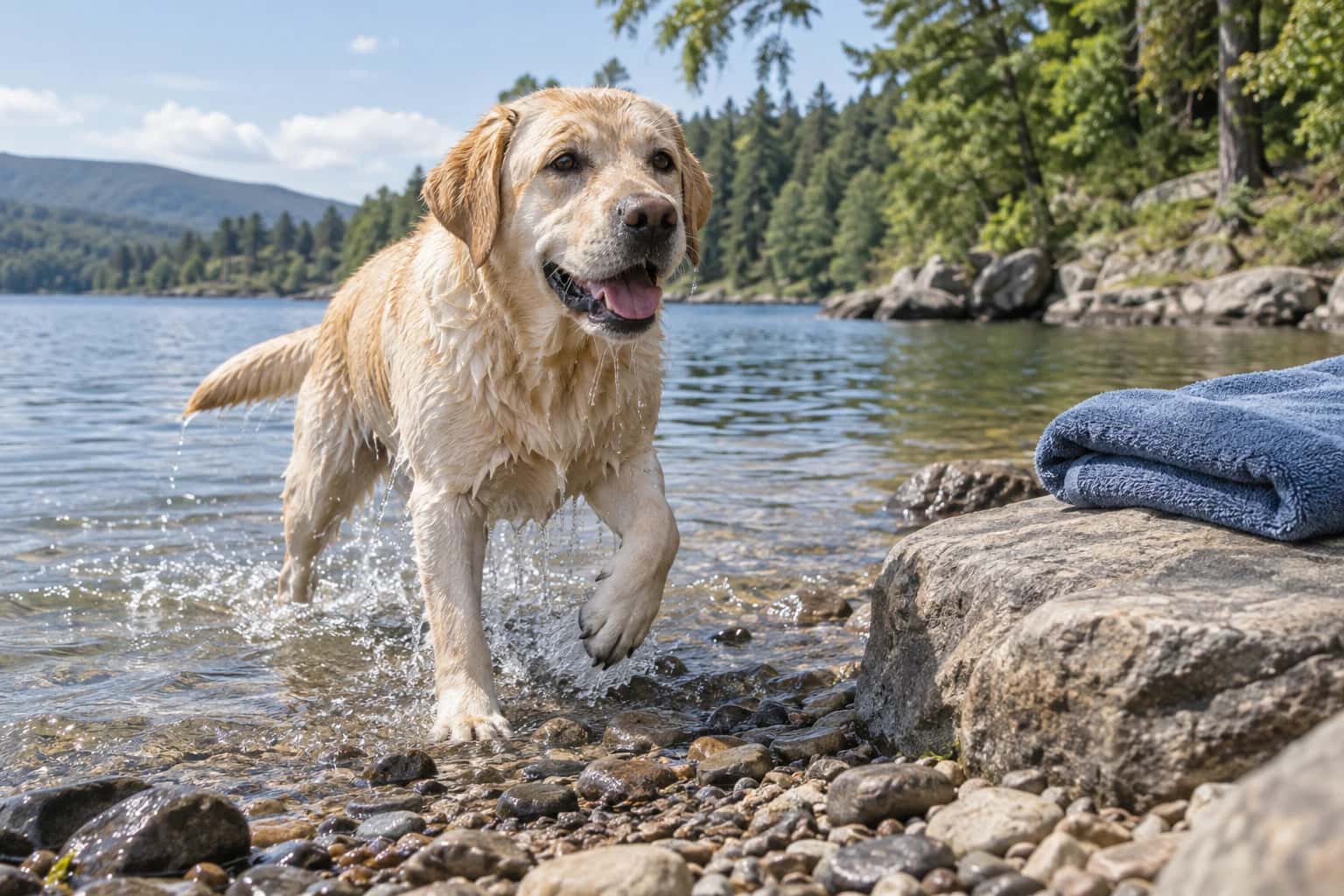
Some dogs see water and simply have to be in it. If you have one of those, you know the look: soaked to the skin, grinning, and completely unwilling to get out. Swimming is wonderful exercise, and what happens in the hour afterward is what keeps their skin and ears healthy. Here's what I'd suggest once your dog climbs out.
Rinse off the pool or the bay
Chlorine and salt both stay in the coat after the water dries, and both can leave skin dry, itchy and flaky if they sit there. A dog who swims at Point Isabel or in a backyard pool once in a while will usually be fine, but a dog who swims every weekend all summer can start to show it.
A rinse with plain, lukewarm fresh water is enough most days. A hose or a quick trip into the shower works. Get the water all the way down to the skin, not only over the top of the coat, and pay attention to the armpits, belly and between the toes, where salt and grit collect.
You don't need to shampoo after every swim. Frequent shampooing can dry out the skin too. Save a proper bath for when your dog is actually dirty or smelly, and use a gentle dog shampoo when you do.
Dry them properly, especially thick coats
This is the step people skip, and it's the one I care most about. Short, single coats dry fairly quickly on their own. Thick double coats are a different story. Goldens, Shepherds, Huskies, Newfies and many doodles can feel dry on top while the undercoat next to the skin stays damp for hours.
Warm, damp skin trapped under a dense coat is exactly where hot spots like to start. These are red, raw, often weepy patches that can appear quickly and make a dog miserable.
A few things help:
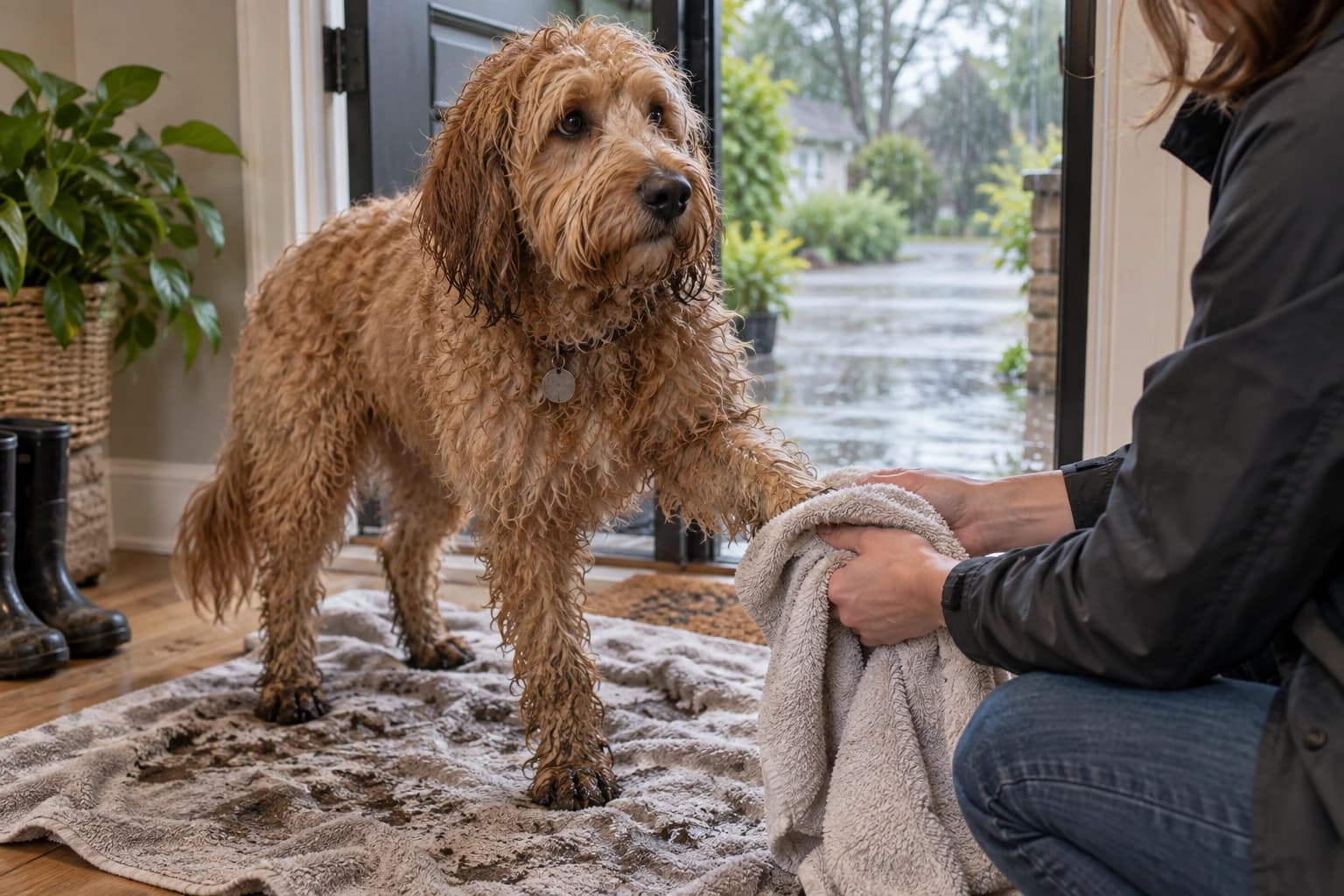
- Towel first, and firmly. Press and squeeze the water out rather than rubbing in circles, which can tangle longer coats.
- Get down to the skin. Part the coat with your fingers in a few places, especially behind the ears, under the collar, the armpits, the tail and the backs of the legs. If it feels damp at the skin, keep going.
- Use a dryer if your dog tolerates it. Keep it on a cool or low setting, keep it moving, and hold it away from the face. Never leave a dryer pointed at a dog unattended.
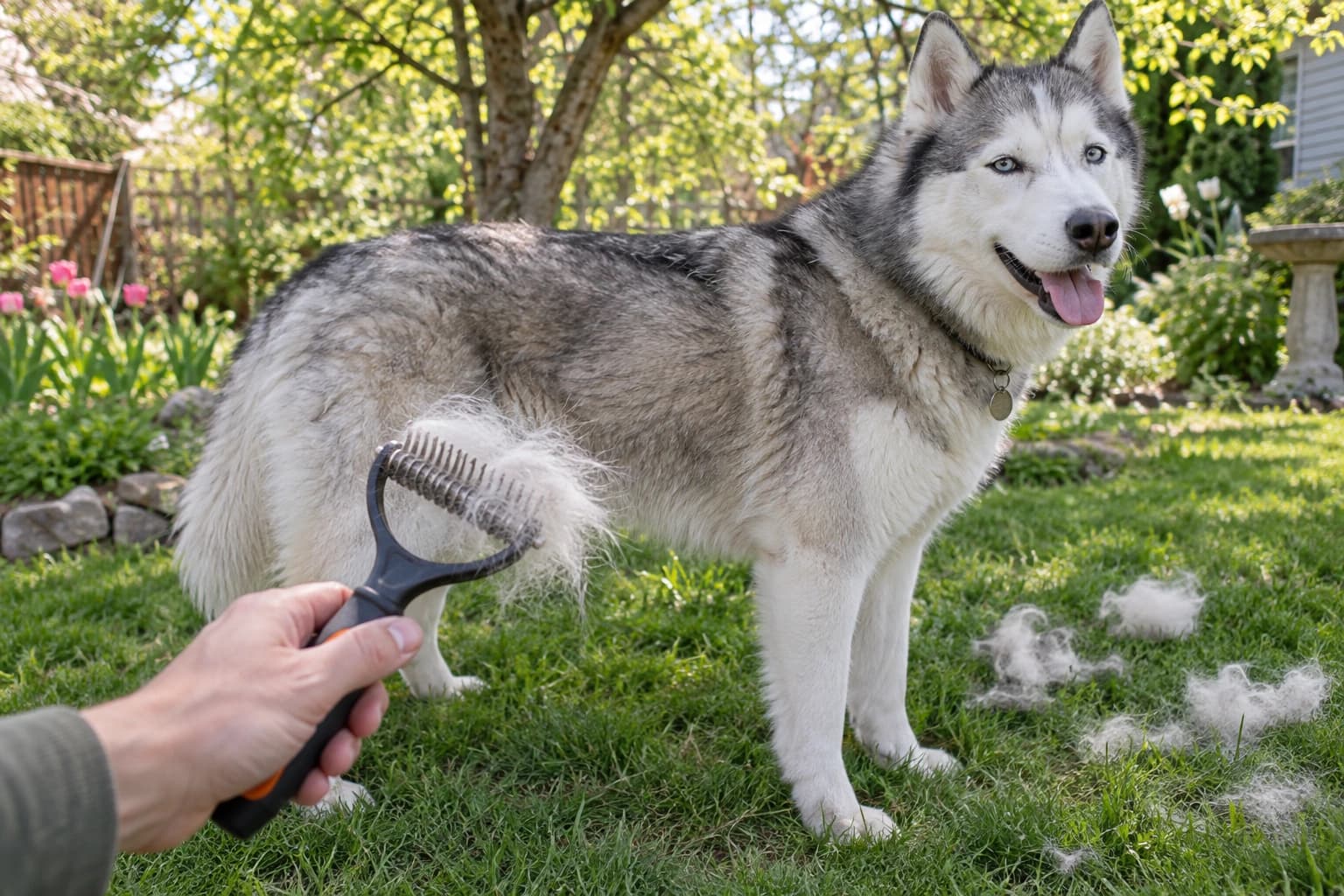
- Brush once dry. A good brush out, especially during shedding season, gets loose undercoat out so air can reach the skin next time.
If you do find a hot spot, a red, moist or hairless patch your dog keeps licking or scratching, call your vet. They can spread fast, and they're much easier to deal with early.
Don't forget the ears
Water that sits in the ear canal after swimming is one of the common reasons dogs end up with ear infections. Dogs with floppy ears, like spaniels, retrievers and doodles, are especially prone because the ear flap holds the moisture in.
After a swim, gently dry the inside of the ear flap and the opening of the ear with a soft towel or cotton pad. Don't push cotton swabs or anything else down into the canal. If your dog swims a lot, ask your vet whether an ear drying solution makes sense for them, and follow their instructions.
Watch for the signs that something is brewing:
- Head shaking or pawing at the ears
- Redness or swelling inside the ear
- A sour or yeasty smell
- Discharge, dark wax or crusting
- Tilting the head or wincing when you touch the ear
Any of those is a reason to see your vet, not to wait for the next groom.
Check for foxtails and debris
In spring and summer, the grass along trails and shorelines is full of foxtails, the dry, barbed seed heads that work their way into dogs and only move one direction: in. A swim followed by a roll in dry grass is a perfect way to collect them.
Once your dog is dry, run your hands over them and look closely at:
- Between the toes and pads
- Inside and around the ears
- Around the eyes and nose
- The armpits and groin
- Under the tail
Pull out any foxtails sitting on the surface of the coat, along with burrs and sticks. If a foxtail has already started to go into the skin, an ear or a nose, leave it to your vet. Sudden sneezing, violent head shaking, squinting, or licking one spot on a paw over and over after a day outdoors can all mean a foxtail has gotten in somewhere you can't see.
A word about algae
In warm months, some lakes and reservoirs around the Bay Area develop blue-green algae blooms. These can produce toxins that are dangerous to dogs, both from swimming and from drinking the water or licking it off their coat. You can't always tell by looking.
Before a lake day, check for posted signs and any advisories from the park. If there's a warning, keep your dog out of the water, even if other dogs are in it. If your dog does get into water you're unsure about, rinse them well with fresh water right away so they don't lick it off, and call your vet or an emergency vet immediately if they show vomiting, drooling, weakness, stumbling or seizures.
Swimming dogs also tend to need more frequent baths and deshedding in summer, and a good deshedding session can make a big difference in how fast a thick coat dries. If your water dog is due for one, I'm happy to help.