Seasonal Care
Should You Shave Your Dog for Summer?
Why shaving a double-coated dog usually isn't the cooling fix it seems, which coats can safely go shorter for summer, and the one situation where shaving really is the kind choice.
Nat · May 18, 2026 · 6 min read
As the days warm up, a lot of owners wonder whether to shave their dog. It comes from a good place. You see your fluffy dog panting on a hot afternoon and you want to help. The answer depends almost entirely on what kind of coat your dog has. For some dogs, a shorter summer cut is a good idea. For others, shaving can do more harm than good.
Start with the coat type
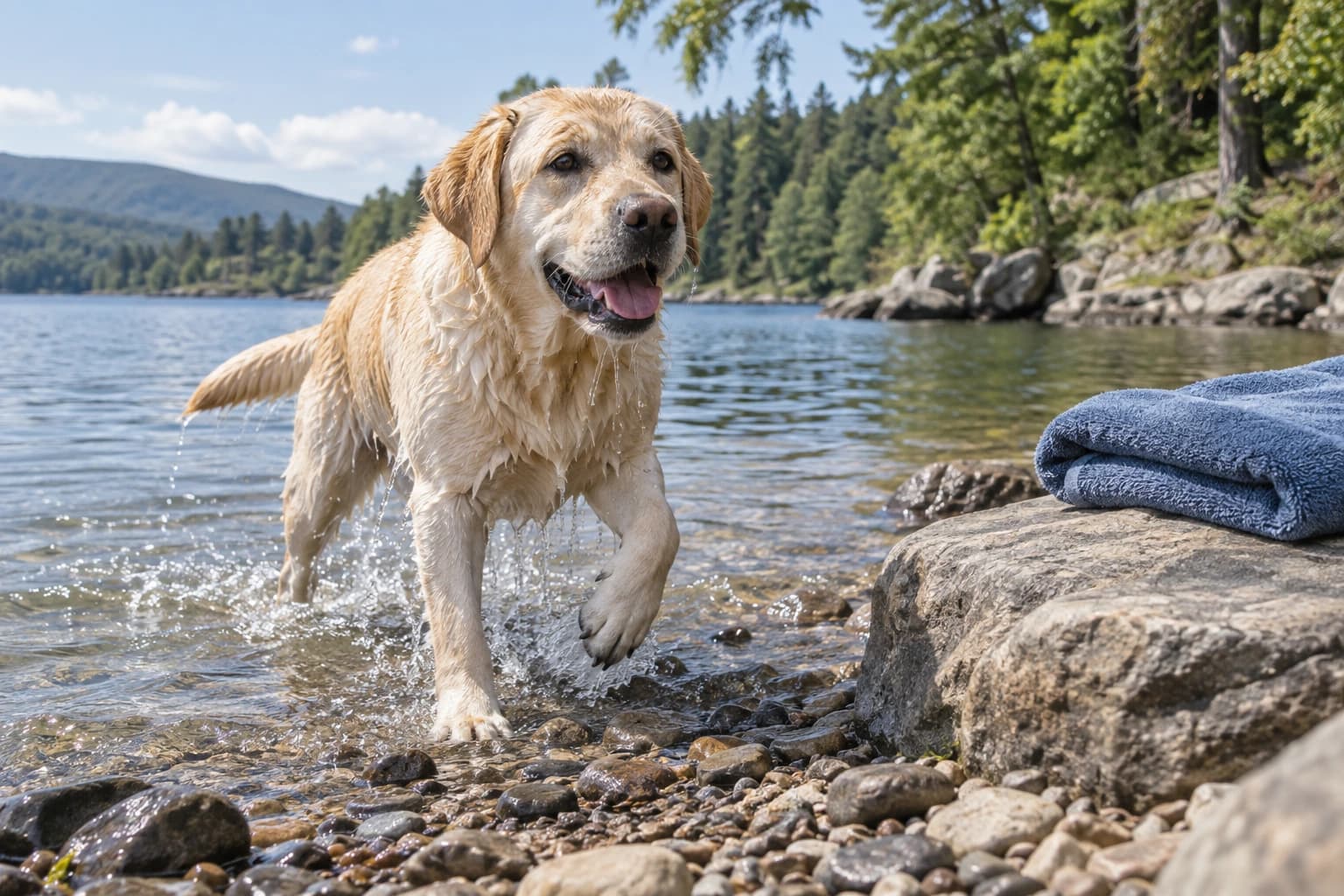
Double coats have two layers. There's a soft, dense undercoat close to the skin and longer, coarser guard hairs on top. Huskies, German Shepherds, Golden Retrievers, Labs, Corgis, Australian Shepherds, Pomeranians, and Samoyeds all have double coats.
Single coats have one layer of hair that keeps growing, often with little or no undercoat. Poodles, Shih Tzus, Maltese, Yorkies, Bichons, and many doodles fall into this group, though doodles vary a lot depending on which parent's coat they took after.
If you're not sure what your dog has, part the fur down to the skin. A thick, woolly layer underneath with longer hair on top usually means a double coat. Your groomer can tell you for certain.
Why shaving a double coat usually isn't the answer
It seems logical that less fur means a cooler dog. With a double coat, it doesn't work that simply.
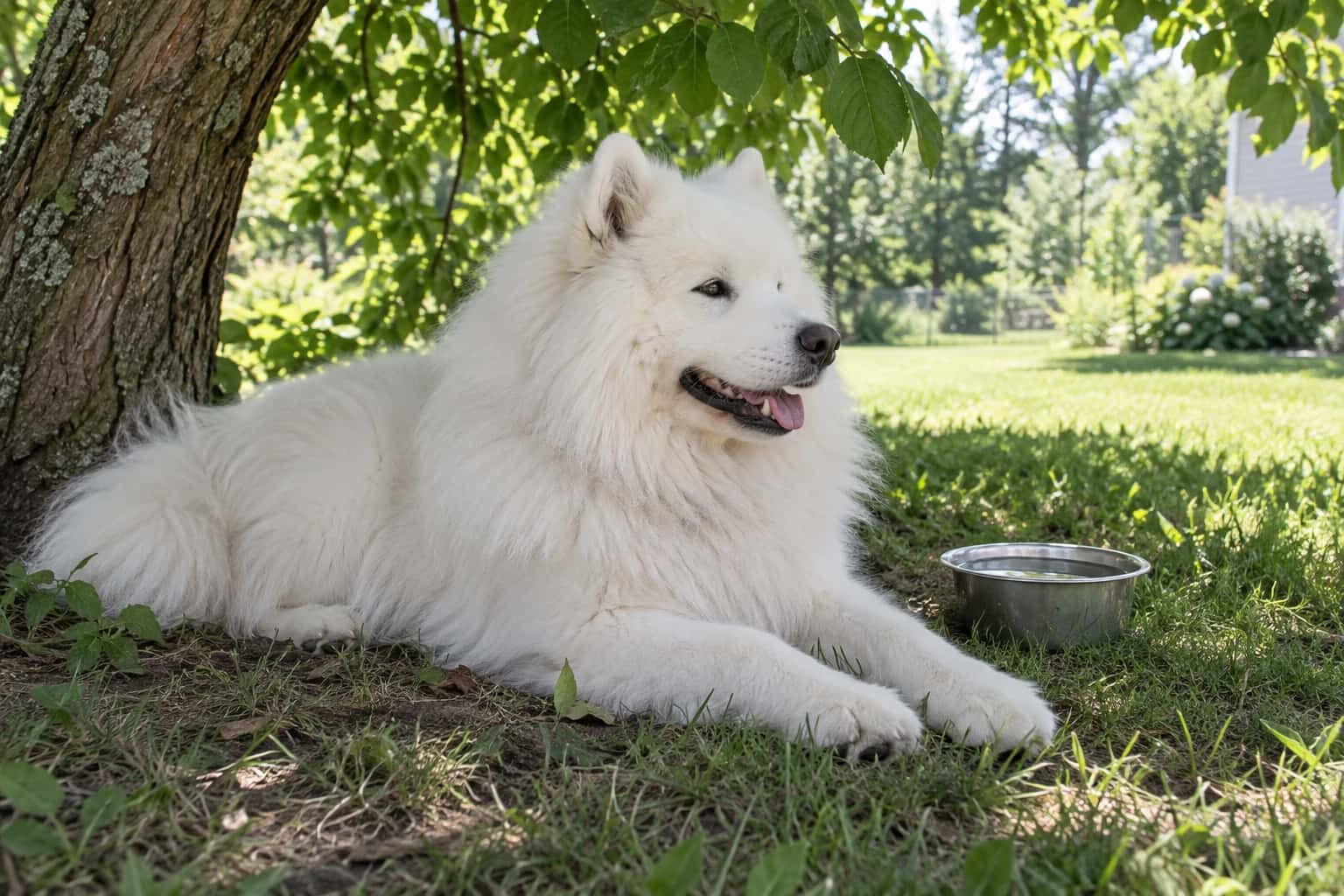
The coat is insulation, both ways. A healthy double coat helps protect a dog from heat as well as cold. The guard hairs shade the skin from direct sun, and once the loose undercoat is brushed out, air can move through the coat close to the body. Take it all off and your dog loses that layer of protection. Dogs also cool themselves mainly by panting, with a little help from sweat glands in their paw pads, not by sweating through their skin the way we do, so bare skin doesn't give them the relief you might expect.
Sunburn. Dogs' skin is used to being covered. Shaved down, it's exposed to the sun, and dogs with pale or pink skin can burn, particularly on the back and nose. Sunburn is uncomfortable, and repeated sun exposure isn't good for skin long term.
The coat may not grow back the same. Sometimes a shaved double coat grows back patchy, uneven, or with a different texture. The undercoat can come in faster than the guard hairs and leave the coat woolly and prone to matting. In some dogs, patches can take a long time to regrow. This doesn't happen to every dog. Plenty of double-coated dogs are shaved for surgery or matting and grow back just fine. But you can't know in advance which dog it'll be, which is why I don't shave a healthy double coat just for summer.
Single-coated dogs can go shorter
For dogs with continuously growing hair, a shorter summer cut is usually perfectly fine and can make life easier. A shorter coat is quicker to dry after swimming, collects fewer foxtails and burrs, and is much easier to keep free of mats between grooms.
I'd still leave a little length rather than taking the coat right down to the skin. Even a short layer of hair gives some protection from the sun. And remember that a shorter cut doesn't replace the other ways of keeping cool: shade, fresh water, and walks at cooler times of day.
Better options for double-coated dogs
If your double-coated dog is struggling in the heat, there's a lot you can do without shaving.
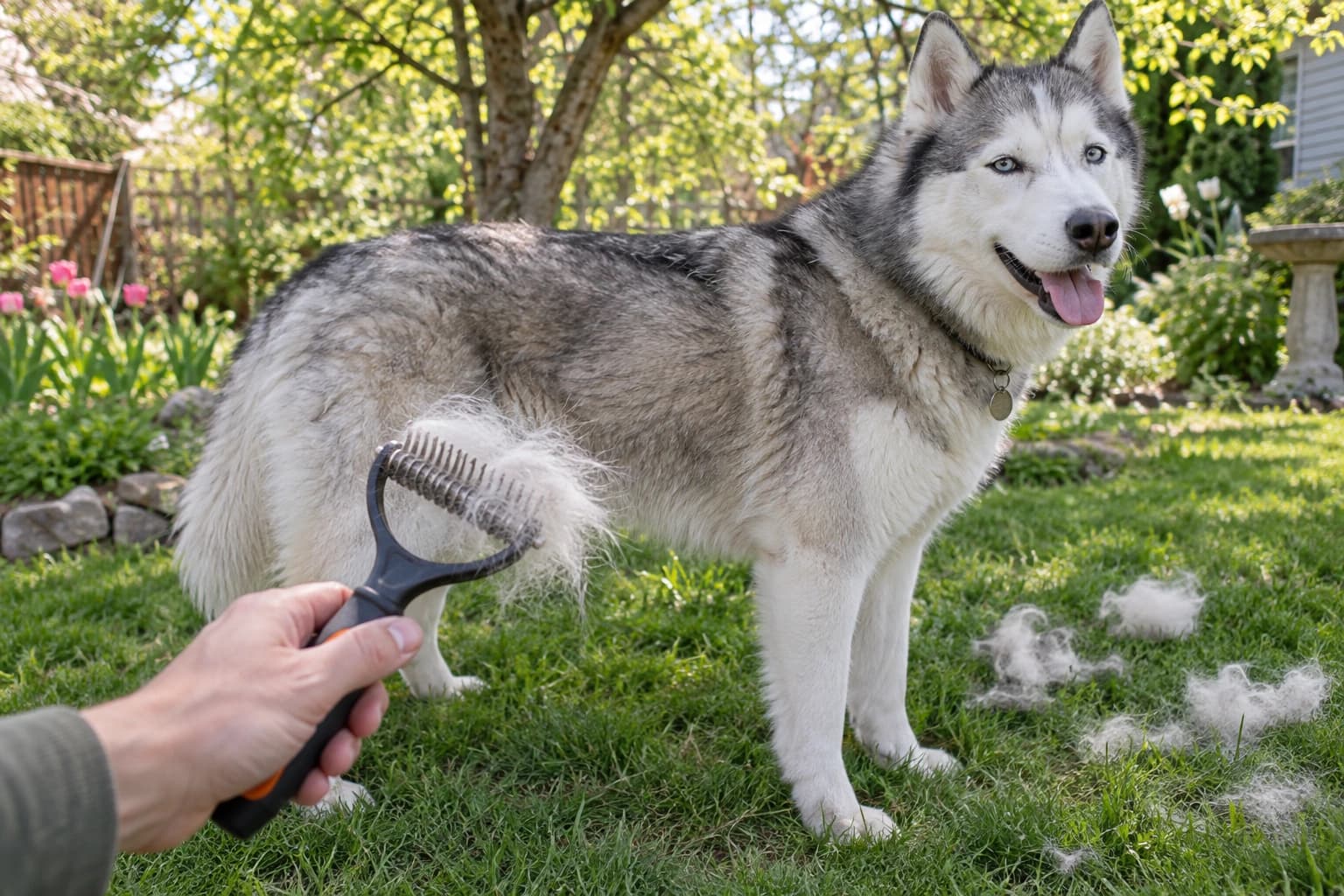
Deshedding. Most of the heaviness you see in a double coat in late spring is loose undercoat that hasn't come out yet. A thorough deshedding treatment removes that dead fluff and lets air reach the skin, and it makes a real difference to how much hair ends up on your floors. Regular brushing at home with an undercoat rake or slicker keeps it from building back up.
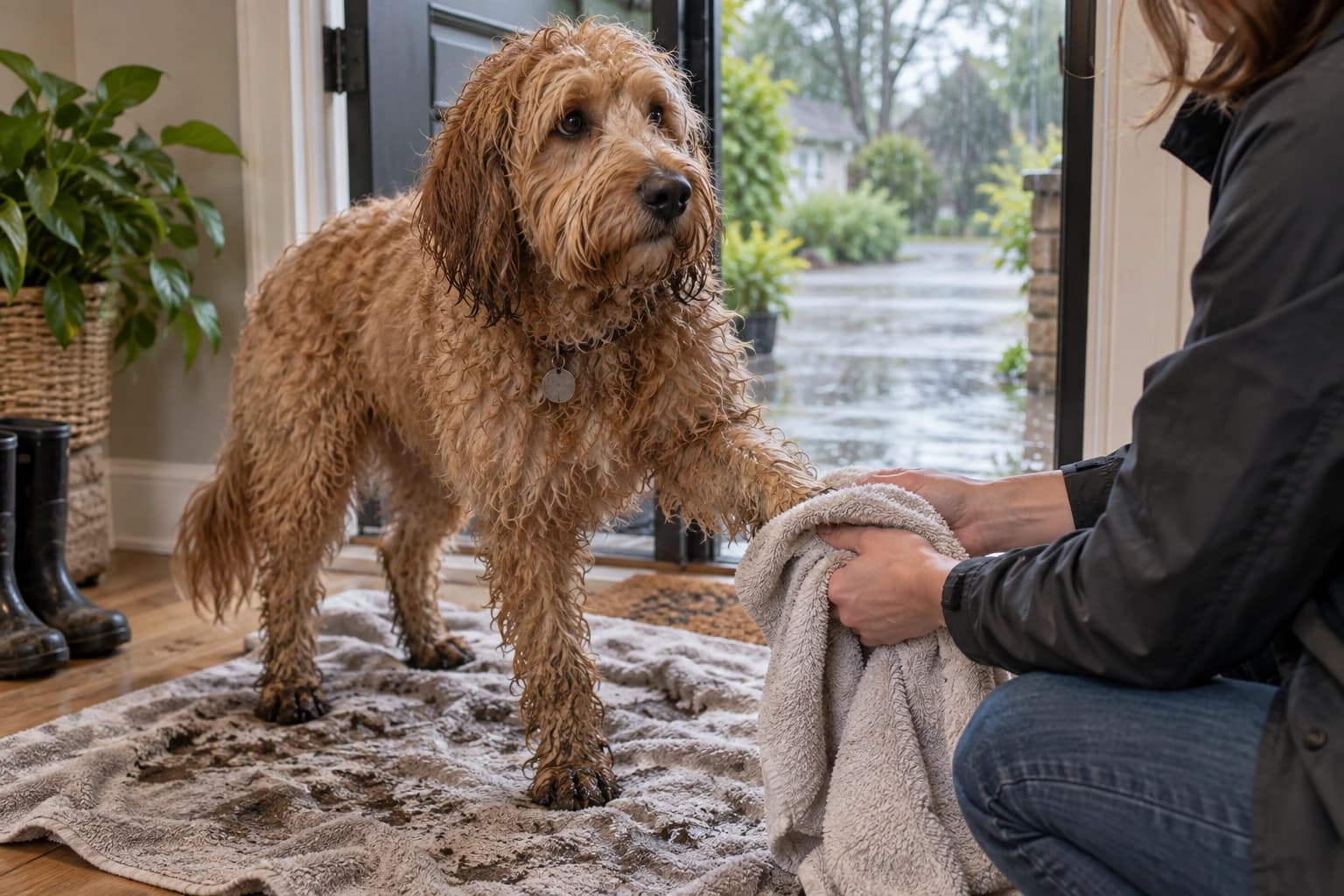
A tidy trim. You can make a dog more comfortable without touching the main coat. Trimming the paw fur, a sanitary trim, neatening the feathering on the legs and tail, and tidying the belly all help keep your dog cleaner and a bit cooler, especially after trips to the beach or the trails.
Everyday heat care. Walk early or late, bring water, let your dog rest in the shade, and never leave them in a parked car, even for a few minutes. Heavy panting, drooling, weakness, stumbling, or vomiting on a hot day can be signs of heatstroke. Move your dog somewhere cool and call your vet right away.
When shaving is the kind choice
There is one situation where I'll recommend shaving a dog, whatever their coat type: severe matting.
When mats get tight and close to the skin, they pull with every movement. They trap moisture and dirt against the skin and can hide sores, hot spots, or parasites underneath. Brushing out mats that bad would be painful and would take hours. In that case, shaving the coat down and starting fresh is the right thing for the dog. Comfort comes first, and the coat will grow.
After a shave-down, the skin underneath is often pink, irritated, or itchy for a few days. Keep your dog out of strong sun while the coat grows in, and watch for scratching or redness that doesn't settle. If anything looks sore or infected, check with your vet. Then a regular brushing and grooming routine helps keep the coat from getting to that point again.
Your vet may also shave areas for medical reasons, like surgery or treating a skin problem. That's always the right call when they advise it.
The short version
If your dog has a double coat, skip the shave and focus on getting the undercoat out. If your dog has a single coat, a shorter summer cut with a little length left is usually a good choice. If your dog is badly matted, shaving is often the best way forward. When in doubt, ask your groomer to look at your dog's coat with you. If you're in the East Bay, I'm always glad to help you figure out what will keep your dog comfortable.