Seasonal Care
Fall Shedding and What a Deshedding Treatment Actually Does
Why double-coated dogs shed again in the fall, what happens step by step during a deshedding treatment, how often it makes sense, and how to keep up at home.
Nat · October 5, 2026 · 5 min read
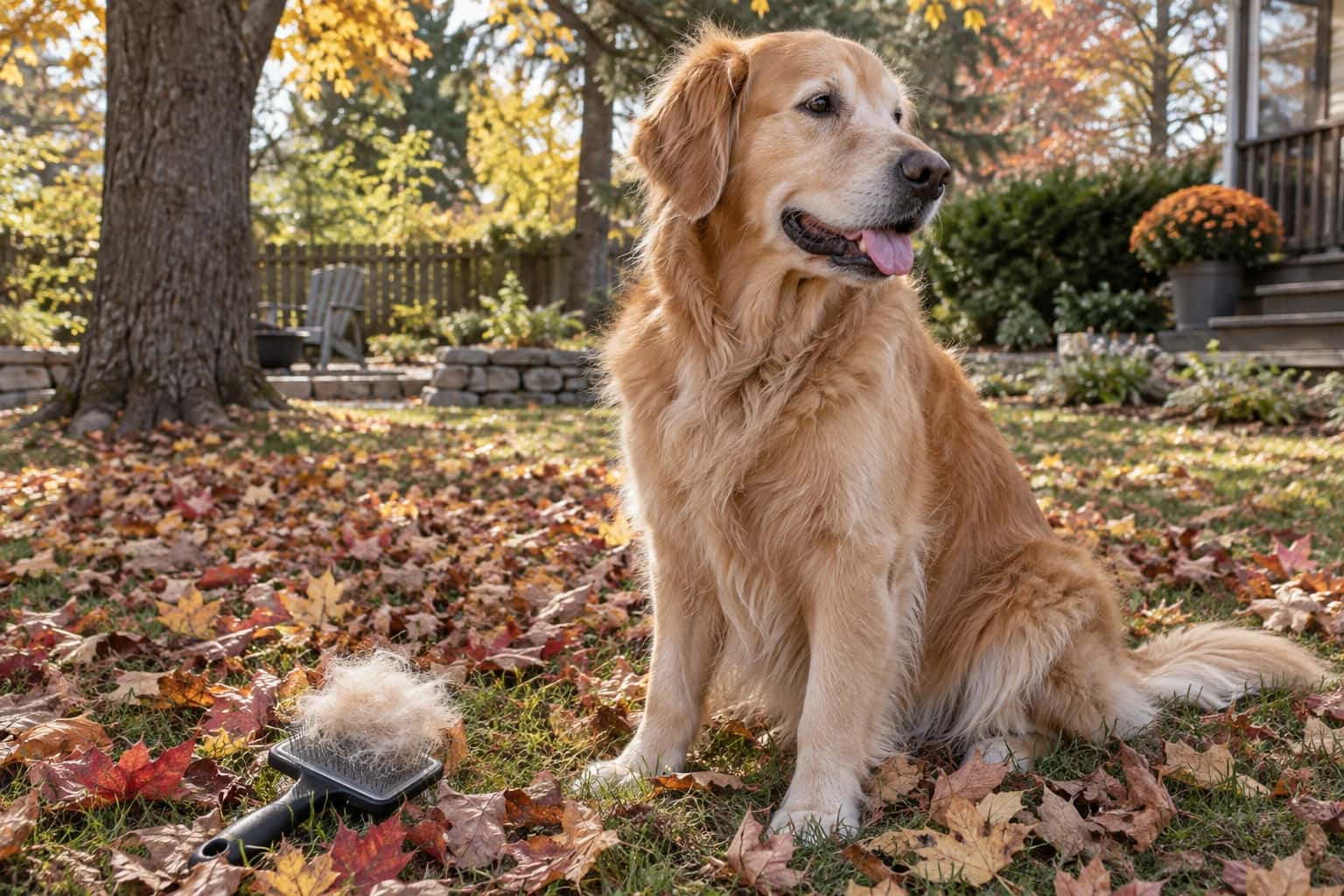
Most people expect the big shed in spring, so the fall one catches owners off guard. The days get shorter and suddenly tufts of fur are drifting across the kitchen floor again. If your dog has a double coat, this is normal. Their body is swapping out the lighter summer undercoat for a thicker winter one, and the old fluff has to go somewhere.
Our East Bay winters are mild, but dogs respond to daylight as much as temperature, so the fall shed still happens. It's usually gentler than spring and comes on gradually through September and October.
Which dogs shed in the fall
The dogs who shed hardest this time of year are the double-coated breeds: German Shepherds, Huskies, Golden Retrievers, Corgis, Australian Shepherds, Pomeranians, and plenty of mixes with that soft, dense layer under the outer coat.
Single-coated dogs with continuously growing hair, like Poodles, Bichons, and many doodles, don't have a seasonal shed in the same way. Their loose hair gets caught in the coat instead of falling out, which is a matting problem more than a shedding one.
Short-coated dogs like Labs and Pugs often surprise their owners. Many of them drop hair all year with an extra push in fall.
What a deshedding treatment is
A deshedding treatment is a bath and groom built around one goal: getting the loose undercoat out of the coat and off your dog, instead of onto your couch over the next six weeks. Each step sets up the next one.
The bath. A thorough wash with a shampoo suited to your dog's skin, worked all the way down through a thick coat, since dirt and oil hold the dead undercoat in place. Plenty of hair comes loose in the bath alone.
Conditioner. The step people skip at home, and it makes a real difference. Conditioner helps the loose undercoat slide free instead of snagging, so there's less pulling on your dog's skin during brushing.
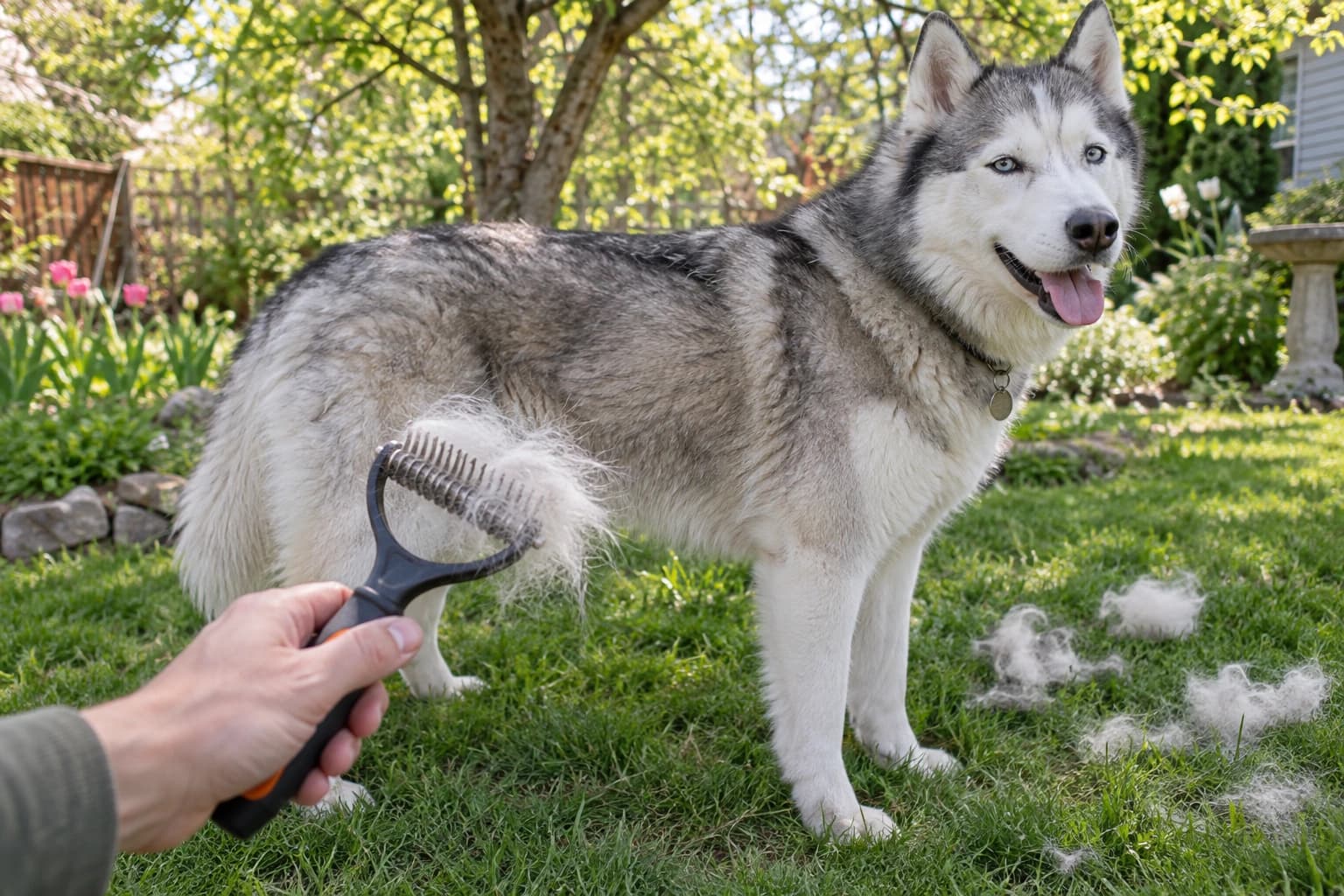
Undercoat tool. Once the coat is clean and conditioned, I work through it with an undercoat rake or deshedding tool, in sections, going with the direction of the hair. This part is gentle and slow. The aim is to lift out what's already loose, not to thin the coat or scrape the skin. Deshedding tools can irritate skin if they're used too hard or too long in one spot, so I watch how the skin looks and how the dog is feeling as I go.
The blow-out. A thorough, careful dry is where a lot of the remaining undercoat comes out, as airflow pushes loose fluff free that brushing can't reach. It also dries the coat down to the skin. A thick coat left damp underneath can stay wet for hours and irritate the skin.
A final brush-through. One more pass with a brush and comb catches what the dryer loosened.
When it's done, the coat should look fuller and softer, not thinner. The guard hairs stay. You're only removing hair your dog was going to shed anyway, just all at once and in one place.
How often
For most double-coated dogs, one deshedding treatment at the start of the fall shed makes a big difference, and a second a few weeks later helps if your dog is a heavy shedder. Outside of the seasonal sheds, many dogs do well with a deshed every couple of months as part of their regular groom.
Your dog will tell you. If soft tufts come away when you run your hand down their back or along their neck and rear end, the undercoat is ready to come out.
Keeping up at home
A professional deshed clears the backlog. Brushing at home keeps it from building back up.
- Brush a few times a week during the shed, daily if you can manage it. Short sessions are fine.
- Work in sections. Lift the hair and brush from the skin outward, especially behind the ears, the neck ruff, the "pants" on the back legs, and the base of the tail. These spots pack up fastest.
- Use a slicker brush and a metal comb. The comb is your check. If it can't glide from skin to tip, there's still packed undercoat there.
- Go easy with deshedding tools. A few passes per area is plenty. If the skin looks pink or your dog starts pulling away, stop.
- Brush outside while it's dry. East Bay fall is often warm and dry before the rain starts in November.
When it's more than a seasonal shed
Seasonal shedding comes out evenly and the skin underneath looks healthy. Call your vet if you notice bald patches, broken hairs, red or flaky skin, sores, a strong smell, or a lot of scratching or licking. Hair loss that seems out of proportion, or that doesn't settle after a few weeks, is worth having checked. Allergies, parasites, hormonal problems, and skin infections can all look like "shedding" at first.
Winter coat, coming in
A good deshed early on means that new winter coat grows in clean and soft, and you get to enjoy it instead of sweeping it up.
If your double-coated dog is leaving a trail behind them this fall, I'm happy to help with a deshedding treatment at home. You can get in touch here.