Seasonal Care
Rainy Season Care: Muddy Paws, Wet Coats, and Damp Skin
How to handle muddy feet at the door, dry a wet coat all the way down to the skin, and catch the damp-weather skin problems that show up in winter.
Nat · January 26, 2026 · 5 min read
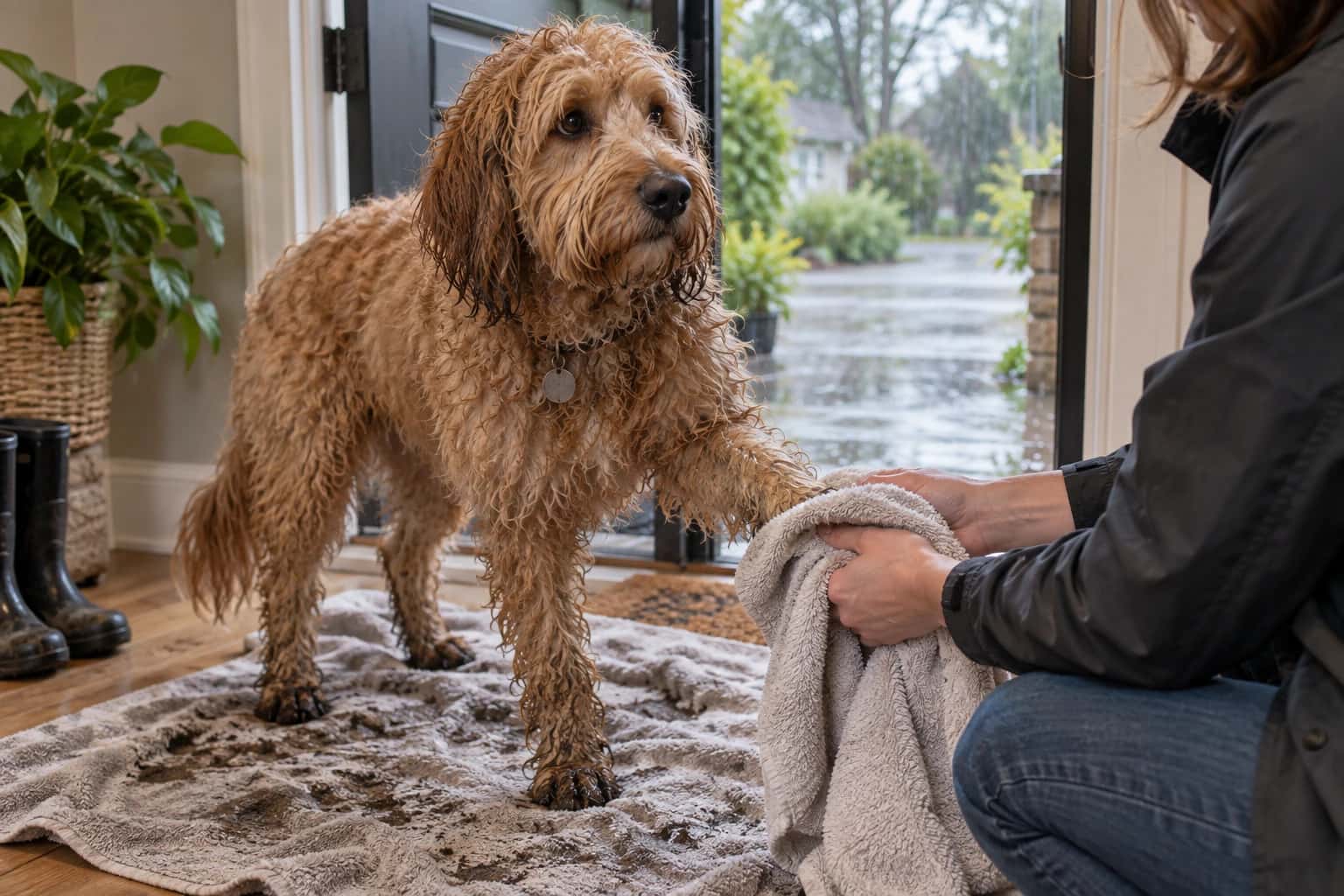
Here in the East Bay most of our rain arrives between November and March, and for a lot of dogs that means the same routine every day: out into the wet, back in with four muddy feet and a coat that smells like a damp sweater. Plenty of dogs love it. The trails at Tilden and Briones turn to mud, and nobody has told your dog that's a problem.
Most of what goes wrong in rainy season comes from one thing: moisture that stays on the skin too long. A coat that looks dry on top can still be wet underneath hours later, and that's where the itching, the smell, and the sore spots start. A few habits at the door make a real difference.
Set up a towel station
Keep a small kit by the door you use for walks, so you're not hunting for a towel with a dripping dog.
- Two or three absorbent towels, with one kept just for feet
- A shallow tub or bucket of lukewarm water for really muddy paws
- A washable mat to stand them on
- A few treats, because standing still for foot wiping is a skill worth rewarding
Wipe each foot, then the legs, belly, and underside of the tail, which pick up most of the splash. Then do a first pass over the body. If your dog doesn't love having their feet handled, go one paw at a time with a treat for each. It gets faster with practice.
Dry the coat all the way down
A quick rub gets the surface. The part that matters is the skin.
Short coats usually dry well with a good towel rub against the direction of the hair, then with it.
Double coats (Shepherds, Huskies, Goldens, Corgis, Aussies) are the ones to watch. The outer coat sheds water, but once the dense undercoat soaks through it holds moisture against the skin for a long time. Part the hair with your fingers in a few places, especially the neck, chest, and back end. If it feels cool and damp near the skin, keep going.
Curly and long coats (Poodles, doodles, Shih Tzus) hold water like a sponge, and wet curls tangle fast. Blot rather than scrub, since rubbing a wet curly coat is a quick way to make mats. Once dry, a gentle brush-through helps.
If you use a hair dryer, keep it on the cool or low setting, keep it moving, and hold it at a distance. A dog's skin burns more easily than ours, and they can't tell you it's too hot until it already is. A dog who hates the dryer is better off with extra towels and time in a warm room.
Damp undercoat and hot spots
Hot spots are patches of red, moist, inflamed skin that can appear surprisingly fast, sometimes over a day or two. Dogs with thick coats are prone to them, and damp weather makes them more likely because trapped moisture and warmth irritate the skin, the dog licks or scratches, and it snowballs from there.
Watch for:
- A dog licking, chewing, or scratching one spot over and over
- Hair that looks wet or matted in a patch when the rest is dry
- A sour or unpleasant smell from one area
- Skin that is red, oozing, or sore to the touch
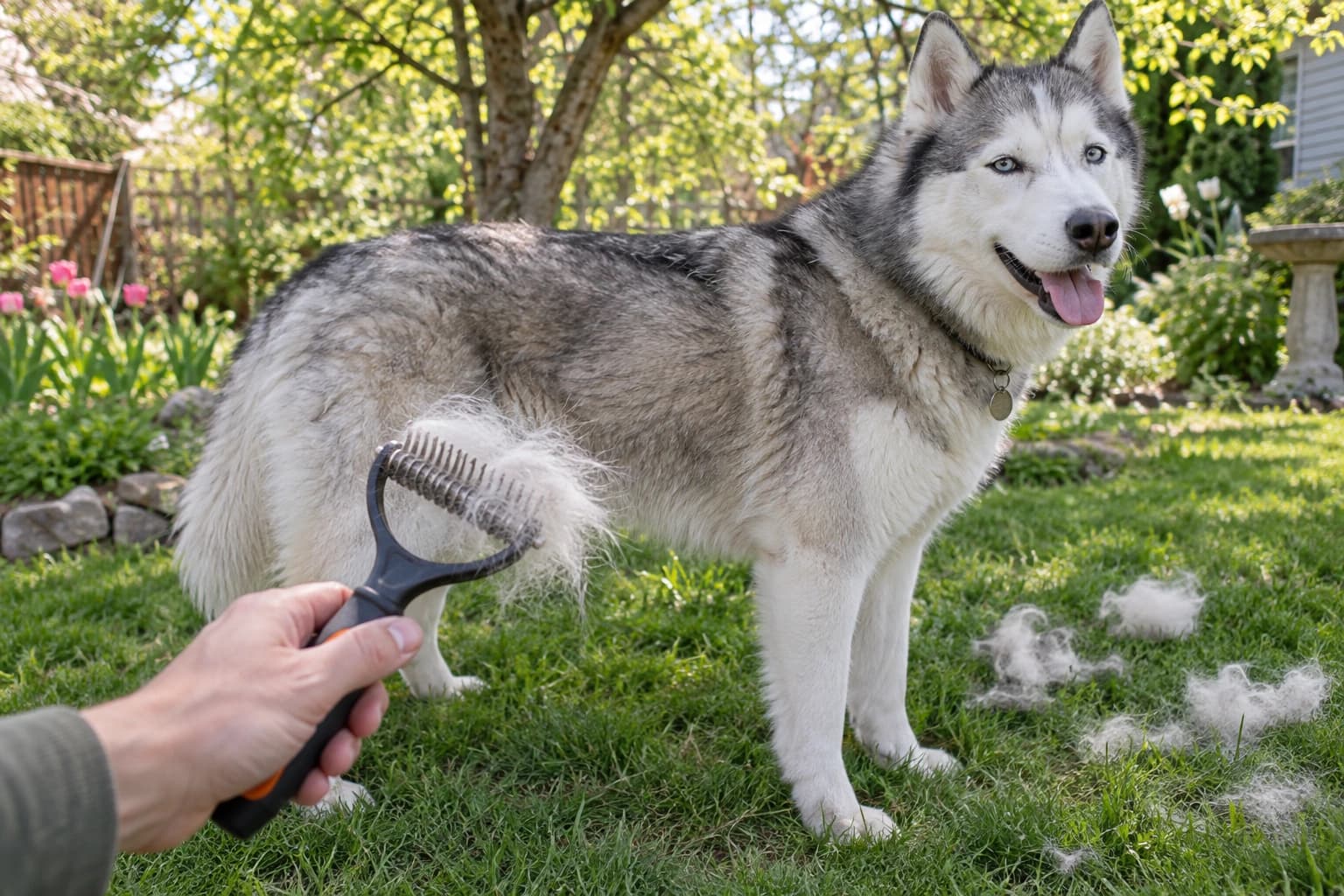
Hot spots need a vet. They're painful, they can get infected, and they often need proper cleaning and treatment to heal. Please don't try to treat one with home remedies. What you can do is prevent them, mostly by getting the coat dry to the skin and keeping the undercoat brushed out so air can reach it. Loose, dead undercoat traps moisture far more than a coat that's been kept clear.
Paw fur between the pads
Long fur between the pads collects mud, holds water, and on some dogs forms little clumps that pull at the skin. It also makes wood and tile floors slippery, which matters most for older dogs.
Keeping that fur trimmed level with the pads helps feet dry faster and stay cleaner. It's fiddly work close to delicate skin, so if you're not confident with scissors, it's a quick job for a groomer.
While you're drying feet, spread the toes and have a look. Redness between the toes, a yeasty smell, constant licking, or a dog who suddenly doesn't want their feet touched are all worth mentioning to your vet. Damp feet that stay damp can develop skin irritation or infection between the toes.
Floppy ears
Dogs with floppy ears can get water in them on wet walks, and warm, damp ear canals are a friendly place for infections. Wipe the outer ear dry after a soggy outing. Head shaking, scratching at the ears, redness, or a bad smell are reasons to call your vet.
Bathing in rainy season
A muddy dog doesn't always need a full bath. Often a rinse of the legs and belly plus a good towel dry is plenty, and bathing too often can dry out the skin. When you do bathe, pick a time when your dog can dry properly indoors afterward, rather than heading straight back into the rain.
Rainy months are also a good time for a proper deshed for double-coated dogs, since clearing out that dead undercoat is one of the best things you can do to help the coat dry faster.
A good end to a wet walk
A towel by the door, a few minutes of drying, and a quick look at feet and skin will keep most dogs comfortable all winter. If you'd like help getting a heavy coat or overgrown paw fur under control before the wet weather really sets in, get in touch.