DIY Grooming
How to Bathe Your Dog at Home Between Grooms
A step-by-step look at the bath itself: how often to do it, what to use, how warm the water should be, and how to rinse and dry so your dog's skin stays happy.
Nat · June 1, 2026 · 6 min read
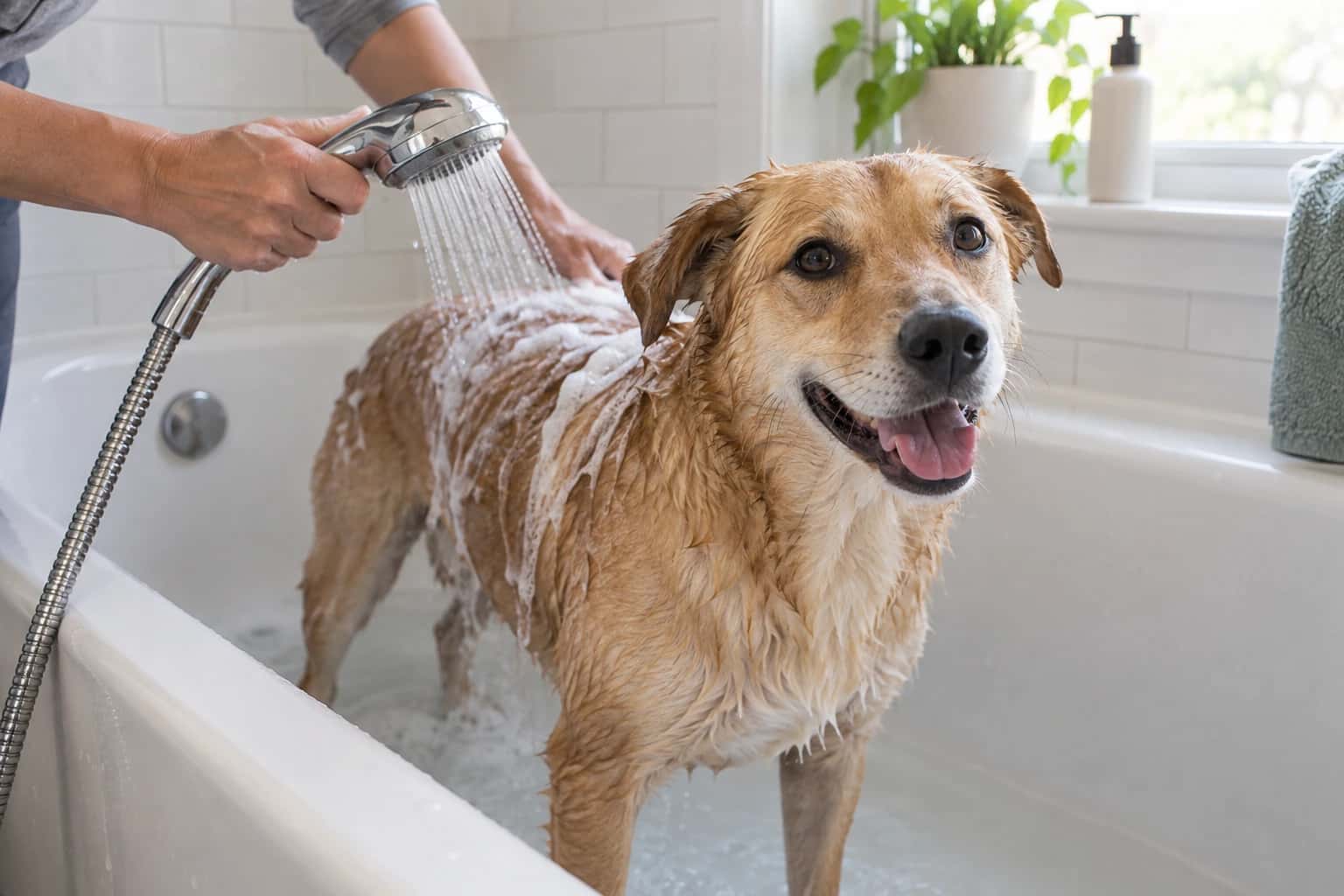
A bath at home between grooms can make a real difference, especially after a muddy walk or a roll in something your dog found fascinating and you did not. It can also go sideways fast: a wet dog bolting through the house, soap in the eyes, a coat that still smells like wet dog two days later. Most of that comes down to a few details. Here's how I'd approach the bath itself, from the setup to the last towel.
How often is enough
For most dogs, a bath every four to eight weeks is plenty, with extra rinses when they get properly dirty. Dogs have natural oils in their skin and coat that keep things healthy, and washing too often strips them. That can lead to dry, flaky, itchy skin, which then makes some dogs smell faster, not slower.
If your dog has a skin condition and your vet has prescribed a medicated shampoo, follow their schedule instead. Those baths often need a specific contact time and frequency, and your vet knows your dog's skin.
Use dog shampoo, not yours
What about a gentle human shampoo or baby shampoo in a pinch? I'd skip it. Dog skin has a different pH from ours and is thinner, so products made for people can irritate it and dry it out. A mild dog shampoo is the safe everyday choice. If your dog is itchy or sensitive, an oatmeal shampoo made for dogs is soothing for a lot of them.
Diluting shampoo in a cup or squeeze bottle of warm water before you apply it helps it spread through the coat and rinse out more easily.
Brush first, every time
This is the step people skip, and it's the one that matters most for longer and curly coats. Water tightens mats. A small tangle that you could have brushed out dry turns into a tight felted knot once it's wet and then dried. So brush the whole coat before the bath, down to the skin, and run a comb through to check.
If you find mats you can't work out, don't bathe over them and don't try to cut them out. Leave them for your groomer. For short coats, a quick once-over with a rubber brush before the bath loosens dead hair so more of it washes away.
Get everything ready before the dog
Once your dog is wet, you don't want to be hunting for a towel. Set out:
- Diluted shampoo and any conditioner
- A cup or handheld sprayer for rinsing
- A non-slip mat in the tub or shower
- A drain catcher for the hair
- Two or three towels, more for big or thick-coated dogs
- A washcloth for the face
- Treats within reach
Take off any collar that shouldn't get wet. And never leave your dog alone in the tub, even for a moment.
Water temperature
Aim for lukewarm, about what you'd use for a baby's bath. Test it on the inside of your wrist. Water that feels nicely warm to your hand can be too hot for your dog, and cold water makes a bath miserable and makes a lot of dogs fight it. Check again partway through if you're using a tap, since water heaters can shift.
Washing, in order
- Wet the coat thoroughly, starting at the neck and working back. Thick coats shed water, so work it in with your hand until it reaches the skin.
- Apply shampoo from the neck back, massaging down to the skin. Don't forget the belly, armpits, inside the back legs, and between the toes.
- Wash the head last, with a damp washcloth and a tiny bit of shampoo, working around the eyes rather than over them.
Starting at the neck matters for fleas, if there are any, and it keeps soap away from the face for as long as possible.
Keep water out of the ears
Water sitting in the ear canal is a common setup for ear irritation, especially in floppy-eared dogs. Don't spray water toward the head. Hold the ear flap down gently over the opening while you wash near it, or skip the head with the sprayer and use the washcloth. Some people place a loose cotton ball just in the opening of each ear, not pushed in, and take it out right after the bath. If you do this, don't forget them.
After the bath, dry the inside of the ear flap and the outer part of the ear with a towel or cotton pad. Never push anything down into the canal.
Rinse longer than you think you need to
This is where most home baths fall short. Shampoo left in the coat dries out the skin, can make it itchy, and leaves the coat dull and sticky so it gets dirty again sooner. Rinse until the water runs completely clear, then rinse again. Squeeze the coat with your hand. If it feels slippery or you see suds, keep going. Pay extra attention to the armpits, the belly, under the tail, and wherever the coat is thickest.
Drying
Let your dog shake first. Then squeeze and blot with towels rather than rubbing, which tangles longer coats. Swap to a dry towel when the first one is soaked.
If you use a blow dryer, keep it on a cool or low setting, keep it moving, and keep it off the face. Human dryers on high heat can burn skin quickly. Brush as you dry on longer coats.
The coat needs to be dry all the way to the skin. A damp undercoat left to air dry can lead to hot spots and that lingering wet dog smell. Keep your dog somewhere warm and out of drafts until they're fully dry, and be ready for zoomies. They're a normal and very happy part of bath day.
When to leave it to a groomer
A home bath is great for keeping your dog fresh. Mats, heavy shedding season, a skunk encounter, or a dog who panics in the tub are all good reasons to hand it off.
The first few home baths are usually the messiest. Keep the setup the same each time, and it gets quicker for both of you.