Home Care
Maintaining Your Dog's Coat Between Grooming Sessions
Practical at-home care to keep your dog's coat clean, comfortable, and free of mats between professional grooms.
Nat · October 20, 2025 · 5 min read
There's nothing quite like a freshly groomed dog: soft, fluffy, and smelling wonderful. A professional groom resets the coat, and what happens at home over the following weeks decides how long that lasts. The good news is it doesn't take much. A few minutes of brushing, done with a treat and some affection, prevents most of the problems I see, especially mats, and it's lovely one-on-one time with your pup.
Match the routine to the coat
- Long, curly, or wool coats (doodles, Poodles, Shih Tzus, Maltese): brush most days. These mat fastest.
- Medium coats and dogs with feathering: every couple of days.
- Short, smooth coats: once a week is usually enough.
If you love your dog in a longer style, the brushing has to match. If life makes that hard, there's no shame in it. A shorter cut is kinder than letting mats build up, and your dog won't mind one bit.
Tools worth having
- Slicker brush: the everyday brush for most coats.
- Metal comb: for checking your work. If the comb glides through to the skin, you're done. If it catches, there's a tangle.
- Undercoat rake: for double-coated breeds, especially during heavy shedding.
- Rubber curry brush: good for short coats.
A light spray of water with a little dog conditioner makes brushing easier and reduces breakage.
How to brush properly
If you've been brushing faithfully and your dog still mats, please don't feel guilty. It happens to devoted owners all the time, and it's usually down to technique. Surface brushing is the most common reason. The top looks smooth while the coat underneath tangles against the skin. Line brushing fixes this:
- Part the coat so you can see the skin.
- Brush a thin layer from the skin outward.
- Move the part a little and repeat, working through the whole dog in sections.
- Check each section with the comb.
Where mats start
Check these spots most often:
- Behind the ears
- Armpits
- Under the collar or harness
- Between the back legs
- Feet and around the ankles
Running your fingers through these areas every evening catches tangles while they're still small.
Bathing between grooms
Bathe when your dog is actually dirty or smelly, or when your vet has recommended it for skin care. Don't bathe to get rid of mats, because water tightens them.
- Brush out completely first.
- Use lukewarm water and a dog shampoo.
- Rinse thoroughly, since leftover shampoo can irritate skin.
- Dry completely. A coat left damp mats quickly.
Often a spot clean of the feet or face is all that's needed.
Coat-specific notes
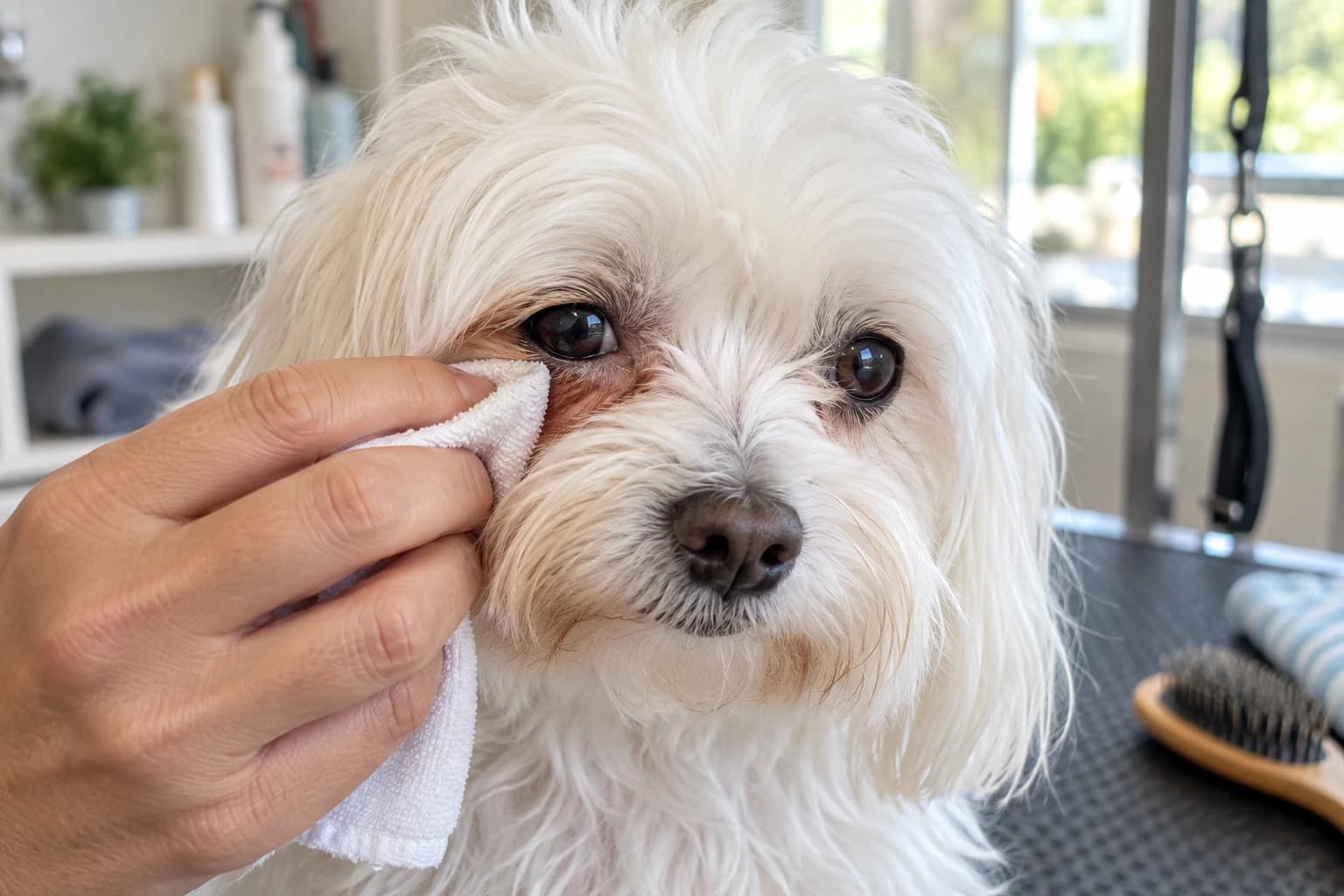
Long-haired small breeds. Wipe the face daily, especially around the eyes and after meals, and keep hair out of the eyes.
Double coats. Brush weekly and use the undercoat rake more often during shedding seasons. Don't shave to control shedding.
Doodles and curly coats. Daily brushing really matters here, particularly where the coat rubs: behind the ears, under the collar, and the legs.
Short coats. They still need weekly brushing, nail trims, and ear checks.
Face, feet, and hygiene
- Face: gently wipe the eye area and beard. Leave trimming near the eyes to your groomer.
- Feet: after walks, check between the toes for debris and dry wet feet. In the East Bay, look for foxtails and other grass seeds in the feet, ears, and armpits during the dry months.
- Sanitary area: keep it clean and let your groomer keep the hair short.
Dealing with problems
Small tangle. Spray it, loosen the edges with your fingers, then work it out gently with the comb. Don't cut mats out with scissors. It is very easy to cut skin.
Large or tight mats. Leave these for your groomer. Pulling at them hurts your dog and can make them wary of brushing. Finding one isn't a reason for guilt, just a reason to call.
Dog hates brushing. Go back to basics: brush nearby with a treat, one stroke with a treat, and build slowly. Keep sessions short and sweet, and end with praise.
Dull coat, flaky skin, redness, or hair loss. Mention it to your vet, since coat changes can have a health cause.
A simple schedule
- Daily: quick brush or finger check of mat-prone spots, face wipe, paw check.
- Weekly: full line brush and comb-through, ear check, look at nail length.
- Every few weeks: professional groom, with the interval depending on coat and style.
Five minutes most days does far more than an hour once a week, and your dog gets a little extra love every day.
If you're in the East Bay and want help setting up a routine for your dog, get in touch.