Grooming Tips
Why Home Grooming Might Not Be Enough for Your Dog
What's worth doing at home, what tends to go wrong with DIY haircuts and baths, and when it makes sense to bring in a professional groomer.
Nat · March 10, 2025 · 4 min read
Wanting to groom your own dog comes from a good place, and I'm all for it. Owners who brush regularly and keep an eye on their dog's ears, teeth, and paws make my job easier and their dogs more comfortable, and those quiet brushing sessions are lovely bonding time. But some parts of grooming are harder than they look, and a few can hurt your dog if they go wrong.
Where home haircuts go wrong
The most common problems I see after a DIY trim:
- Bald patches and uneven lines. Home clippers often struggle with thick or curly coats, and it's easy to pick a blade that's far too short or to press unevenly.
- Steps and choppy spots. Blending lengths smoothly takes practice and the right tools.
- Clipper burn. Blades get hot quickly, and a hot blade on thin or sensitive skin causes irritation.
- Nicks and cuts. Skin around the armpits, belly, ears, and between the toes is thin and moves. Scissors near the face and eyes are especially risky.
If a home haircut hasn't gone to plan, please don't beat yourself up. Hair grows back, and your dog doesn't care how they look. Injuries and a dog that learns to fear grooming are the bigger worries.
Bathing is harder than it sounds
Bathing a big or wriggly dog in a home tub is hard on your back and your bathroom. The two things people most often get wrong are rinsing and drying. Shampoo left in the coat can irritate the skin, and a thick coat that's only dried on the surface stays damp underneath, which can lead to mats and skin problems. Water and shampoo in the ears and eyes are worth avoiding too.
Nails and the quick
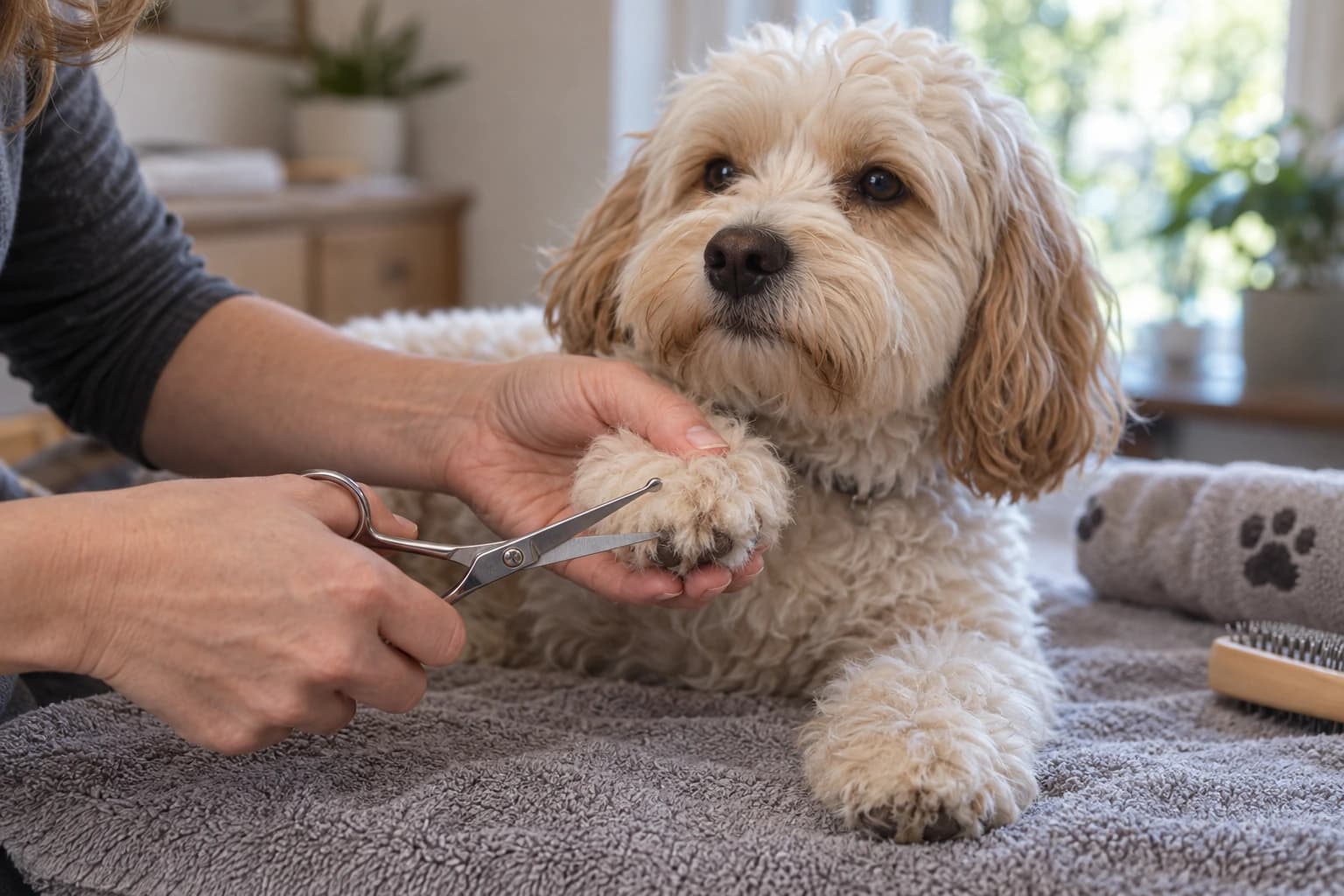
Cutting into the quick hurts and bleeds, and one bad experience can make a dog fight nail trims for a long time. Dark nails are the hardest because you can't see where the quick is. If trims at home are a struggle, having a groomer do them is a perfectly reasonable choice.
Tools and technique
Groomers work with clippers built for all-day use, a range of blades and combs, high-velocity dryers that get thick coats dry to the skin, and a table with a safety loop that keeps the dog secure. More important than the equipment is knowing how different coats behave. A doodle, a double-coated shepherd, and a wire-coated terrier each need a different approach, and the right choice for one can damage another. Shaving a double coat is a common example.
Handling is a skill too: reading a dog's body language, knowing when to slow down or take a break, and keeping an anxious dog safe and calm without force. Keeping grooming a good experience for your dog matters as much as the haircut.
What to do at home
These are the things that make the biggest difference between appointments:
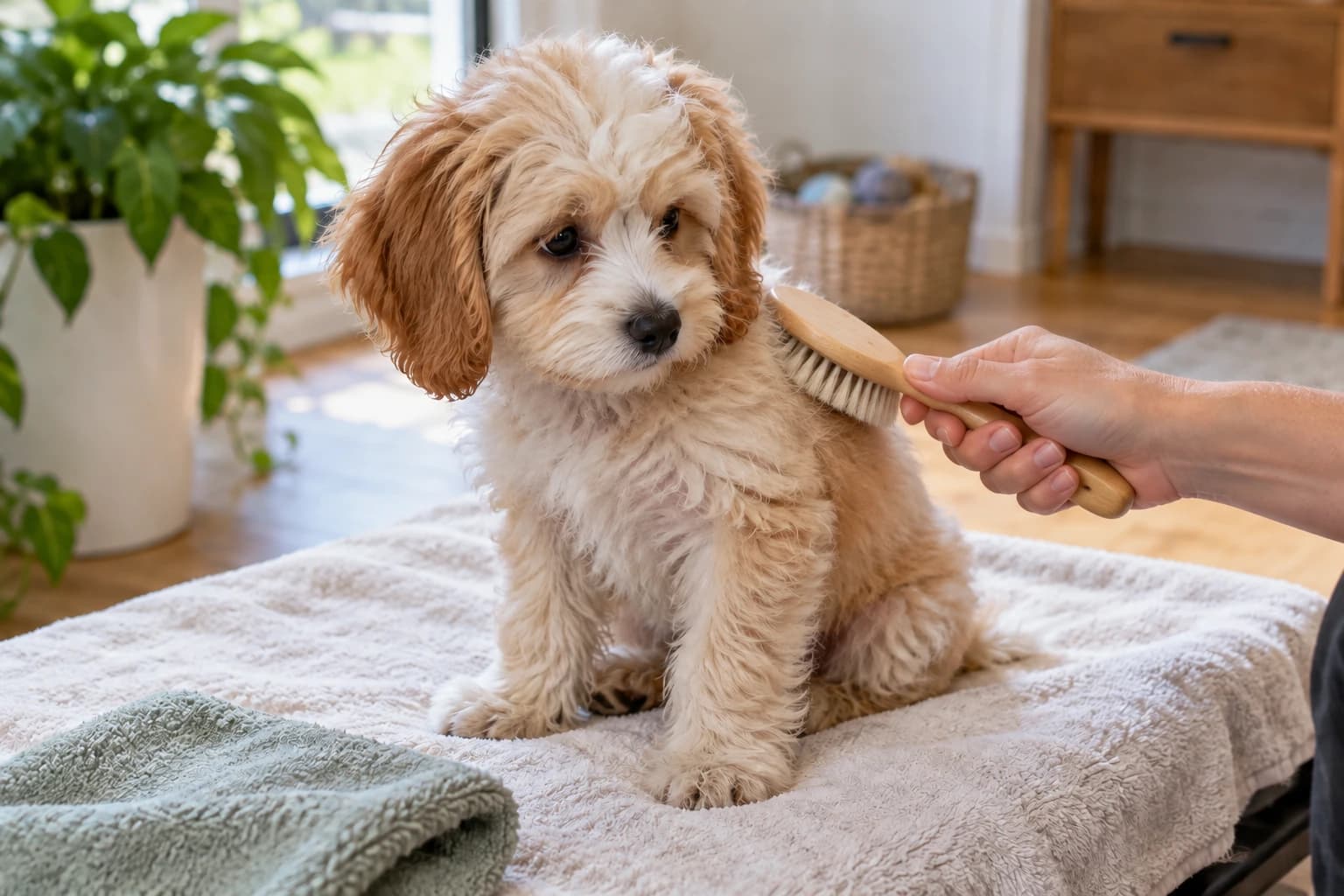
- Brushing. Right down to the skin, especially for long, curly, or double coats. This is the best way to prevent mats.
- Teeth. Brush with a toothpaste made for dogs. Ask your vet if you're unsure what to use.
- Ears. Look and sniff. Redness, discharge, or a bad smell means a vet visit.
- Paws. Check for cuts, splinters, and burrs, especially after hikes.
- Nails. If your dog tolerates it, a nail grinder can keep nails short between trims.
- Spot cleaning. Wipe muddy paws and faces as needed.
With small mats, only work on them if you can get a comb underneath. Don't cut mats out with scissors. It's very easy to cut skin that's been pulled up into the mat.
When to bring in a groomer
- Mats that are close to the skin or cover large areas
- Haircuts for coats that need regular clipping
- Nail trims your dog won't tolerate at home
- Senior dogs or dogs with mobility issues that need careful handling
- Dogs that are fearful or reactive during grooming
- Any skin problem your vet wants handled a particular way
Doing both
The best setup for most dogs is regular brushing and basic care at home, with professional grooming on a schedule that fits the coat. For many coats that's every 4 to 8 weeks, and for curly coats often closer to 4 to 6. You get the everyday care and cuddles, your dog stays comfortable between visits, and each groom is easier on them because of it.
If you're in the East Bay and want help with your dog's grooming, get in touch.