Grooming Tips
Preparing Your Dog for Their First Grooming Appointment
A few weeks of simple practice at home can make a dog's first professional groom calmer for everyone. Here's what to work on and what to tell your groomer.
Nat · April 21, 2025 · 5 min read
If you're a little nervous about your dog's first grooming appointment, that's completely normal. You're handing someone you love to a stranger, and you want it to go well. I want that too.
A first groom tends to set the tone for the ones that follow. A calm first visit makes the next one easier, while a frightening one can take a long time to undo. The good news is that most of the preparation happens at home, it's simple, and it's a nice way to spend a few minutes with your dog each day.
Start handling practice a few weeks ahead
A groomer will touch parts of your dog that don't get handled much. Get your dog used to it in short, relaxed sessions:
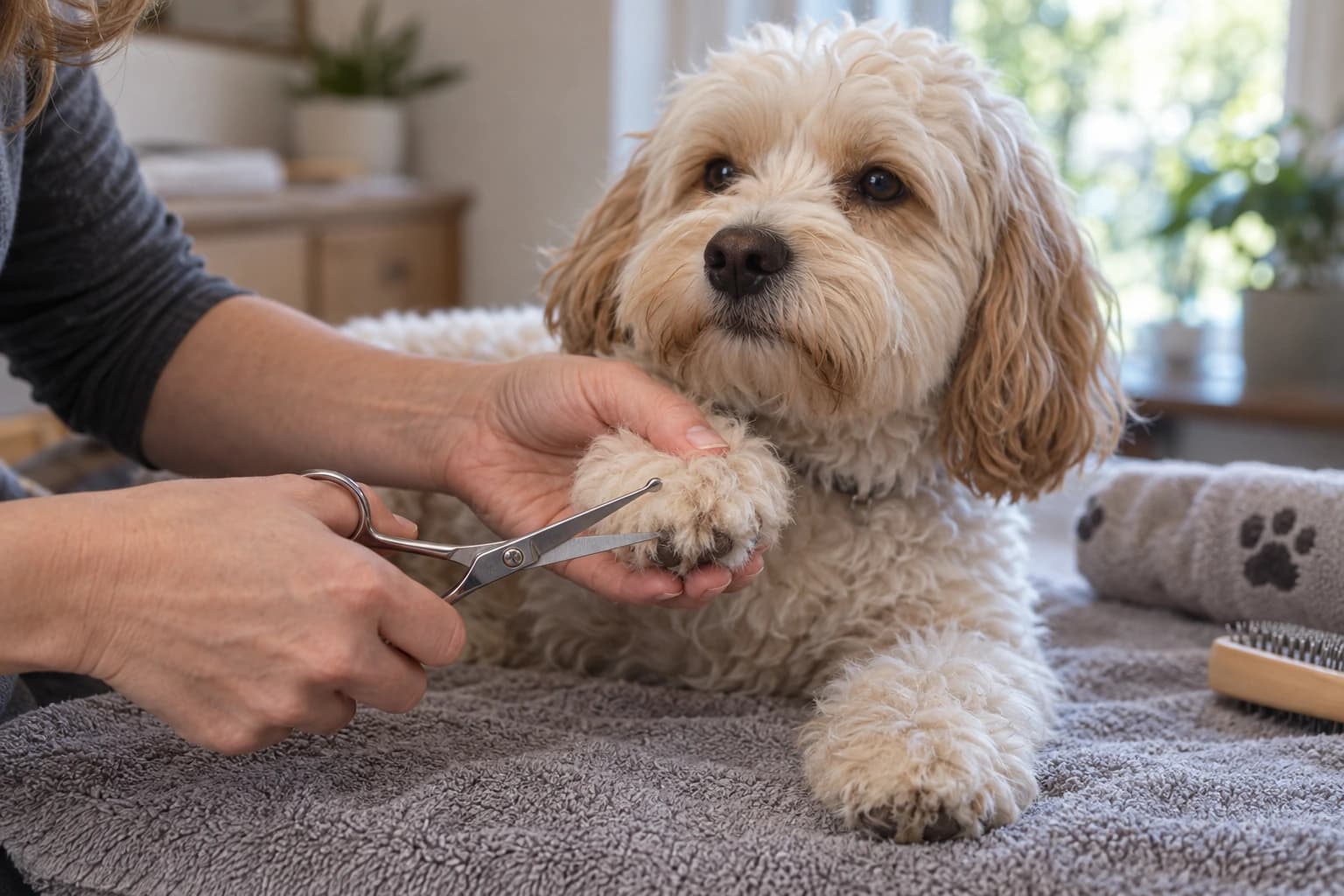
- Hold each paw for a few seconds and gently press the toes
- Look inside the ears
- Lift the lips to see the teeth
- Touch the tail and rear end
- Run your hands over the whole body, including the belly and legs
Pair each touch with a treat and praise. Keep sessions short and stop while your dog is still relaxed. Done this way, it just feels like extra attention, and most dogs are happy to have more of that.
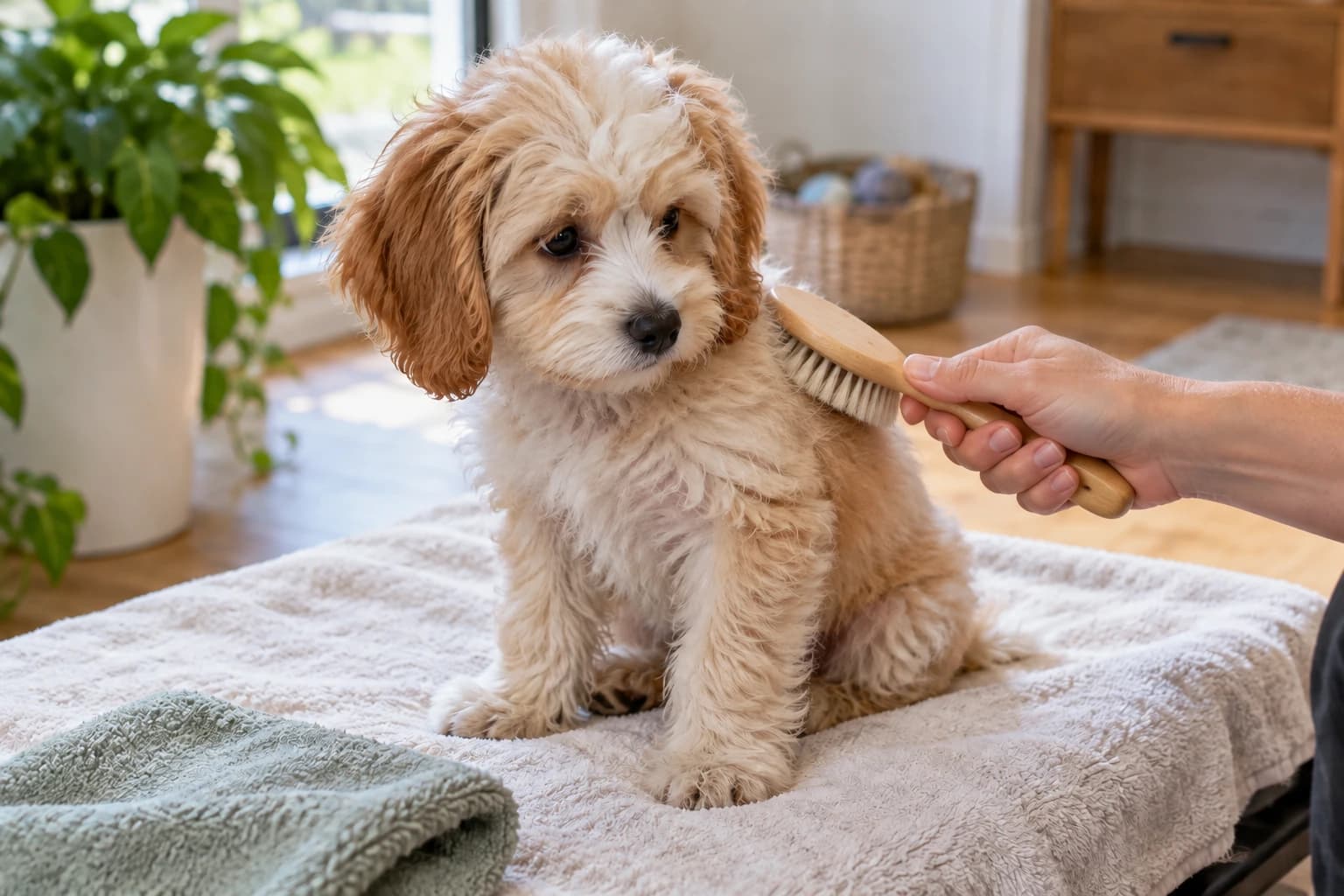
Introduce the brush slowly
If your dog hasn't been brushed much, go in small steps. Show the brush and give a treat. Touch your dog with it and give a treat. Then one gentle stroke, then a few. Build up the time over several days so brushing feels normal rather than like something being done to them.
Get them used to grooming sounds
Dryers and clippers are loud and unfamiliar. A couple of weeks before the appointment:
- Run a hair dryer on the cool setting across the room while your dog eats or gets treats
- Bring it a little closer over several days, without pointing it at the dog
- An electric toothbrush or clipper sounds played at low volume can help too
The goal is for the noise to become background, not a signal that something scary is about to happen.
Practice standing on a raised surface
Grooming usually happens on a table. Put a non-slip mat on a sturdy table or counter and reward your dog for standing calmly for a few seconds at a time. Stay close and keep a hand on them so they feel secure.
The day before and the day of
- Give your dog a normal walk or play session. Tired is good, exhausted and cranky is not.
- Keep the morning routine the same: usual wake-up, usual potty break, usual breakfast.
- Make sure they've had a chance to go to the bathroom before the groom starts.
- Have their favorite treats ready.
- Try to stay calm yourself. Your dog knows you better than anyone and picks up on how you're feeling, so a relaxed, cheerful goodbye helps more than a long, worried one.
What to tell your groomer
You know your dog best, and the more your groomer knows, the better they can look after them. Mention:
- Spots your dog doesn't like touched, such as paws or ears
- Health issues, sensitive skin, or anything your vet has flagged
- Past bad experiences, and anything that seems to frighten them
- What you want from the first visit. Keeping it simple is a perfectly good goal.
It's also fair to ask how they handle a nervous first-timer, whether a shorter first session makes sense, and what they do if your dog gets overwhelmed.
Adjusting for your dog
Anxious dogs often do better with a gradual start: a bath and nail trim first, with the full haircut on a later visit. If your dog is very anxious in general, ask your vet whether anything would help.
Young, energetic dogs benefit from extra exercise beforehand and practice settling on a mat.
Seniors getting groomed for the first time may need a shorter session, extra padding, and breaks to rest.
Normal nerves versus a reason to stop
Some trembling, whining, trying to move away, or refusing treats at first is common on a first visit and usually eases as the dog settles.
Panic that doesn't ease, attempts to bite, or a dog that shuts down completely are signs to stop and try again another day. A good groomer would rather end early than push a frightened dog through a full groom. There's no failure in that. Some dogs just need a few gentle visits before they feel safe, and that's fine.
After the first groom
Tell your dog how brave they were, give them something they love, and keep an eye on them for the rest of the day. Keep up the brushing and handling at home, and book the next appointment on a regular schedule so grooming becomes a familiar part of their life rather than an occasional event. Most dogs settle in more with every visit.
If you're in the East Bay and want a patient first groom for your dog, get in touch.